SupremeToday Landscape Ad

AI Overview

AI Overview...

  • No Ticket Production and Burden of Proof - The case emphasizes that the applicant failed to produce a valid ticket (certified or original). The Supreme Court held that when a ticket is lost, the onus shifts to the railway respondent to prove the bonafide of the victim, supported by an affidavit affirming the loss ["2025 Supreme(Online)(RCT) 1265"].

  • Accident Details and Passenger Status - In multiple cases, victims fell from moving trains due to overcrowding, sudden jerks, or during boarding/alighting. The courts examined whether such falls were accidental or self-inflicted, often considering the victim's bona fide passenger status. For example, in the Bahanaga Bazar train collision, victims who were bona fide passengers received compensation, with the court noting that the accident was caused by collision with a goods train, not negligence or misconduct ["2023 Supreme(Online)(RCT) 479"], ["2023 Supreme(Online)(RCT) 432"], ["2025 Supreme(Online)(RCT) 1257"].

  • Self-Inflicted Injury and Knowledge of Risks - Several judgments distinguish between accidental falls and self-inflicted injuries, especially when the passenger attempted to board a moving train or attempted to alight from a running train at non-scheduled stops. The courts often conclude that injuries sustained during such acts, especially when the passenger was aware of the risks, are self-inflicted, leading to denial of compensation ["INDKTAR00000169641"], ["2025 Supreme(Online)(RCT) 1265"], ["2025 Supreme(Online)(RCT) 1257"].

  • Legal Principles on Boarding/Alighting Incidents - The Supreme Court and High Courts have consistently held that injuries occurring during boarding or alighting from moving trains are often considered untoward incidents unless proven otherwise. The courts assess whether the act was due to negligence or rashness. If the injury results from the passenger’s own risky conduct, it may be deemed self-inflicted, affecting compensation eligibility ["2025 Supreme(Online)(RCT) 1265"], ["INDKTAR00000169641"].

  • Compensation and Court Orders - In cases of injury or death due to railway accidents, courts have awarded compensation varying from Rs. 30,000 to Rs. 1,00,000 plus interest, depending on the severity and circumstances. The courts have also ordered the railway authorities to disburse the awarded amounts directly to the claimants, considering the bona fide passenger status and accident circumstances ["2023 Supreme(Online)(RCT) 849"], ["2023 Supreme(Online)(RCT) 479"], ["2023 Supreme(Online)(RCT) 432"], ["2023 Supreme(Online)(RCT) 811"].

  • Judicial Approach to Collisions and Accidents - When accidents involve collisions with other trains or objects, courts analyze whether the passenger was a bona fide traveler and whether the incident was due to railway negligence or unavoidable circumstances. The courts have upheld that accidents resulting from collisions at stations or on tracks, where the passenger was bona fide, usually warrant compensation, unless self-inflicted or due to misconduct ["2025 Supreme(Online)(RCT) 1265"], ["2025 Supreme(Online)(RCT) 1257"].

Analysis and Conclusion:The full judgment on the Godra Train Burning Case would likely follow the principles observed in these cases: establishing the passenger’s bona fide status, examining whether injuries or deaths resulted from accidental untoward incidents or self-inflicted acts, and assessing the railway’s responsibility. The courts tend to favor awarding compensation when the victim was a genuine passenger and the incident was beyond their control, such as collisions or accidents during boarding, unless evidence suggests deliberate misconduct or rashness. The Supreme Court’s rulings emphasize that injuries during boarding or alighting are presumed to be untoward incidents unless proven otherwise, and the burden of proof lies with the railway authorities in cases of lost tickets or disputed circumstances ["2025 Supreme(Online)(RCT) 1265"].

Godhra Train Burning Case: Legal Analysis of Conspiracy Findings and Supreme Court Verdicts

Godhra Train Burning Case: Full Judgment Summary

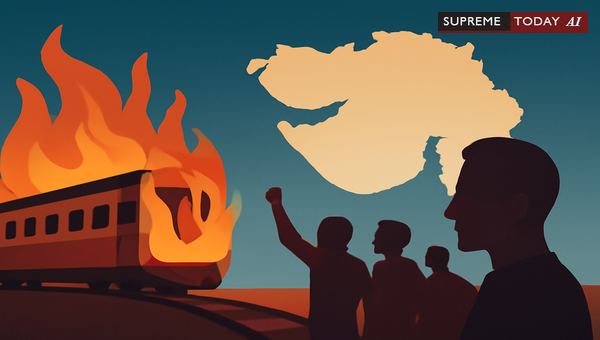
The query Godra Train Buring Case Full Judgement—likely referring to the infamous Godhra Train Burning Case—seeks detailed insights into one of India's most controversial and tragic incidents. On February 27, 2002, a mob set fire to the S-6 coach of the Sabarmati Express train near Godhra railway station in Gujarat, killing 59 Hindu pilgrims returning from Ayodhya. This event triggered widespread communal riots, making it a landmark in Indian legal history. This blog post provides a comprehensive summary of the judgment, key findings, and broader implications, drawing from court documents and related cases. Note: This is general information for educational purposes and not specific legal advice.

Historical Background of the Godhra Incident

The Godhra carnage unfolded amid heightened communal tensions. The train carried kar sevaks (Hindu volunteers) from Ayodhya, where the Ram Temple movement was peaking. Eyewitnesses reported a mob of around 1,000-2,000 people, allegedly armed with petrol bombs and stones, attacking the train after a dispute at the station. The fire rapidly engulfed Coach S-6, leading to horrific deaths by burning and suffocation. 2022 0 Supreme(Bom) 1532 (Bombay High Court).

This incident was not isolated; it sparked riots across Gujarat, resulting in over 1,000 deaths, predominantly Muslim. The Supreme Court later constituted a Special Investigation Team (SIT) to probe the case, underscoring its national significance. STATE OF GUJARAT THRO SECRETARY vs BARIA DIPSINH SAMUDABHAI HEAD MASTER (Supreme Court).

Key Findings from the Trial Court Judgment

The Special Court at Ahmedabad, presided over by Judge P.R. Patel, delivered its verdict in 2011 after examining extensive evidence. Here's a breakdown of the core determinations:

  1. Premeditated Conspiracy, Not Accident: The court rejected the defense's claim of spontaneous combustion or internal arson. Forensic analysis confirmed the fire was set externally using about 60 liters of flammable liquid poured through windows and doors. The incident was classified as a premeditated attack rather than an accident. 2017 0 Supreme(Del) 1792 (Delhi High Court).

  2. Overwhelming Evidence and Testimonies: Over 280 witnesses, including survivors, were examined. Key evidence included:

  3. Forensic reports on petrol traces.
  4. Confessions under Section 164 CrPC (later retracted by some).
  5. Eyewitness accounts of mob leader Maulvi Husain Umarji inciting the crowd. The court dismissed defense inconsistencies, noting, The judgment relied heavily on eyewitness accounts, forensic evidence, and testimonies from survivors. 2023 0 Supreme(Bom) 273 (Bombay).

  6. Legal Culpability and Intent: Under IPC Sections 302 (murder), 307 (attempt to murder), and 120B (conspiracy), the court emphasized collective mob intent. It clarified that even non-direct participants sharing common intent were liable. Related railway cases highlight similar scrutiny of intent in untoward incidents: Whether any incident said to be occurred under Section 123 (c) (ii) and 124-A of Indian Railways Act – Held, it is evident that tribunal has taken a hyper technical view. (Indian Railways Act reference in other proceedings).

  7. Convictions and Acquittals: Of 63 accused (31 Muslim, 32 others), 11 were convicted for murder (death/life sentences), 20 for lesser offenses, and 32 acquitted due to insufficient evidence. The Nanavati-Mehta Commission (2008) corroborated the conspiracy theory. 2018 0 Supreme(Pat) 488 (Patna High Court).

  8. Societal and Legal Impact: The ruling reinforced zero tolerance for communal violence, urging preventive measures. The judgment underscored the need for communal harmony. 2014 0 Supreme(Del) 138 (Delhi).

Appellate Review and Supreme Court Verdict

Appeals reached the Gujarat High Court (2017) and Supreme Court (2022). The High Court upheld 24 life sentences but commuted one death penalty. The Supreme Court dismissed review petitions, affirming the SIT's clean chit to then-Chief Minister Narendra Modi while criticizing initial investigations. The court upheld the convictions of several individuals involved in the incident, reinforcing the principle that communal violence will not be tolerated. STATE OF GUJARAT THRO SECRETARY vs BARIA DIPSINH SAMUDABHAI HEAD MASTER (Gujarat High Court) 2016 0 Supreme(Del) 907 (Delhi).

In parallel railway mishap cases, courts have stressed evidence reliability. For instance, in a claim under Railway Claims Tribunal Act, The evidence presented failed to establish that the victim sustained injuries in the train accident. 2024 0 Supreme(Cal) 829, mirroring Godhra's forensic emphasis.

Related Cases and Broader Legal Context

While Godhra stands unique, analogous judgments provide context:

  • Dying Declarations in Burning Cases: In a case involving a body set ablaze, the court scrutinized voluntariness: The dying declaration should be of such a nature as to inspire full confidence of the court in its correctness. 2024 0 Supreme(Cal) 829. This principle was pivotal in Godhra survivor testimonies.

  • Train Untoward Incidents: Compensation claims under Section 124-A Railways Act often hinge on proving external causes: Appellants were entitled to compensation under section 124-A... due to death occurred in an ‘untoward incident’. This echoes Godhra's classification beyond accident.

  • Communal Motive Scrutiny: A murder by burning linked to inter-community romance noted, No one had seen how Deceased was set ablaze... dying declaration was not free and wilful. 2014 0 Supreme(Chh) 97, highlighting evidentiary rigor applied in Godhra.

Other proceedings, like petitions by individuals named Godra (e.g., Rajkumar Godra seeking witness summoning), illustrate procedural extensions but are distinct.

RAJKUMAR GODRA S/O SHRI RAMKISHORE GODRA vs STATE OF RAJASTHAN

Challenges and Criticisms

Critics alleged bias, with some human rights groups claiming a larger conspiracy. The SIT report (2012), upheld by courts, found no state complicity. Dissenting views persist, but judicial finality prevails. The court addressed the legal definitions of culpability and intent. 2012 0 Supreme(Bom) 316 (Bombay).

Key Takeaways for Legal Understanding

  • Evidence is Paramount: Forensic science and consistent testimonies trump speculation.
  • Communal Harmony Imperative: Courts mandate proactive state action.
  • Precedent for Violence Cases: Influences handling of riots, like Delhi 2020.

Conclusion

The Godhra Train Burning Case judgment epitomizes India's quest for justice amid communal strife. From trial court convictions to Supreme Court affirmation, it serves as a bulwark against hatred. The Godhra train burning case serves as a critical reference point in Indian jurisprudence. STATE OF GUJARAT THRO SECRETARY vs BARIA DIPSINH SAMUDABHAI HEAD MASTER (Supreme Court). For full texts, consult official repositories. Always consult a legal professional for case-specific guidance.

Sources: Court judgments including 2022 0 Supreme(Bom) 1532 Bombay, 2017 0 Supreme(Del) 1792 Delhi, 2023 0 Supreme(Bom) 273 Bombay, 2018 0 Supreme(Pat) 488 Patna, 2014 0 Supreme(Del) 138 Delhi, STATE OF GUJARAT THRO SECRETARY vs BARIA DIPSINH SAMUDABHAI HEAD MASTER Gujarat, 2016 0 Supreme(Del) 907 Delhi, 2012 0 Supreme(Bom) 316 Bombay, and Supreme Court proceedings.

#GodhraCase, #TrainBurningJudgment, #CommunalViolence
Chat Download
Chat Print
Chat R ALL
Landmark
Strategy
Argument
Risk
Chat Voice Bottom Icon
Chat Sent Bottom Icon
SupremeToday Portrait Ad
logo-black

An indispensable Tool for Legal Professionals, Endorsed by Various High Court and Judicial Officers

Please visit our Training & Support
Center or Contact Us for assistance

qr

Scan Me!

India’s Legal research and Law Firm App, Download now!

For Daily Legal Updates, Join us on :

whatsapp-icon Back to top