


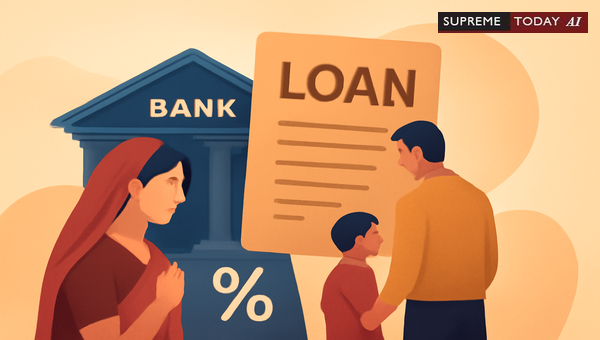
Is Wife Liable for Husband's Bank Loan After His Death?
Losing a loved one is devastating enough, but discovering an outstanding bank loan in their name can add immense financial stress for surviving family members. A common question arises: Bank Loan by Husband he Died Whether Wife and Children are Liable? If your husband took a bank loan and passed away, are you and your children personally responsible for repayment? This blog post breaks down the legal nuances under Indian law, drawing from key judgments and principles to provide clarity.
Note: This is general information based on legal precedents and not specific legal advice. Consult a qualified lawyer for your situation.
Understanding Heirs' Liability for Deceased Borrower's Debts
Under the Indian judicial system, banks have rights to recover outstanding loans from a deceased borrower's , but this is not automatic. The bank's ability to pursue the wife, children, or son depends on several factors: the nature of the loan (secured or unsecured), any guarantees provided, and contractual obligations. 2022 5 Supreme 412
Key principle: Liability does not transfer personally to heirs merely due to familial ties or inheritance. Instead, recovery is typically limited to the unless heirs have explicit legal bindings like guarantees. 2022 5 Supreme 412
When Is the Wife or Children Personally Liable?
- No Automatic Liability: Heirs like the wife and children are generally not personally liable for the husband's personal debts unless they co-signed, guaranteed, or inherited secured assets. The bank must prove a legal basis beyond the borrower's death. 2022 5 Supreme 412
- Guarantee or Co-Obligation: If the son or wife acted as a , their liability is co-extensive with the principal debtor. Banks can pursue guarantors directly, even without exhausting remedies against the estate. 2009 6 Supreme 171 2006 7 Supreme 734
For example, case law emphasizes: guarantors’ liabilities are co-extensive with the principal debtor, meaning the (which could be a son if he is a ) can be held liable for the debt. 2009 6 Supreme 171
Role of Security and Collateral in Recovery
Most bank loans are secured by collateral like property or . Here's how this impacts heirs:
- : Banks can enforce security interests against the deceased's estate or inherited assets. If the wife or son inherits mortgaged property, the bank may auction it to recover dues. 2006 7 Supreme 734 2009 7 Supreme 515
- Pledged Assets: Documents highlight that assets pledged or mortgaged can be attached and sold to recover outstanding dues. 2006 7 Supreme 734
In related precedents, banks exercise discretion in recovery strategies. For instance, if full recovery is possible via auctioning mortgaged property, banks aren't compelled to offer (OTS). 2023 Supreme(Online)(KER) 4730 The court noted: It is ultimately for the Bank to take a conscious decision in its own interest and to secure/recover the outstanding debt... there are all possibilities to recover the entire loan amount, instead of granting the benefit. 2023 Supreme(Online)(KER) 4730
Similarly, no borrower has an absolute right to OTS if the bank believes it can recover fully from the loanee, , or secured property. 2025 Supreme(Online)(Mad) 65090
Specifics on Recovery from the Son
The question often focuses on the son. Unless he is a , co-borrower, or inherits secured assets, the bank cannot recover directly from him. 2022 5 Supreme 412
- If Son is : Bank proceeds independently. 2009 6 Supreme 171
- Inherited Secured Assets: Bank enforces lien on those assets. However, banks cannot arbitrarily withhold unrelated assets like fixed deposits without a valid lien. In one case, the bank’s over deposits does not extend to hold deposits for when there is no lien established or express contract securing deposits against loans. 2021 Supreme(Online)(NCDRC) 139
Legal Principles from Key Judgments
Several cases outline these boundaries:
- 2022 5 Supreme 412: The bank’s right to recover arises once a final judgment and are issued, and the cause of action to recover from the debtor’s estate or guarantors can be pursued accordingly.
- 2009 6 Supreme 171: Affirms direct action against guarantors.
- 2006 7 Supreme 734: Recovery tied to security; heirs liable only if guarantors or inheriting secured assets.
Additional insights from other rulings reinforce banks' prudent recovery efforts. In a suicide note context, actions were deemed those of a prudent law abiding citizen making an endeavour to recover a bad loan.
Banks must substantiate recovery steps with documents; unsubstantiated claims fail.
ANDHRA BANK vs YANAMREDDY POLLI REDDY & ORS.
For that notice there was no action taken by the Opposite Party and if the loan is not cleared then the bank has to take necessary steps to recover of that loan, but which action taken by the bank was not substantiated by them by filing necessary documents. 2021 Supreme(Online)(Del) 4458Exceptions and Limitations
Heirs enjoy protections:- No Guarantee or Security: Recovery limited to the estate under succession laws (e.g., for Hindus).- : Personal liability doesn't pass to heirs.- OTS Discretion: Banks can't be forced into settlements if full recovery is viable. 2025 Supreme(Online)(Mad) 65090
Practical Recommendations for Families and Banks
For Heirs (Wife/Children):- Review loan documents for guarantees or securities.- Check inheritance against secured assets.- Negotiate with the bank, but note OTS is discretionary.
For Banks:- Verify guarantors (e.g., son).- Enforce securities promptly.- Obtain recovery certificates for stronger claims. 2022 5 Supreme 412
Conclusion: Key Takeaways
In summary, the wife and children are typically not personally liable for the husband's bank loan after his death unless they guaranteed it, co-obligated, or inherited secured assets. Banks recover from the estate or enforceable securities, guided by contracts and case law like 2022 5 Supreme 412 2009 6 Supreme 171 2006 7 Supreme 734.
Understanding these principles can prevent undue harassment. Always seek professional legal counsel to navigate your specific case, as outcomes depend on individual facts.
This post is for informational purposes only and reflects general legal positions as of available precedents.
#BankLoanLiability, #HeirsDebtRecovery, #IndianLaw















