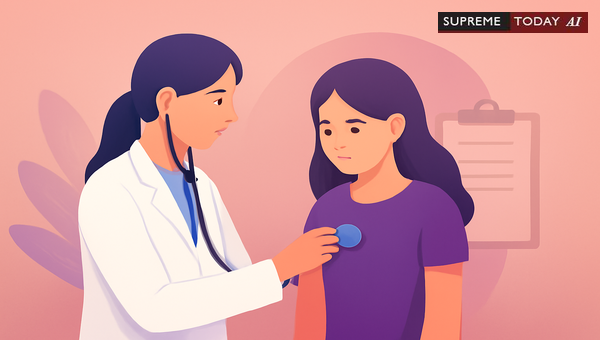
Can Homeopathy Doctors Examine POCSO Victims Under CrPC?
In cases involving the Protection of Children from Sexual Offences (POCSO) Act, 2012, the medical examination of victims is a critical step in gathering evidence while safeguarding the child's dignity. A common question arises: Can a Homeopathy Doctor Examine a POCSO Victim as Per CrPC? This issue intersects procedural mandates under the Code of Criminal Procedure (CrPC), now transitioned into the Bharatiya Nagarik Suraksha Sanhita (BNSS), with practical realities in medical practice. While the law prioritizes victim comfort, courts have shown flexibility in resource-constrained scenarios. This post delves into the legal framework, judicial interpretations, and practical considerations, drawing from key precedents.
Disclaimer: This article provides general information based on legal precedents and is not a substitute for professional legal advice. Consult a qualified lawyer for case-specific guidance.
Legal Framework Governing Medical Examinations in POCSO Cases
The POCSO Act outlines strict guidelines for medical examinations to protect minor victims, particularly girls, from further trauma. Section 27(2) of the POCSO Act mandates that the medical examination of a girl victim be conducted by a woman doctor to uphold her dignity and comfort. 2020 0 Supreme(Gau) 127 This provision aligns with Section 164A of the CrPC (now Section 184 BNSS), which requires the victim's consent and emphasizes competent examination wherever possible. 2022 0 Supreme(MP) 576
However, the law does not explicitly restrict examinations to allopathic doctors. The focus remains on procedural safeguards rather than the practitioner's specific qualification stream, provided the examination meets evidentiary standards.
Key Procedural Requirements
- Victim's Consent: Essential under CrPC Section 164A; without it, the examination may be deemed invalid. 2022 0 Supreme(MP) 576
- Qualified Personnel: The examiner must be competent, though 'competency' is interpreted contextually by courts.
- Timely and Thorough Examination: Courts stress comprehensive reports, especially for minors, including opinions on injuries or conditions. 2024 0 Supreme(MP) 738
In practice, medical reports often corroborate victim statements recorded under Sections 161, 164 CrPC, or 183 BNSS. For instance, intact hymen or absence of injuries does not negate assault if testimony is reliable. 2024 0 Supreme(Del) 15 2024 0 Supreme(Gau) 1184
Judicial Interpretations: Flexibility in Exceptions
Courts have relaxed strict adherence to Section 27(2) in unavoidable circumstances, prioritizing justice over procedural rigidity. In remote or resource-limited areas where only male doctors are available, examination by a male doctor does not automatically vitiate the evidence or trial, provided the victim's consent is obtained and no prejudice is caused to the accused.2020 0 Supreme(Gau) 127
The litmus test is prejudice to the accused, not mere procedural lapse. Evidence from such examinations remains admissible unless the defense proves impropriety or lack of consent. 2020 0 Supreme(Gau) 127
Landmark Insights from Case Law
- Practical Constraints Acknowledged: Judicial rulings emphasize real-world challenges. For example, in a bail application under POCSO sections, the court highlighted the need for thorough medical exams per guidelines but granted bail due to negative reports and hostile witnesses, underscoring evidence quality over examiner type. 2024 0 Supreme(MP) 738
- Victim Testimony Supremacy: Convictions can rest on credible victim statements alone, even with inconclusive medical evidence. In one case, despite a doctor's report showing no definitive rape signs, the court upheld conviction based on the minor's consistent testimony under Section 164 CrPC. 2024 0 Supreme(Gau) 1184
- Corroboration Role: Medical evidence supports but does not override reliable testimony. A prosecutrix's statement, consistent across police and magistrate recordings, was deemed sufficient despite intact hymen findings. 2024 0 Supreme(Del) 15
These precedents illustrate that courts focus on overall fairness rather than disqualifying evidence solely on examiner credentials.
Relevance of Homeopathy Doctors in POCSO Examinations
The POCSO Act and CrPC do not specify that only allopathic (MBBS) doctors can conduct examinations. Homeopathy doctors, as registered medical practitioners under relevant councils, may examine POCSO victims if circumstances justify it, with victim's consent and dignity preserved.2020 0 Supreme(Gau) 127
A notable case directly addressed this: The victim was examined by a Homeopathy doctor whose report noted inflammation possibly due to infection, with intact hymen and no external injuries. Despite contentions that the doctor was unregistered and the report inconclusive, the court convicted the accused based on the victim's vivid oral evidence of penetration, holding that even partial penetration constitutes rape.2016 0 Supreme(Gau) 60 The judgment clarified: if virile member of accused be within labia of pudendum of woman no matter how little... it amounts to rape. 2016 0 Supreme(Gau) 60
This ruling demonstrates that a homeopathy doctor's examination does not inherently invalidate proceedings. However, challenges like registration or report quality can be raised, as seen where the defense questioned the doctor's credentials. 2016 0 Supreme(Gau) 60
Comparative Insights from Other Cases
- Inconsistencies in medical reports (e.g., no injury marks) led to acquittals when coupled with contradictory victim statements, but not due to doctor type. 2023 0 Supreme(Gau) 1122 2023 0 Supreme(Cal) 888
- Negative FSL/DNA reports and hostile victims prompted bail, reinforcing the need for robust medical opinions regardless of practitioner. 2022 0 Supreme(MP) 576
Key Considerations for Validity
For a homeopathy doctor's examination to hold:1. Consent: Explicitly obtained from the victim or guardian. 2020 0 Supreme(Gau) 1272. Dignity Preservation: Ideally by a female practitioner; male/homeopathy exams acceptable in exigencies without prejudice. 2020 0 Supreme(Gau) 1273. Competency and Registration: Doctor should be qualified; unregistered status may invite scrutiny. 2016 0 Supreme(Gau) 604. Comprehensive Reporting: Include hymen status, injuries, and opinions on assault probability. 2024 0 Supreme(MP) 7385. No Prejudice to Accused: Defense must prove harm for exclusion. 2020 0 Supreme(Gau) 127
The requirement for a female doctor is procedural, aimed at victim protection; non-adherence does not automatically invalidate evidence if consent exists and no prejudice is shown.2020 0 Supreme(Gau) 127 2021 0 Supreme(Gau) 819
Conclusion and Key Takeaways
A homeopathy doctor can generally examine a POCSO victim under CrPC provisions, subject to consent, dignity safeguards, and absence of prejudice. While Section 27(2) prefers female doctors, judicial pragmatism allows flexibility, as evidenced in multiple rulings. 2020 0 Supreme(Gau) 127 2021 0 Supreme(Gau) 819
Key Takeaways:- Prioritize victim consent and comfort in all exams.- Medical evidence supports but does not supersede credible testimony.- In resource-scarce areas, available qualified doctors suffice.- Always ensure thorough, guideline-compliant reports to withstand scrutiny.
For legal professionals, investigators, or families navigating POCSO cases, understanding these nuances ensures fair proceedings. Stay informed on evolving jurisprudence to protect child rights effectively.
#POCSOAct #ChildProtectionLaw #LegalMedicalExam