


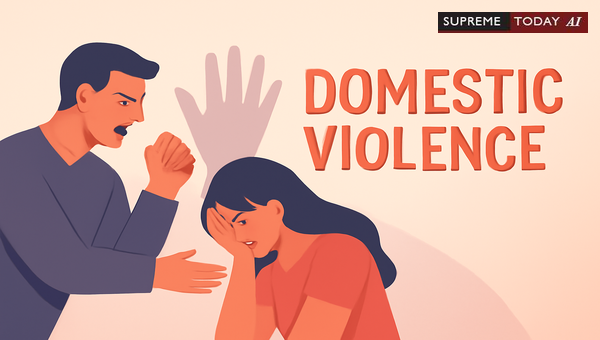
Husband's Priority Liability in : Stepmother Cases
In family disputes involving , questions often arise about who bears primary responsibility under the (). A common query is: Husband Liability is Priority in Case of Step Mother in Act. This article delves into this issue, explaining the husband's central role in maintenance and , while outlining conditions under which stepmothers or other in-laws may be implicated. Note that this is general information based on legal precedents and not specific legal advice—consult a qualified lawyer for your situation.
Overview of the and Key Principles
The aims to protect women from various forms of , including . It provides remedies like , , , and . Central to many cases is the concept of a , defined under as a dwelling where the aggrieved woman lived with the respondent in a . Courts have emphasized that claims typically arise only in such shared settings 2018 0 Supreme(P&H) 3323 2023 0 Supreme(All) 1829.
The husband's liability is typically prioritized. As the primary respondent, he is first responsible for maintenance and support. Other family members, like a stepmother, are not automatically liable unless specific conditions are met 2013 0 Supreme(P&H) 1694.
Primary Liability of the Husband
Under the , the husband bears the main obligation for maintenance. allows for , covering expenses like medical costs, loss of earnings, and maintenance for the aggrieved person and her children. Failure to provide this can amount to economic abuse, a recognized form of 2013 8 Supreme 416 1888 0 Supreme(SC) 7.
For instance, courts have upheld broad under , including for unmarried daughters regardless of age, reinforcing the husband's duty even in complex family dynamics involving stepmothers 2024 0 Supreme(All) 45. In one case, daughters claimed maintenance from their father and stepmother after their mother's death, highlighting the father's core responsibility 2024 0 Supreme(All) 45.
The father-in-law's liability arises only if the wife proves joint family living or rights in —not automatically 2013 0 Supreme(P&H) 1694. This underscores the husband's position as the priority liable party.
When Can a Stepmother Be Held Liable?
Family members, including stepmothers, may be respondents if they lived in the and specific allegations of violence are proven 2016 0 Supreme(Kar) 172. However, if the stepmother does not reside there or no direct allegations exist, she cannot be held liable 2016 0 Supreme(Kar) 172 2010 0 Supreme(Pat) 1036.
The definition of '' is broad, including past cohabitation, even post-divorce, as long as violence occurred in India 2024 0 Supreme(Bom) 1183. can be sought without time limits under the , unlike 2024 0 Supreme(Pat) 285.
Key conditions for stepmother liability:- Proof of with the aggrieved woman 2018 0 Supreme(P&H) 3323.- Specific acts of violence, such as economic or emotional abuse 2013 8 Supreme 416.- No mere familial relation suffices; evidence is required 2016 0 Supreme(Kar) 172.
Exceptions, Limitations, and Related Scenarios
Liability isn't absolute for in-laws. Courts clarify that a isn't limited to joint family properties but any where the woman lived with the husband or relatives 2022 0 Supreme(Del) 336 2021 0 Supreme(Bom) 309. Yet, the right to residence under isn't indefeasible, especially against senior citizen in-laws 2022 0 Supreme(Del) 336.
Conflicts arise with the . can't summarily evict daughters-in-law from shared households without considering rights; both laws must be harmoniously construed 2021 1 Supreme 139 2021 0 Supreme(Chh) 333. For example, Right of a woman to secure a residence order in respect of a cannot be defeated by simple expedient of securing an order of eviction by adopting summary procedure under Senior Citizens Act 2021 1 Supreme 139.
In cases pitting daughters-in-law against aged parents, alternative accommodation may be ordered under (1)(f) , balancing rights 2022 0 Supreme(Del) 336. The has noted: The respondent in a proceeding under Act can be any relative of the husband but only if conditions are met 2020 6 Supreme 613.
Post-divorce, the still applies for past violence, holding the ex-husband liable 2024 0 Supreme(Bom) 1183. This extends to scenarios with stepmothers introduced after separations.
Broader Implications and Judicial Insights
Judicial interpretations emphasize permanency in living arrangements for '' status—mere casual stays don't qualify 2020 6 Supreme 613. The promotes women's rights, stating: Progress of any society depends on its ability to protect and promote rights of its women 2020 6 Supreme 613.
In challenging maintenance orders involving stepparents, courts uphold the 's scope for children and aggrieved women 2024 0 Supreme(All) 45. Civil courts can address eviction claims alongside DV proceedings, without barring them 2020 6 Supreme 613.
Recommendations for Aggrieved Parties
- Gather Evidence: Document proof, specific incidents, and economic impacts.
- Prioritize Husband Claims: Target maintenance from the husband first, as courts favor this 2013 0 Supreme(P&H) 1694.
- Specific Allegations: Against stepmothers, allege direct involvement with evidence 2016 0 Supreme(Kar) 172.
- Seek : File under for urgent protection and residence.
- Harmonize Laws: In senior citizen disputes, highlight entitlements 2021 1 Supreme 139.
Conclusion and Key Takeaways
In cases with stepmothers, the husband's liability is priority. He is primarily accountable for maintenance and protection, with stepmothers liable only upon proving and specific misconduct. This framework balances family responsibilities while safeguarding women.
Key Takeaways:- Husband's duty is foundational; in-laws' is conditional 2013 0 Supreme(P&H) 1694.- is pivotal 2018 0 Supreme(P&H) 3323 2023 0 Supreme(All) 1829.- Economic abuse strengthens claims 2013 8 Supreme 416.- Courts harmonize with other laws like Senior Citizens Act 2021 1 Supreme 139.
This evolving area underscores the need for case-specific advice. Stay informed on precedents to navigate these challenges effectively.
References: 2013 0 Supreme(P&H) 1694 2018 0 Supreme(P&H) 3323 2023 0 Supreme(All) 1829 2016 0 Supreme(Kar) 172 2013 8 Supreme 416 1888 0 Supreme(SC) 7 2010 0 Supreme(Pat) 1036 2024 0 Supreme(All) 45 2024 0 Supreme(Bom) 1183 2024 0 Supreme(Pat) 285 2022 0 Supreme(Del) 336 2021 0 Supreme(Bom) 309 2021 0 Supreme(Chh) 333 2021 1 Supreme 139 2020 6 Supreme 613
#DVActIndia #DomesticViolenceLaw #HusbandLiability












