


Can a Husband Pray for Direction Under (1)(f) of the ?
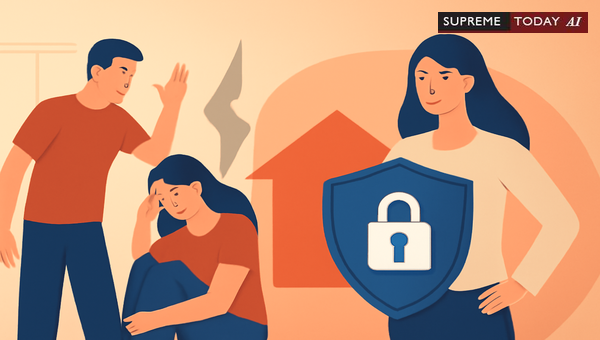
In the realm of family law in India, the , 2005 () stands as a cornerstone for safeguarding women against abuse within domestic relationships. But what happens when the roles are reversed? A common question arises: Can Husband Pray for Direction under 19 1 F of ? This query often stems from situations where husbands feel aggrieved by their wives' actions and seek court interventions like .
This blog post delves into the legal framework, analyzing whether husbands can invoke (1)(f) for directions, supported by statutory provisions, case law, and judicial interpretations. We'll explore the Act's intent, limitations, and viable alternatives. Note: This is general information and not specific legal advice. Consult a qualified lawyer for your situation.
Overview of the , 2005
The was enacted to provide immediate and effective protection to women facing domestic violence, defined broadly to include physical, sexual, verbal, emotional, and economic abuse. Crucially, the Act defines an as a woman who has been subjected to any act of domestic violence by her husband or his relatives
2013 0 Supreme(P&H) 367.
As highlighted in judicial precedents, The Legislation has been enacted to render justice to women who suffered domestic violence. 'Domestic violence' constitutes both civil and criminal act perpetrated upon a woman in with husband or any of the relatives of husband
. This gender-specific focus underscores that the Act is not a gender-neutral law but one tailored for women's protection.
form the bedrock of reliefs:- : Right to reside in .- : .- : , including directing the to vacate.
Understanding (1)(f) and Its Applicability
(1) empowers Magistrate courts to pass on behalf of the (woman). Specifically, (1)(f) allows directions for the residence of the aggrieved woman at any specified place, potentially requiring the husband () to ensure her accommodation or vacate the .
(1) of the allows the court to pass , which can include directions for the husband to vacate the if the wife is the
2013 0 Supreme(P&H) 367. The provisions are specifically designed to protect women who have experienced domestic violence, thereby granting them rights to reside in a and seek against their husbands or relatives
2013 0 Supreme(P&H) 367.
A , as defined under , extends beyond properties owned by the husband to those of his relatives where the woman has resided in a . Courts have clarified: The in a proceeding under can be any relative of the husband2022 0 Supreme(Del) 336 2021 0 Supreme(Bom) 309 2021 0 Supreme(Bom) 908 2021 0 Supreme(Chh) 333 2021 0 Supreme(Chh) 216. However, this does not flip the script to allow husbands as applicants.
Why Husbands Cannot Invoke (1)(f)
The 's framework explicitly limits remedies to women. The legal framework established by the does not extend the same remedies to husbands who claim to be victims of domestic violence perpetrated by their wives. The Act is explicitly focused on protecting women, and the term is limited to women
2013 0 Supreme(P&H) 367.
Consequently, a husband cannot invoke (1)(f) to seek directions or relief under the , as the Act does not provide a remedy for men alleging domestic violence by their wives
2013 0 Supreme(P&H) 367.
This position is reinforced by the Act's objective: Thus, the very objective of the is to provide remedies to the woman who is the victim of domestic violence2022 0 Supreme(Ker) 942. While husbands, as respondents, may counter-claim or seek ancillary reliefs under broader civil procedures (e.g., or CPC), they cannot initiate proceedings as 'aggrieved persons' under .
Key Case Law: Saraswathy v. Babu and Beyond
Judicial scrutiny has consistently upheld the women-centric nature of the Act. In Saraswathy v. Babu, the emphasized that the provisions of the are intended to protect women from domestic violence and that the rights conferred under the Act are not applicable to men2018 0 Supreme(Mad) 4037. The court further noted that the concept of a and the associated rights are applicable only to women who have been subjected to domestic violence2018 0 Supreme(Mad) 4037.
Other rulings echo this. For instance, courts have invalidated reliefs misapplied outside the Act's scope, such as unsustainable lump-sum grants not aligned with women's protection 2022 0 Supreme(Gau) 713. Additionally, proceedings under often scrutinize claims to ensure they fit the definition of domestic violence against women 2022 0 Supreme(Ker) 942.
While some interpretations allow courts wide powers under Section 26 to grant directions 2024 0 Supreme(Mad) 2261, this does not extend primary reliefs to male applicants.
Alternative Legal Avenues for Husbands
If a husband faces alleged domestic violence or harassment:- Criminal Complaints: File under (if applicable, though primarily for cruelty to wives), 323 (hurt), or 506 (criminal intimidation). Note: 498A is wife-specific but can be countered.- Civil Remedies: Seek protection via general civil suits, injunctions under , or maintenance/divorce under /.- Other Laws: Explore the or general harassment laws.
Recommendations: Husbands may explore other legal avenues outside the , such as filing a complaint under different laws that address domestic violence or harassment. It may also be beneficial to seek legal advice on alternative remedies available under civil or criminal law
2013 0 Supreme(P&H) 367.
Conclusion and Key Takeaways
In summary, based on the provisions of the and relevant case law, a husband cannot pray for direction under (1)(f) of the Act. The legislation is crafted exclusively for women victims, limiting '' status and associated reliefs accordingly
2013 0 Supreme(P&H) 367 2018 0 Supreme(Mad) 4037.
Key Takeaways:- prioritizes women's right to residence and protection.- Husbands cannot file as applicants but may defend or seek ancillary reliefs.- Shared households include relatives' properties, but only for women's claims.- Always consult a lawyer for personalized strategies.
Understanding these nuances can prevent futile litigation. For deeper insights, review the full Act and precedents.
References:
2013 0 Supreme(P&H) 367 2018 0 Supreme(Mad) 4037
2022 0 Supreme(Ker) 942 2022 0 Supreme(Del) 336 2021 0 Supreme(Bom) 309 2022 0 Supreme(Gau) 713
Word count: 1028. This post aims to inform; professional legal counsel is essential.
#DVA ctIndia, #DomesticViolenceLaw, #HusbandRightsDV















