


When In-Laws Vacate the Matrimonial Home After a Can It Amount to Under the DV Act
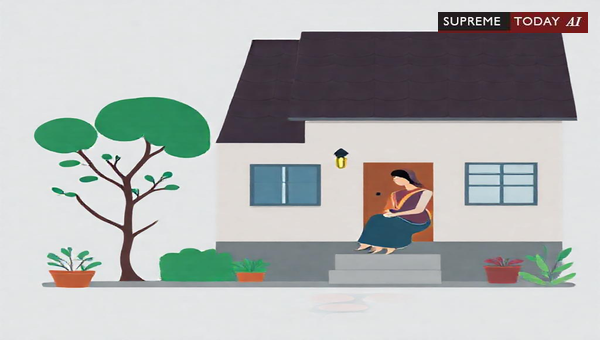
A recurring and troubling scenario under the (DV Act) involves a woman who secures a protecting her right to stay in the , only to find that her husband and in-laws promptly vacate the premises, move into a rented house, and then seek modification of the on the ground that nobody else lives there anymore. The question that arises is whether this tactic — in-laws vacating themselves so that the aggrieved woman is left alone and can be pressed to leave — constitutes an indirect method of evicting or dispossessing the woman of her protected residence rights. The has answered this question with a clear yes, holding that such conduct is a shortcut designed to defeat the rights granted under the Act.
The 's Finding on
In a revision petition arising from orders of a Magistrate and the , the court dealt with a young wife who had obtained an interim under Sections 12, 18 and 19 of the DV Act, restraining the respondents from evicting her from the . Immediately after the order was passed, the husband joined his parents and brother in taking a rented house and shifting residence from the , and then filed a petition under of the DV Act seeking modification of the .
The court held that the right of residence of the petitioner-wife could not be curtailed by providing alternate accommodation in all cases under Section 19(1) merely because the husband, his parents, and sibling vacated the premises as soon as the was passed. The court observed that this:
can only be taken as a short cut method indirectly to evict the petitioner for closing her rights provided under the Act, that is not the purpose for which of the Act has been introduced.
The court emphasized that mere apprehension of legal proceedings at the instance of the petitioner, and voluntary shifting of residence after a is passed in favour of the , is not a justifying modification under . The revision petition was allowed and the impugned orders were set aside as illegal and improper 2021 0 Supreme(Ker) 924 and 2021 Supreme(Online)(KER) 23700.
Why This Reasoning Matters: The Nature of the Right to Reside
of the DV Act grants every woman in a the , whether or not she has any right, title, or beneficial interest in it. This is a vital and significant statutory right that applies to relationships founded on marriage, consanguinity, adoption, or a relationship in the nature of marriage 2024 0 Supreme(Ker) 514.
The court's refusal to permit modification of a based on the respondents' own voluntary vacating of the home flows directly from the purpose of this scheme. If respondents could defeat a simply by walking out, the statutory protection would be rendered illusory — the right would exist on paper but be defeated by resorting to an indirect method 2021 0 Supreme(Ker) 924.
Key principles emerging from this line of cases include:
- A cannot be modified without a substantive change in circumstances. Mere voluntary shifting out by the husband and in-laws, especially immediately after the order, does not qualify 2021 Supreme(Online)(KER) 23700.
- modification requires sufficient factors. The burden rests on the party seeking modification to demonstrate a genuine, independent change in circumstances, not a self-created one 2021 0 Supreme(Ker) 924.
- The right to reside exists independent of ownership. A woman's entitlement under read with Sections 17 and 19 does not depend on her holding title to the property 2024 0 Supreme(Ker) 514.
Balancing the Right to Reside with the Rights of Other Family Members
The protection is not absolute. Courts have repeatedly recognized that the right to residence must be balanced against the rights of other family members, particularly senior citizens who own the property 2024 0 Supreme(Ker) 743. Where a genuine arrangement is made, relief may be moulded under of the DV Act 2021 0 Supreme(Del) 197.
Important qualifications noted in the case law include:
- The right of residence under Section 19 is not an indefeasible right, especially where a daughter-in-law is pitted against aged parents-in-law, and senior citizens are entitled to live peacefully without being haunted by marital discord
Vibhuti Wadhwa Sharma VS Krishna Sharma
. - A requires living with some degree of permanency; fleeting or casual residence does not qualify
Vibhuti Wadhwa Sharma VS Krishna Sharma
. - The right of a woman to a cannot, however, be defeated by the simple expedient of securing an eviction order under the summary procedure of the — the two statutes must be harmoniously construed 2025 0 Supreme(Bom) 2036 and 2024 0 Supreme(Bom) 602.
- Where a is properly modified and is offered, courts may direct the respondent to pay rent for alternate accommodation along with maintenance 2024 0 Supreme(Ker) 743.
What Distinguishes Lawful Modification from
The dividing line drawn by the is one of causation and timing:
- Timing: Vacating the immediately upon the passing of a suggests a tactical move rather than a genuine change.
- Self-created change: The party seeking modification cannot rely on a change in circumstances that it deliberately brought about to nullify the order.
- Mere apprehension of proceedings: Fearing possible legal action from the petitioner is not, by itself, a changed circumstance 2021 0 Supreme(Ker) 924.
- Statutory safeguards: Modification under presupposes sufficient factors established to the court's satisfaction; the provision was never intended as a device to close out a woman's residence rights 2021 Supreme(Online)(KER) 23700.
Where, by contrast, a property owner has genuinely been dispossessed or compelled to leave — for instance, a mother-in-law whose premises were broken into after she moved out — courts may restore her possession and mould relief by directing rent for under 2023 0 Supreme(Guj) 62. Context, therefore, matters greatly.
Practical Takeaways for Women and Respondents
For aggrieved women:- A under Section 19 remains binding unless a court finds a genuine under .- If in-laws or the husband vacate the premises to pressure you into leaving, this may be argued as an — courts have recognized and rejected such tactics.- Relief can include both residence orders and such as rent for alternate accommodation and maintenance, which may be enhanced to account for inflation and current economic conditions 2026 0 Supreme(Ker) 649 and 2021 0 Supreme(Del) 722.
For respondents and in-laws:- Self-created changes in circumstances will generally not support modification of a .- proposals must be genuine and proportionate to satisfy .- Eviction routes under other statutes, such as the Senior Citizens Act, cannot be used as a shortcut to nullify DV Act protections 2025 0 Supreme(Bom) 2036.
Conclusion
The 's decision squarely answers the question posed: when in-laws and the husband vacate the on their own, immediately after a is passed in favour of the aggrieved woman, and then seek modification of that order, the court will treat this as a short-cut, indirect method of evicting her and defeating her statutory rights. The right to residence under the DV Act is a vital protection that cannot be closed out by tactical manoeuvres, though it must be balanced fairly against the genuine rights of other family members, including senior citizens. Anyone facing a similar situation should treat this information as general legal information and consult a qualified advocate for advice tailored to the specific facts of their case.
#DomesticViolenceAct #RightToResidence #KeralaHighCourt #SharedHousehold #WomensRights












