


Does Telling Someone 'Go Die' Amount to ?
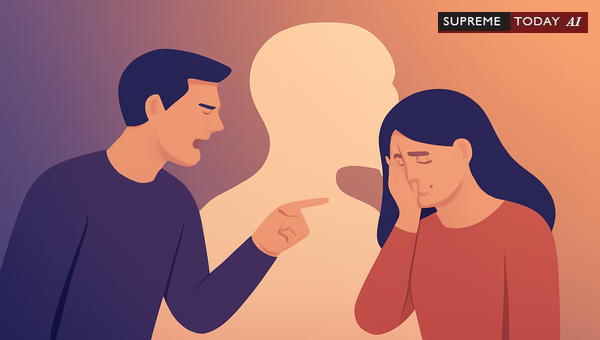
In heated arguments or moments of frustration, harsh words like go and die or even affirming someone's suicidal statement with yes, you should die can escalate tensions. But do such utterances cross the line into criminal territory under Indian law? Specifically, whether directly telling a person to die, and when the person says that I'll die, replying with affirmation that yes you should die, will be count as /abetment to suicide?
This question strikes at the heart of (IPC), which punishes . While emotions run high, the law demands more than mere words to establish . This blog post delves into , key legal elements like and proximity, and practical insights to clarify when verbal barbs become abetment. Note: This is general information based on case law and not specific legal advice. Consult a qualified lawyer for personalized guidance.
Understanding Abetment and Under Section 306 IPC
Abetment to suicide under Section 306 IPC requires proof of , aiding, or intentionally engaging in a conspiracy that drives someone to take their own life. Courts have consistently emphasized that abetment involves a mental process of instigating a person or intentionally aiding a person in doing of a thing
- 2022 Supreme(Online)(MAD) 20093
. Without this, mere words fall short.Key Ingredients for
- or Conduct: isn't passive; it demands active goading that leaves the victim with no other option but to commit suicide 2025 2 Supreme 695.
- (Criminal Intent): Words spoken in a fit of anger lack the necessary intent. As held, words uttered in the heat of anger or emotion without an intention or are not sufficient to establish ''2012 7 Supreme 472.
- : There must be a direct nexus between the words and the suicide. A significant time gap weakens the link 2025 2 Supreme 695.
Isolated remarks like 'go and die' do not suffice. In 2012 7 Supreme 472, the court ruled that casual words during a quarrel lack and do not amount to .
: When Words Don't Equal Abetment
Indian courts have repeatedly acquitted accused in cases relying solely on verbal provocations. Let's examine pivotal rulings:
Landmark Cases
- 2012 7 Supreme 472: The accused told the deceased, Why don't you die? in anger. The court clarified that such statements, even if uttered, do not necessarily lead to the conclusion of '' unless they are part of a conduct that incites or actively encourages the victim to commit suicide2012 7 Supreme 472. No conviction without active aid.
- State of M.P. (AIR 2002 SC 1998)
- 2022 Supreme(Online)(MAD) 20093
: The accused telling the deceased to go and die would by itself not constitute the ingredients of and presence of is necessary concomitant of- 2022 Supreme(Online)(MAD) 20093
.
Affirmative Responses and Timing
Responding yes, you should die to a suicidal remark mirrors these cases. Affirmative responses to such words, even if they acknowledge the suggestion, do not necessarily amount to '' or 'abetment' unless they are part of a continuous conduct2012 7 Supreme 472 2025 2 Supreme 695.
In another instance, the isolated remark exhorting the person to die will not amount to 2020 0 Supreme(Mad) 964. Similarly, out of anger, uttering the words 'go and die' will also not amount to abetment, unless there is actual in the form of forcing or driving the person to commit suicide2018 0 Supreme(Mad) 3334.
A gap between such remarks and suicide further dilutes , as proximity is crucial 2025 0 Supreme(Kar) 728.
Exceptions: When Words Could Lead to Liability
While mere utterances rarely suffice, context matters:- Continuous Harassment: Daily torment leading to suicide may qualify if it induces a mental state where death is the only alternative2018 0 Supreme(Kar) 283. Getting fed-up from the daily harassment... the reason for commission of suicide is nothing but or abetment2023 0 Supreme(Raj) 349.- : Even or will amount to abetting, if the said cruelty forced her to take a decision that she has no other alternative except to die2022 0 Supreme(Mad) 675.- or Pattern: If the victim is hypersensitive and remarks form part of ongoing provocation, liability may arise—but proof is stringent 2020 0 Supreme(Mad) 964.
Can a person be said to have abetted another person to commit suicide... by merely telling the other in public, 'why can't you go and die etc.'? Courts answer no, absent deliberate encouragement 2005 0 Supreme(Bom) 880.
Prosecution's Burden and Defenses
To secure a conviction:1. Prove positive acts beyond words.2. Establish through intent.3. Link via proximate 2025 2 Supreme 695.
Defenses often succeed by highlighting emotional context: mere abusive language or casual remarks like go and die, especially if made in anger or heat of moment, generally do not constitute sufficient 2025 0 Supreme(Kar) 728.
Key Takeaways for Everyday Scenarios
- Family Quarrels: Petty disputes or partition demands don't abet unless forcing suicide 2018 0 Supreme(Mad) 3334.
- Workplace or Public Spats: Isolated barbs lack nexus.
- Social Media: Viral rants may amplify scrutiny, but still need proof of incitement.
Recommendations:- Prosecution must show conduct, timing, and intent 2012 7 Supreme 472.- Courts should contextualize utterances before liability 2025 2 Supreme 695.
Conclusion: Context is King in Abetment Cases
Telling someone to die or affirming it does not automatically constitute or abetment to suicide unless paired with positive acts, clear , and temporal proximity. Mere verbal expressions, particularly in emotional moments, should not be equated with incitement or active aid unless supported by additional conduct indicating intent2012 7 Supreme 472.
Each case turns on facts—harsh words alone rarely convict. For those facing charges or grieving a loss, understanding these nuances is vital. Stay informed, seek counsel, and remember: law prioritizes intent over impulse.
Word count: 1028. References drawn from provided legal documents for accuracy.
References
- 2012 7 Supreme 472: Words in anger lack .
- 2025 2 Supreme 695: Proximity and conduct essential.
- 2022 Supreme(Online)(MAD) 20093
: for 'go die' remarks.- 2020 0 Supreme(Mad) 964, 2018 0 Supreme(Mad) 3334, 2025 0 Supreme(Kar) 728, and others as cited.












