


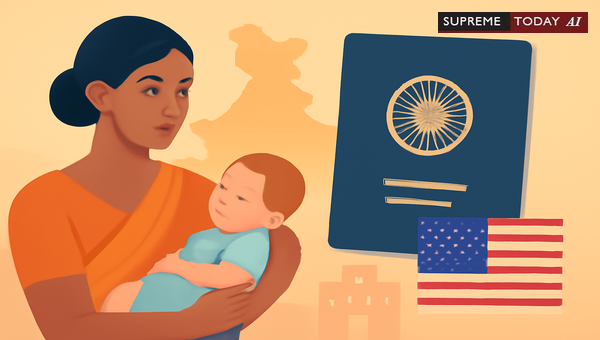
Indian Citizenship for Surrogate Child of US Parents
In the world of international surrogacy, one pressing question often arises: What is the citizenship for a child born in India to a surrogate mother of a US citizen father and mother? This scenario blends complex family law, immigration rules, and nationality statutes, creating uncertainty for intending parents. With India's evolving surrogacy regulations and the , understanding a child's rights is crucial. This post breaks down the legal framework, key precedents, and practical considerations—remember, this is general information, not personalized legal advice. Consult a qualified attorney for your specific case.
Legal Framework: in India
India's citizenship laws are governed primarily by the , particularly Section 3, which outlines . The rules have evolved over time:
- Before : A person born in India on or after , automatically became an Indian citizen if either parent was a citizen of India at the time of birth. 2022 0 Supreme(Ker) 305
- On or after : Citizenship is granted if both parents are Indian citizens, or one parent is an Indian citizen and the other is not an at the time of birth. 2022 0 Supreme(Ker) 143
These provisions apply regardless of the mode of birth, but surrogacy introduces layers of complexity regarding parentage. In surrogacy arrangements, the surrogate is the birth mother, while the genetic (biological) parents are typically the commissioning parents—here, US citizens.
Impact of Surrogacy on Parentage
Under Indian law, particularly post the (which bans ), the child's parentage is legally assigned to the intending parents via genetic link. However, for births before these restrictions, courts have examined biological ties. If both genetic parents are US citizens, the child born in India may not qualify for automatic Indian , as neither parent meets the Indian citizenship criterion. This aligns with post-1987 rules requiring at least one Indian citizen parent (non-). 2022 0 Supreme(Ker) 305
Yet, precedents emphasize flexibility when one biological parent holds Indian citizenship. Courts have held that a child born in India to an Indian citizen parent is entitled to Indian citizenship, regardless of the citizenship status of the other parent. This was reinforced in cases where the biological father was Indian, dismissing objections over a foreign mother. 2022 0 Supreme(Ker) 143 2022 0 Supreme(Ker) 305
Application to US Citizen Parents and Surrogate Births
Consider a child born in India to an Indian surrogate mother, with US citizen father and mother as genetic parents. Here's how the law typically applies:
- If the biological father is an Indian citizen: The child is entitled to Indian citizenship under Section 3(1)(c)(ii), as the child is born in India and one parent is an Indian citizen. The mother's US citizenship does not disqualify. 2022 0 Supreme(Ker) 305 2022 0 Supreme(Ker) 143
- If both genetic parents are US citizens: No automatic Indian citizenship, as neither is Indian. The child may acquire US citizenship by descent (if eligible under US law, e.g., ), but Indian authorities require birth registration and parental status proof for any claims.
From related precedents: The petitioner’s father is a citizen of India and her mother was not an at the time of her birth. This underscores the one-citizen-parent rule. 2024 0 Supreme(Bom) 887
Surrogacy cases highlight parentage proof. A child born via surrogacy to a US father and Indian surrogate may have complex citizenship implications, often requiring legal determination based on the parents' citizenships at the time of birth. Registration at an Indian consulate is key for overseas claims, but for India-born children of foreign parents, citizenship is barred if parents are non-citizens.
Relevant Case Law and Precedents
Indian courts have clarified these issues:
- In key rulings, objections based on a foreign mother were deemed legally unsustainable when the father was Indian. The child retains . 2022 0 Supreme(Ker) 305
- For foreign parents: A child born in India to a Nigerian father () was ineligible. Similarly, children of non-citizen mothers face hurdles if legitimacy or parentage is contested.
International parallels from other jurisdictions inform surrogacy:- Malaysian law: The biological father is a citizen of Malaysia while the biological mother is a citizen of Thailand. Illegitimate children follow the mother's citizenship.
TCK & ORS vs KETUA PENGARAH PENDAFTARAN NEGARA MALAYSIA & ORS - Kuala Lumpur
- Another: The child being an illegitimate childborn to a noncitizen mother, whose nationality is known, cannot be said to be one...CKM & ANOR vs PENDAFTAR KELAHIRAN DAN KEMATIAN & ORS - Kuala Lumpur
These echo India's focus on legitimate parentage and one Indian parent's status.
Additional Considerations from Surrogacy and Dual Nationality
- US Citizenship Angle: US-born children of citizens acquire , but India-born surrogacy kids may claim US citizenship via if parents meet transmission requirements. Cases note: The child was born in the US and is a citizen of the US by birth. India recognizes limitedly. 2021 3 Supreme 440
- Passport and Documentation: If eligible for Indian citizenship, apply for a passport emphasizing the father's status: The child is entitled to an Indian passport, as the is recognized irrespective of the mother’s citizenship status. 2022 0 Supreme(Ker) 305
- Post-Birth : If a parent renounces Indian citizenship post-birth, it may affect the child, but status at birth governs. 2023 0 Supreme(Kar) 186
Children of foreign parents in India generally do not auto-acquire citizenship unless parents qualify. Surrogacy demands DNA proof and agreements.
Key Points and Recommendations
- Citizenship Status: Typically Indian if biological father Indian; otherwise, follows genetic parents (US). 2022 0 Supreme(Ker) 143 2022 0 Supreme(Ker) 305
- Legal Precedent: Foreign parent citizenship doesn't disqualify if one is Indian. 2022 0 Supreme(Ker) 143
- Practical Steps:
- Confirm biological parents' citizenship at birth.
- Gather birth certificate, DNA tests, surrogacy agreement.
- Apply for Indian passport if eligible or US CRBA.
- Note: banned since 2021; altruistic only.
Conclusion and Key Takeaways
A child born in India to a surrogate mother with US citizen parents generally acquires citizenship based on genetic parents' status at birth. If the father is Indian, Indian citizenship applies; if both US, likely US by descent. Legal nuances in surrogacy demand expert review—courts protect child rights but prioritize statutory criteria.
Key Takeaways:- Review Section 3, .- One Indian parent (non-illegal) suffices post-1987.- Surrogacy requires parentage proof. 2022 0 Supreme(Ker) 305
This analysis draws from established precedents; always seek professional advice. For updates, monitor guidelines.
(Word count: 1028. Sources cited per legal document IDs provided.)
#IndianCitizenship #SurrogacyIndia #USParentsIndia















