



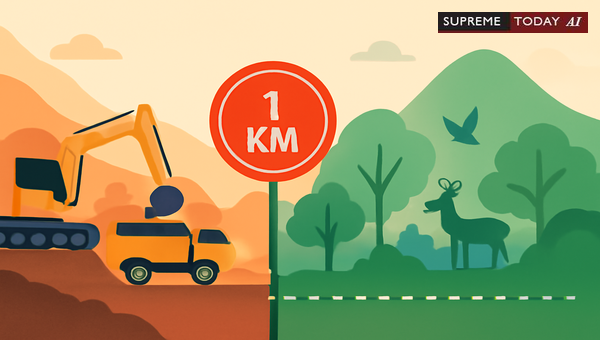
Mining Within 1km of Habitations: India's Legal Rules
Introduction
In India's rapidly developing landscape, mining activities play a crucial role in economic growth. However, they often clash with environmental conservation and human safety concerns, especially near human habitations. The pressing legal question arises: What is the impact of mining in human habitations? Particularly, can mining operations legally occur within one kilometer of villages, towns, or protected areas like national parks and wildlife sanctuaries?
Indian courts, particularly the , have addressed this through landmark orders emphasizing a . This blog post delves into the judicial stance, key principles, and practical implications, drawing from authoritative court documents. Note that this is general information based on precedents and not specific legal advice—consult a qualified lawyer for your situation.
Main Legal Finding
Under Indian jurisprudence, mining activities within one kilometer of habitations or protected areas face strict restrictions. Courts have consistently upheld a safety zone of at least 1 km from the boundaries of National Parks, Wildlife Sanctuaries, or habitations to safeguard environmental integrity and human health. Mining within this zone is typically prohibited unless explicitly permitted by law or specific judicial orders. 2013 0 Supreme(SC) 552 2024 0 Supreme(Kar) 287 2015 0 Supreme(J&K) 414
This principle stems from the recognition that proximity poses risks like dust pollution, noise, habitat disruption, and threats to wildlife corridors—such as elephant paths. For instance, in cases involving quarries near forests, courts have noted violations when sites are within 1 km of reserves. 2024 Supreme(Online)(NGT) 5368
Key Points from Judicial Orders
- Minimum : A 1 km buffer around protected areas and habitations where mining is generally not allowed. 2013 0 Supreme(SC) 552 2024 0 Supreme(Kar) 287 2015 0 Supreme(J&K) 414
- Specific Orders: The order in directed no mining within 1 km of protected areas. Similarly, the clarification reinforced that permits should not enable activity inside this zone. 2013 0 Supreme(SC) 552 2024 0 Supreme(Kar) 287
- Environmental Clearances Mandatory: Even without formal notifications, compliance with the , and , is required. 2013 0 Supreme(SC) 552 2015 0 Supreme(J&K) 414
- No Automatic Permission: Mere absence of a notified does not greenlight mining; legal scrutiny is essential. 2024 0 Supreme(Kar) 287 2015 0 Supreme(J&K) 414
- Fundamental Rights Link: Environmental protection ties to (right to life), making harmful activities unlawful without safeguards. 2015 0 Supreme(J&K) 414
These points underscore a , prioritizing habitation safety over resource extraction.
Detailed Analysis: Court Orders and Principles
on Buffer Zones
The has explicitly established a 1 km safety zone in multiple rulings. For example, the order stated that no mining should be permitted within 1 km of protected areas. 2024 0 Supreme(Kar) 287 The order added nuance: while no absolute ban exists beyond 1 km up to 10 km, activities within the inner zone demand rigorous oversight by bodies like the . 2024 0 Supreme(Kar) 287 2015 0 Supreme(J&K) 414
In , the Court emphasized habitat protection, noting risks near sanctuaries. 2013 0 Supreme(SC) 552
Environmental and Constitutional Framework
Key statutes reinforce these judicial directives:- : Requires prior clearance for mining near sensitive zones. 2013 0 Supreme(SC) 552 2015 0 Supreme(J&K) 414- : Prohibits disturbances to sanctuaries, including those within 1 km. 2024 0 Supreme(Kar) 287
Courts have linked this to , holding that environmental protection is a . Polluting activities near habitations violate this without clearances. 2015 0 Supreme(J&K) 414
Insights from Related Cases
Related judgments highlight the 1 km threshold's application:
In a quarry proposal case, the Tenda Reserve Forest and Kuldhia Wildlife Sanctuary were within 1 km of the site, on an elephant path, raising safety alarms near habitations. The nearest authorized human habitation was also perilously close. 2024 Supreme(Online)(NGT) 5368
A over mining near bridges clarified compliance: activities within 1 km upstream/downstream were halted, but leases weren't automatically canceled absent willful disobedience. This shows enforcement focuses on cessation within zones, not blanket revocations. 2021 0 Supreme(UK) 294
Other cases, though not directly on mining, define habitations stringently—e.g., requiring separation of at least 1 km from other settlements and populations over 300 for certain eligibilities, illustrating judicial consistency on distance metrics. 2018 0 Supreme(J&K) 495 2018 0 Supreme(J&K) 615 2018 0 Supreme(J&K) 129 2017 0 Supreme(J&K) 1017
These examples demonstrate courts' holistic view: 1 km serves as a practical, protective benchmark across contexts.
Exceptions and Counterarguments
- Claimed Exceptions: Respondents sometimes argue no formal eco-sensitive notification means mining is allowable within 1 km. 2024 0 Supreme(Kar) 287
- Court Rebuttal: Environmental laws and constitutional imperatives prevail; courts issue directives overriding such claims. Specific exemptions require statutory nods. 2013 0 Supreme(SC) 552 2015 0 Supreme(J&K) 414
While 10 km zones may allow mining post-assessment, the 1 km core remains sacrosanct absent explicit approval. 2015 7 Supreme 257 2025 0 Supreme(All) 33
Recommendations for Compliance
To navigate these rules:- Maintain Buffers: Ensure at least 1 km separation from habitations/protected areas in proposals. 2013 0 Supreme(SC) 552- Secure Clearances: Obtain environmental and wildlife approvals before operations. 2024 0 Supreme(Kar) 287- Enforce Vigilance: Authorities must monitor and halt violations; miners should conduct site audits. 2015 0 Supreme(J&K) 414- Community Engagement: Involve locals early to address habitation impacts.
Conclusion and Key Takeaways
Indian courts have firmly established that mining within 1 km of human habitations or protected areas is generally unlawful without special permissions, prioritizing ecological and human safety. This 1 km safety zone, rooted in orders like those from 2006, reflects a balance between development and sustainability. 2013 0 Supreme(SC) 552 2024 0 Supreme(Kar) 287 2015 0 Supreme(J&K) 414
Key Takeaways:- Prohibited unless cleared.- Ties to fundamental rights and statutes.- Enforcement via judicial oversight.
Stay compliant to avoid penalties—mining's future lies in responsible practices. For tailored advice, reach out to legal experts.
References
- 2013 0 Supreme(SC) 552: Safety zone orders around protected areas/habitations.
- 2024 0 Supreme(Kar) 287: No mining within 1 km; environmental compliance.
- 2015 0 Supreme(J&K) 414: Fundamental rights and clearances.
- 2015 7 Supreme 257: Buffer zone principles.
- 2025 0 Supreme(All) 33: Eco-sensitive notifications.
- 2024 Supreme(Online)(NGT) 5368: Quarry near forests/sanctuaries.
- 2021 0 Supreme(UK) 294: Bridge proximity compliance.







