


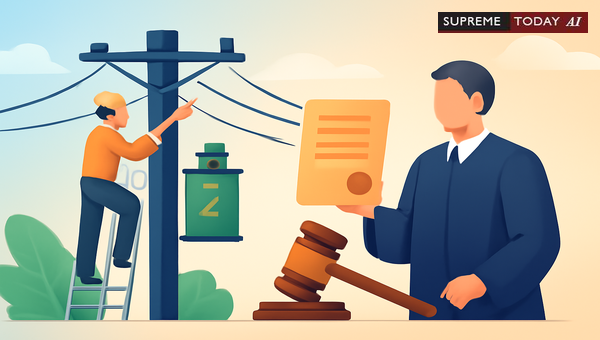
Can You Obtain an Injunction Against for Installing Poles or Transformers?
Imagine discovering that the local plans to erect a pole or transformer right in front of your home or business. It could block access, affect property value, or raise safety concerns. A common reaction is to seek a to halt the work. But is this legally feasible?
In this post, we dive into the legal question: against from Installing Electricity Pole. We'll examine the governing laws, key court precedents, and factors that influence outcomes. Note: This is general information based on judicial trends and not specific legal advice. Consult a qualified lawyer for your situation.
Legal Framework Governing Installations
Electricity boards in India operate under statutory powers that prioritize public utility. The grants them authority to lay down or place electric supply lines, including poles and transformers, in public streets without requiring consent from neighboring property owners1999 0 Supreme(Mad) 808.
Similarly, reinforces this by affirming no consent is needed for installations in public areas 1999 0 Supreme(Mad) 805. These provisions underscore that public streets are not private property, limiting challenges based solely on adjacency.
However, courts balance this with property rights. Under , District Magistrates handle disputes over illegal electrical works, often taking precedence over civil injunctions 2023 0 Supreme(Cal) 1631 2025 0 Supreme(Ker) 2024. Civil courts may restrain actions only if statutory limits are exceeded or clear harm is proven.
Common Claims and 's Defense
Property owners typically argue:- Hindered access (ingress/egress)- Diminished property value- Safety hazards, like fire risks or aesthetic impact
For instance, plaintiffs have claimed poles and transformers affect the utility and value of the property
. In one case, a suit was filed against , though dismissed on technical grounds.
Electricity boards counter with statutory rights. They assert no prior notice or consent is mandatory, as upheld in , where consent was deemed unnecessary for lines over private property 1999 0 Supreme(Mad) 808 2013 0 Supreme(Mad) 3989.
Court Findings: When Injunctions Fail
Courts have consistently upheld the board's right to install in public streets without consent, dismissing injunctions absent proven harm 1999 0 Supreme(Mad) 805 1999 0 Supreme(Mad) 808. Key reasons include:
No Demonstrated Harm: Mere apprehension isn't enough. Plaintiffs must show actual damage or interference. In one ruling, lack of evidence led to denial: mere apprehension of future harm is insufficient to grant an injunction2003 0 Supreme(Mad) 679.
Prevails: Transformers serve broader utility needs. Courts prioritize this over private concerns: outweighs private concerns2010 0 Supreme(Mad) 3614.
: Boards perform lawful acts necessary for public service2010 0 Supreme(Mad) 3614. No mandatory prior notice, per precedents 1999 0 Supreme(Mad) 808.
In O.S.No.45 of 1986, a suit for to remove poles for a transformer was challenged, highlighting boards' defenses 2009 0 Supreme(Mad) 3316.
Instances Where Courts Granted Relief
While success is rare for public street installations, injunctions or removal orders occur under specific circumstances, providing a balanced view:
Proven Impact on Private Property: Courts issued prohibitory/mandatory injunctions for transformers/poles on private property or causing clear harm, like safety near residences or temples 2023 0 Supreme(P&H) 1046 2023 0 Supreme(Ker) 764 2025 0 Supreme(Ker) 2024.
Encroachment or Safety: Directions for shifting followed site inspections, especially near sensitive areas 2024 Supreme(Online)(KER) 20949 2024 Supreme(Online)(Ker) 82352. One case noted: the poles installed by the defendant-respondents affect the utility and value of the property
.
Procedural Lapses: If boards ignore approvals or encroach, relief is possible. In Tamil Nadu, suits targeted Junior Engineers for unauthorized works 2024 Supreme(Online)(Mad) 47207. Another disputed transformer location outside premises 2015 0 Supreme(Jhk) 141.
Compensation or Shifting: Courts sometimes order relocation after costs, balancing rights [](https://supremetoday.ai/doc/judgement/INDMAD00000008000). A petitioner successfully argued for shifting without vendor consent 2014 0 Supreme(Mad) 1143.
These cases show injunctions may succeed if you prove illegality, harm, or private land involvement, often via local authority under Section 145.
Key Legal Principles from Precedents
Civil Court Limits: Jurisdiction barred if conflicting with Electricity Act authorities 2023 0 Supreme(Cal) 1631.
: Plaintiffs must demonstrate specifics beyond fears 2003 0 Supreme(Mad) 679.
Alternatives to Injunction: Pursue compensation for proven loss, as delays in installations have led to awards
. Or challenge via writs if arbitrary 2019 0 Supreme(Mad) 1155.
Full Bench decisions affirm: for lawful drawings 2013 0 Supreme(Mad) 3989.
Practical Recommendations
If facing pole/transformer installation:1. Gather Evidence: Photos, expert reports on harm/safety.2. File Promptly: Seek with strong .3. Explore Alternatives: Approach District Magistrate under Section 145, demand notice/inspection, or claim compensation.4. Check Location: Public street? Harder. Private/encroachment? Stronger grounds.
Advise focusing on specific harm not addressed in precedents 2010 0 Supreme(Mad) 3614. Compensation may be more viable than halt.
Conclusion and Key Takeaways
Generally, obtaining a against an for installing poles or transformers in public streets is unlikely without evidence of actual harm, as and dominate 1999 0 Supreme(Mad) 805 1999 0 Supreme(Mad) 808. Courts dismiss speculative claims, favoring utility needs.
Yet, successes exist where safety, encroachment, or procedural flaws are proven 2023 0 Supreme(P&H) 1046. Property owners should weigh injunctions against faster remedies like shifting or compensation.
Key Takeaways:- Statutory rights under prevail in public areas.- Prove tangible harm for relief.- often trumps private.- Consult professionals; outcomes vary by facts.
References:1999 0 Supreme(Mad) 805 1999 0 Supreme(Mad) 808 2003 0 Supreme(Mad) 679 2010 0 Supreme(Mad) 3614
2024 Supreme(Online)(Mad) 47207 2019 0 Supreme(Mad) 1155 2015 0 Supreme(Jhk) 141 2014 0 Supreme(Mad) 1143 2013 0 Supreme(Mad) 3989 2009 0 Supreme(Mad) 3316 2023 0 Supreme(P&H) 1046 2023 0 Supreme(Cal) 1631 2023 0 Supreme(Ker) 764 2025 0 Supreme(Ker) 2024 2024 Supreme(Online)(KER) 20949 2024 Supreme(Online)(Ker) 82352 [](https://supremetoday.ai/doc/judgement/INDMAD00000008000)
This post is for informational purposes only. Laws evolve; seek tailored advice.
#ElectricityBoard #InjunctionLaw #PropertyRights


![THE DIVISIONAL ENGINEER vs R.DHARMICHAND KOTHARI [DIED] - 2024 Supreme(Online)(MAD) 7097](https://supremetoday-s3.b-cdn.net/Madras_small_1.png)












