


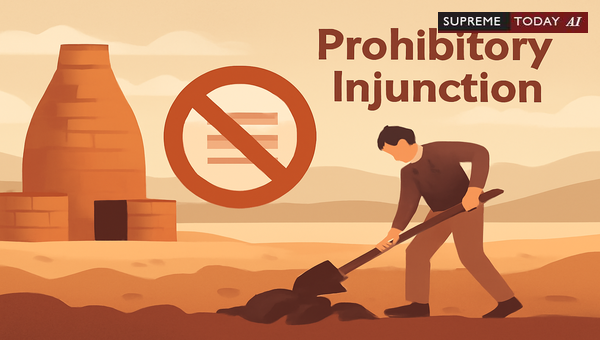
Injunction Against Neighbor's Brick Kiln Land Excavation: Legal Guide
In today's real estate landscape, disputes over land use are common, especially when neighboring properties are involved in industrial activities like brick kiln operations. Imagine discovering deep excavations on your land caused by a neighbor's brick kiln business—pits 15 meters long, 6 meters wide, and 15 feet deep, damaging soil worth lakhs of rupees. This scenario raises critical questions: Can you stop further excavation? Can you force restoration? The legal question at hand is: Draft of Suit for from Excavating Property and for Filling the Excavation with Soil.
This blog explores the legal framework, key court precedents, and practical steps for obtaining such relief. While this provides general insights, consult a qualified lawyer for advice tailored to your situation.
The Growing Problem of Illegal Brick Kiln Excavations
Brick kilns often require substantial soil excavation for raw materials like red soil or ordinary earth. However, when this spills onto adjacent properties without permission, it constitutes and potential environmental harm. One case highlights a fifth respondent in the brick kiln business who tried to into the Petitioner's land and quarried red soil and excavated pits of 15 metres length 6 meters wide and 15 feet depth worth about Rs.25 lakhs. 2022 Supreme(Online)(MAD) 38268 The photographs showed extensive damage, prompting prayers for injunctive relief.
Similar issues plague regions like Rajasthan and Uttar Pradesh, where kilns operate without permits for soil excavation, leading to show cause notices under rules like the . 2024 Supreme(Online)(NGT) 1047 2024 Supreme(Online)(NGT) 4278 2024 Supreme(Online)(NGT) 3592 These operations flout environmental norms, cause soil erosion, and violate land use laws, often involving collusion between kiln owners and local authorities.
Legal Basis for
A restrains a party from continuing wrongful acts, such as excavating your property. Under the , courts grant this when there's a clear threat of , , and in your favor.
Key to many disputes is the status of ordinary earth used in brick-making. A landmark ruling clarified that ordinary earth is not a under the , and . 1968 0 Supreme(Cal) 172 Rules imposing royalties or permits on it were declared (beyond legal authority). The court struck them down, issuing writs restraining authorities from enforcing royalties or criminal proceedings related to such excavation for brick-making. 1968 0 Supreme(Cal) 172
However, this ruling protects lawful excavation on one's own land—it does not authorize . If a neighbor excavates your property without consent, you have a strong case for injunction, as seen in petitions alleging illegal quarrying and . 2022 Supreme(Online)(MAD) 38268 Courts have restrained unauthorized operations pending compliance checks. 2025 Supreme(Online)(P&H) 6180 2024 Supreme(Online)(PH) 2917
Key Legal Principles:
- and : Unauthorized entry and excavation violate property rights under .
- Irreparable Injury: Deep pits cause permanent soil loss and devaluation, not compensable by damages alone.
- Environmental Angle: Lack of consents for establishment, operation, or soil excavation strengthens your plea. 2024 Supreme(Online)(NGT) 1047
: Restoring the Land
Beyond stopping the act, a compels positive action—like filling excavations with soil. Courts issue this cautiously but do so when (pre-violation state) can be restored without undue hardship.
In brick kiln cases, petitioners successfully sought orders to backfill pits after proving -induced damage. 2022 Supreme(Online)(MAD) 38268 Supporting evidence like photographs, soil reports, and valuation estimates (e.g., Rs.25 lakhs loss) bolsters claims. Courts emphasize soil conservation and reclamation, prohibiting topsoil removal without approval. 2025 Supreme(Online)(NGT) 214
The ruling aids indirectly: Since ordinary earth isn't regulable as a , kiln operators can't claim legal right to excavate anywhere, especially not on private land without permission. Authorities are restrained from aiding invalid enforcement, shifting focus to civil remedies against trespassers. 1968 0 Supreme(Cal) 172
Drafting the Suit: Essential Elements
To draft a suit in civil court (or writ petition in for urgent relief):
- Parties: Plaintiff (landowner) vs. Defendants (kiln owner, trespassers).
- Facts: Detail , excavation extent, damage (use photos, surveys).
- Cause of Action: , , violation of property rights.
- Reliefs Prayed:
- against further excavation.
- to fill pits and restore land.
- Damages for loss.
- Affidavit and Evidence: Annex site plans, photos, expert valuations.
Interim relief via can be sought if urgency exists. Reference precedents like restraints on illegal kilns for lacking STP () for excavation. 2024 Supreme(Online)(NGT) 4278
Checklist for Strong Case:
- Prove ownership/title deeds.
- Document violation (photos, witnesses). 2022 Supreme(Online)(MAD) 38268
- Show no permits for adjacent land use.
- Highlight environmental risks like erosion. 2025 Supreme(Online)(NGT) 214
Broader Context: Regulatory Violations and Court Trends
Brick kilns frequently face scrutiny for:- Illegal Operations: No environmental clearance, mining permits, or land conversion. Inspections reveal unpermitted brick earth use. 2024 Supreme(Online)(NGT) 1047 2024 Supreme(Online)(NGT) 3592- Fuel and Emissions: Open storage of wood/residues violates norms.- Collusion: Opposite parties collude with kiln owners, flouting court orders.
Courts cancel licenses or issue injunctions upon proof. 2025 Supreme(Online)(Mad) 58234 2025 Supreme(Online)(MP) 8543 This context supports your suit, as regulators may join or provide evidence.
The ordinary earth judgment reinforces: Kilns can't invoke laws for ordinary earth, making unauthorized digs purely civil wrongs. 1968 0 Supreme(Cal) 172
Conclusion and Key Takeaways
Facing a neighbor's brick kiln excavation? Swift action via prohibitory and mandatory injunctions can protect your property. Courts recognize the harm from trespassory digging, especially with regulations invalidating overreach on ordinary earth. 1968 0 Supreme(Cal) 172 2022 Supreme(Online)(MAD) 38268
Key Takeaways:- Act Fast: File for interim injunction to halt damage.- Gather Evidence: Photos, surveys prove extent (e.g., 15m x 6m x 15ft pits). 2022 Supreme(Online)(MAD) 38268- Leverage Precedents: Cite invalid rules and cases for success.- Holistic Approach: Address environmental violations for stronger relief. 2024 Supreme(Online)(NGT) 1047
This is general information based on reported cases—outcomes vary. Engage a local advocate to draft your suit and navigate jurisdiction.
References
- 1968 0 Supreme(Cal) 172: Ordinary earth not ; rules .
- 2022 Supreme(Online)(MAD) 38268: and excavation by brick kiln respondent.
- 2024 Supreme(Online)(NGT) 1047, 2024 Supreme(Online)(NGT) 4278, etc.: Illegal kiln operations.












