


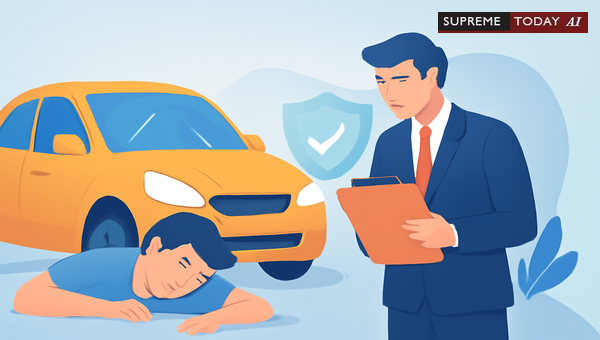
Insurance Defenses in Student Accident Death Claims
The tragic loss of a young life, especially a promising medical student, in a motor vehicle accident can leave families devastated and seeking justice through . But what happens when the insurance company pushes back? The question arises: Death of Medical Student Compensation by the Insurance Company – can insurers deny or limit payouts? In India, governed primarily by the , insurance companies often mount robust defenses based on policy terms, driver conduct, and evidentiary gaps. This post delves into these strategies, drawing from legal precedents to help claimants and insurers understand the landscape.
While families grapple with grief, insurers scrutinize every detail to determine . Understanding these defenses empowers better navigation of claims processes. Note: This is general information, not legal advice. Consult a qualified lawyer for case-specific guidance.
Overview of Insurance in Student Death Cases
Under , insurers must compensate for accidents caused by insured vehicles, but exceptions apply. In student death cases – whether the student was driving, riding, or a passenger – insurers frequently argue that absolve them of direct . These defenses hinge on facts like licensing, vehicle use, and causation.
Key defenses include:
1. of the Deceased Driver
A primary shield for insurers is the deceased student's own , especially if they lacked a valid driving license. Section 149(2)(a)(ii) allows denial if the driver was unlicensed. For instance, if a medical student was riding a two-wheeler without a license, the insurer may claim the accident stemmed from this violation. The insurance company may argue that the accident was caused by the negligent actions of the deceased, particularly if the deceased was operating a vehicle without a valid driving license or was underage. For instance, if the deceased was riding a two-wheeler and did not possess a valid license, this could absolve the insurance company of under 2020 0 Supreme(Mad) 1306.
Courts emphasize the insurer's burden to prove such occurred with the . The courts one after another have held that the burden of proving availability of defence is on Insurance Company and Insurance Company has not only to lead evidence as to breach of condition of policy or violation of provisions of Section 149(2) but has to prove also that such act happens with the connivance or knowledge of the owner 2021 0 Supreme(Guj) 995 2018 0 Supreme(Guj) 1224 2018 0 Supreme(Guj) 918. Without this, persists.
2. Involvement of a Minor
If the student was underage, insurers argue inexperience and lack of legal permission to drive. This was pivotal in cases where minors rode two-wheelers unlicensed, attributing the crash to their unauthorized operation. If the deceased was a minor at the time of the accident, the insurance company could argue that the minor was not legally permitted to operate the vehicle involved in the accident. This defense was noted in a case where the rider of a two-wheeler was a minor without a valid license, leading to the assertion that the accident was due to the minor's inexperience and lack of authorization 2015 0 Supreme(Kar) 1358.
The insurer must independently prove the accident's manner and driver's identity. If the defence of the insurance company is that the accident occurred in a particular manner or the vehicle in question was being driven by a particular person, they would have to independently prove this fact
NATIONAL INSURANCE COMPANYY LTD, Vs SMT.ZULEKHABI
.3. Non-Coverage Under the Policy
Policies cover specific risks; deviations void claims. A student as an unauthorized passenger in a goods vehicle often falls outside scope. The insurance company may contend that the deceased was not covered under the insurance policy. For example, if the deceased was a passenger in a goods vehicle and not an authorized person under the policy, the insurer could argue that they are not liable for compensation 2013 0 Supreme(Bom) 1957.
Even for private vehicles, occupant coverage isn't absolute; insurers may seek recovery from owners post-payout. Liberty exists for insurers to challenge policy scope later 2018 0 Supreme(Guj) 918.
4. Influence of Alcohol or Substances
Evidence of intoxication shifts blame. If there is evidence suggesting that the deceased was under the influence of alcohol at the time of the accident, the insurance company could argue that this contributed to the accident, thereby reducing or negating 2020 0 Supreme(Mad) 1447. Insurers must substantiate via reports.
5. Lack of Evidence or Nexus to Accident
Claimants bear the initial burden, but insurers counter with insufficient proof of insured's or accident-death link. The insurance company can also assert that the claimants have failed to provide sufficient evidence to support their claims of against the insured party... Without concrete evidence linking the accident to the insured's , the insurer may argue for dismissal of the claim 2015 0 Supreme(Kar) 1358.
Courts demand a '' between accident injuries and death. In one case, pre-existing conditions diluted the link: The court ruled that a claimant must establish a between the accident and the death to be entitled to compensation... The court found that the deceased's contributed to his death, and the petitioner failed to establish a direct link between the accident and the cause of death 2024 0 Supreme(Kar) 499. Compensation was reduced accordingly.
Additional Factors: and Compensation Assessment
For students like medical aspirants, courts assess '' considering future prospects. Insurers challenge high estimates: The leaned counsel for the appellant/Insurance Company objected... that the was fixed... for a medical student, whereas the same cannot be applied to this case where the deceased pursued Engineering course 2021 0 Supreme(Mad) 3628. Proper evaluation is key, treating professional degree holders equitably 2021 0 Supreme(Mad) 3628.
Benefits like pensions aren't deducted: The deduction made from the deceased's salary on the ground of receiving family pension was unjustified 2015 0 Supreme(Tri) 205. Compensation must be 'just,' balancing 2021 0 Supreme(Guj) 995.
Recommendations for Stakeholders
- For Insurers: Gather police reports, witness statements, license records, and toxicology early. Assess policy terms meticulously 2020 0 Supreme(Mad) 1306.
- For Claimants: Prove dependency, nexus, and counter defenses with evidence. Previous dismissals don't bar new claims if causes differ 2024 0 Supreme(Kar) 499.
- General: Review for fair compensation principles 2024 0 Supreme(Kar) 499 2015 0 Supreme(Tri) 205.
Conclusion and Key Takeaways
Insurance companies have viable defenses in student death claims – from unlicensed driving and minor status to evidentiary shortfalls – but must prove them rigorously under the Motor Vehicles Act. Cases like those cited show courts balancing claimant rights with insurer protections, often requiring nexus proof and fair assessments.
Key Takeaways:- Insurers' success depends on owner's connivance proof 2021 0 Supreme(Guj) 995.- Students' future prospects warrant careful calculation 2021 0 Supreme(Mad) 3628.- Always establish accident-death nexus 2024 0 Supreme(Kar) 499.
Tragedies demand empathy, yet legal precision. For personalized advice, engage legal experts promptly.
#MotorAccidentClaims #InsuranceDefense #StudentCompensation















