


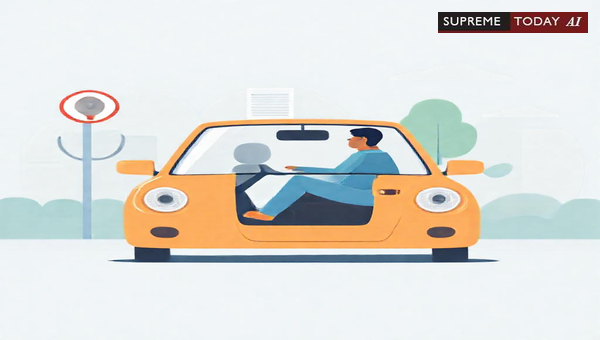
When an Insurance Company Must Pay for an Occupant Injured in a Private Car
One of the most frequently litigated questions in motor accident claims is whether the insurance company's liability towards an occupant inside a private car is limited. A passenger seated in a car at the time of a crash often assumes the insurer will compensate them automatically. The reality is more nuanced: liability depends almost entirely on the type of policy issued and the specific wording of its indemnity clause.
The Core Distinction: vs Comprehensive/Package Policy
Indian courts, including the Supreme Court in , have drawn a clear line between two categories of motor insurance:
- (statutory/): This covers only the minimum third-party risk mandated by statute. An occupant of a private car is generally not treated as a third party under such a policy, so the insurer is typically not liable for the occupant's death or injury 2012 8 Supreme 32 and 2026 Supreme(Online)(Mad) 87922.
- : Where the indemnity clause uses words like any person or covers , the insurer's liability extends to occupants, including gratuitous passengers travelling without payment 2002 1 Supreme 170 and 2009 0 Supreme(SC) 959.
As the Supreme Court clarified, the earlier pronouncements were rendered in respect of the 'Act Policy' which admittedly cannot cover a of an occupant in a car. But, if the policy is a 'Comprehensive/Package Policy', the liability would be covered 2017 0 Supreme(SC) 1757.
Why Occupants Fall Outside Statutory Cover
(corresponding to ) prescribes the minimum third-party risk a policy must cover. That statutory requirement does not extend to passengers in a private car who are not carried for hire or reward 2002 1 Supreme 170. Courts have consistently held:
- An occupant or inmate of a private car is not a third party vis-à-vis the insurer under an Act policy 2021 0 Supreme(J&K) 532.
- Unless additional premium is paid to cover occupants, the insurance company is not liable to indemnify the occupants of the private vehicle under an 2026 0 Supreme(Mad) 325.
- The same reasoning applies to pillion riders on two-wheelers: a statutory policy does not cover a gratuitous pillion rider unless the requisite premium has been paid 2006 3 Supreme 332 and 2008 4 Supreme 329.
In one typical case, the tribunal awarded compensation to the family of a deceased occupant, but the appellate court set aside the insurer's liability because the policy was an Act policy and no premium had been paid for occupant risk — the owner alone remained liable 2014 0 Supreme(Mad) 4347 and 2024 Supreme(Online)(HP) 822.
The Role of Premium and the Circulars
The premium trail is often decisive. If the policy schedule shows only basic third-party premium and no separate premium for occupant cover, insurers are generally exonerated 2021 0 Supreme(HP) 37 and 2024 0 Supreme(Raj) 813.
However, the regulatory position strengthens claimants under package policies. The () has mandated that insurers issuing a Private Car Package Policy cover the liability towards occupants of the private vehicle 2026 Supreme(Online)(MP) 37221. A circular dating back to 1978 also deemed occupant cover — for occupants not carried for hire or reward — to be automatically incorporated into private car package policies 2018 0 Supreme(Guj) 1224.
Notably, some courts have held that once the mandate applies, an insurer cannot rely on a policy term limiting occupant liability: under the Comprehensive/Package Policy, the Insurance Company will be bound to pay compensation in respect of the liability towards an occupant in a car even if there is any term in policy limiting liability of Insurance Company 2014 0 Supreme(Gau) 670.
Limits on Expanding or Unlimited Liability
Even under a comprehensive policy, coverage is not automatically unlimited. Courts have cautioned that:
- Insurer liability is strictly governed by the and cannot be rewritten 2002 1 Supreme 170.
- In the absence of such a term or clause in the policy, pursuant to the , a cannot be expanded to make it unlimited or higher 2002 1 Supreme 170 and 2025 4 Supreme 503.
- Where the policy schedule specifies a limited risk amount and no higher premium was paid for unlimited liability, the insurer may be liable only up to that limit 2026 Supreme(Online)(MP) 37221.
The Swaran Singh decision, (2004) 3 SCC 297, cannot be used to impose liability on an insurer for a non-third-party occupant where the policy itself does not cover that risk 2007 3 Supreme 136.
Practical Steps for Claimants and Vehicle Owners
To determine whether an insurer must compensate an injured occupant:
- Identify the policy type — Act only/Liability only, or comprehensive/package.
- Read the indemnity clause — look for terms like any person or occupants carried in the vehicle.
- Check the premium schedule — confirm whether additional premium was paid for occupant cover.
- Verify the burden of proof — the claimant generally bears the onus of establishing that the policy is a package policy rather than a bare statutory policy 2007 3 Supreme 136.
- Consider circulars — these may support occupant coverage under package policies even against contrary policy terms 2014 0 Supreme(Gau) 670.
Key Takeaways
- Under an Act only or , an insurance company's liability towards an occupant in a private car is limited — in practice, usually nil, because occupants are not statutory third parties.
- Under a comprehensive/package policy with appropriate wording or premium, the insurer must indemnify occupants, including gratuitous passengers.
- Liability can never be expanded beyond the contract without a specific clause; conversely, regulatory mandates may prevent insurers from narrowing occupant cover in package policies.
- Owners should ensure occupant coverage is explicitly priced into their private car policy, since the difference can determine who ultimately pays compensation.
The precise outcome in any claim will depend on the policy documents, premium receipts, and applicable circulars, and this article is general information rather than advice on any specific case.
#MotorAccidentClaims #InsuranceLaw #PrivateCarPolicy #MotorVehiclesAct #ThirdPartyInsurance









