


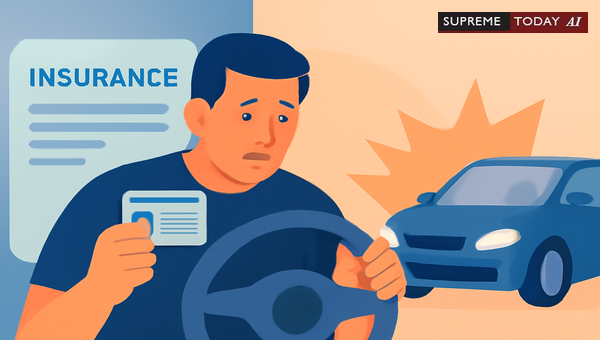
Insurance Liable? Khalasi Driving Without License
In the bustling world of commercial vehicles in India, accidents are unfortunately common. Imagine a scenario: a truck crashes, and the driver turns out to be the khalasi—a vehicle helper—who lacks a valid driving license. The question arises: Khalasi Driving Vehicle Without Licence Insurance Company Not Liable? This is a critical issue for truck owners, insurers, and claimants alike. Under the , and numerous court rulings, the answer is often yes—the insurance company is typically not liable. But let's dive deeper into the legal nuances, key principles, case laws, and practical advice.
This post breaks down the legal framework, supported by precedents and statutory provisions. Note: This is general information based on established cases and should not be considered specific legal advice. Consult a qualified lawyer for your situation.
Understanding the Core Issue: Khalasi and Driving Licenses
A 'khalasi' is typically a helper on heavy vehicles like trucks or tippers, assisting the main driver. Insurance policies for commercial vehicles usually cover only named drivers or those with specific endorsements. If the khalasi takes the wheel without a valid license, it triggers a .
The , mandates a valid driving license for operating any motor vehicle (). Breaching this absolves the insurer from liability in most cases. Courts have consistently held that insurance companies are not obligated to pay compensation if the driver lacks proper authorization or licensing. This principle protects insurers from risks associated with unqualified drivers.
Key Legal Principles on Insurance Liability
1. No Valid License Means No Insurer Liability
An insurance company is generally not liable if the driver lacks a valid driving license at the time of the accident. This is a cornerstone under the , reinforced by rulings such as: 1999 0 Supreme(Ori) 221 2002 0 Supreme(MP) 745 1999 0 Supreme(HP) 112.
For khalasis specifically, policies cover only designated drivers. If the khalasi isn't listed, the insurer escapes liability: 2010 0 Supreme(Pat) 1210.
2.
Driving without a license constitutes a . Courts emphasize: If the driver (or any person operating the vehicle) does not have a valid driving license, this constitutes a breach of the insurance policy conditions, absolving the insurance company from liability 1996 0 Supreme(MP) 26 2003 0 Supreme(All) 1601.
From additional precedents:- Since the vehicle was duly insured with the appellant-Insurance or the person driving the vehicle did not have a valid driving licence.
- the insurance company cannot be held liable for the payment of the award... considering... the driving licence of bus driver 2023 0 Supreme(Raj) 414- The insurance company is entitled to take a defence that the offending vehicle was driven by an unauthorised person or the person driving the vehicle did not have a valid driving licence. 2024 0 Supreme(Jhk) 786
These cases underscore that unlicensed driving voids coverage.
3. on the Insurer
Importantly, the insurance company must prove the lack of a valid license. If they fail, liability may persist. For instance: When the Insurance Company came with a specific defence of valid driving licence, burden is on the Insurance Company to prove the same. Admittedly, the Insurance Company has not adduced any evidence... 2023 0 Supreme(Bom) 805.
However, when proven—as in many khalasi cases—insurers win exoneration: the driver of the vehicle did not possess valid driving licence at the time of accident 2025 0 Supreme(Kar) 929.
Landmark Case Laws
: The court held that the absence of a valid driving license for the driver leads to the insurance company being exempt from liability
.
: Emphasized the insurer's need to prove breach: 2014 0 Supreme(Guj) 986.
Other supporting judgments:- The driver has no valid driving licence to drive transport vehicle and owner has committed breach of policy and as such appellant-Insurance Company is not liable to pay compensation. 2022 0 Supreme(All) 317- As such, the driver of the vehicle did not possess the valid driving licence to drive the offending vehicle and insurance company is not liable to pay any compensation to the claimants. 2023 Supreme(Online)(Gau) 7454- The owner has allowed a person to drive the vehicle without valid driving licence, thereby, he has violated the terms and conditions of the policy... the Insurance Company can avoid its liability. 2024 0 Supreme(Kar) 2
These rulings align with Supreme Court precedents like National Insurance Co. Ltd. v. Swaran Singh, stressing owner knowledge of licensing status.
When Might Insurance Still Be Liable?
Exceptions are rare but possible:- If the insurer fails to prove the breach (e.g., no evidence of invalid license) 2023 0 Supreme(Bom) 805.- Owner lacked knowledge of invalid license: if the owner of the vehicle knowingly permits any driver... who has no valid driving licence then the Insurance Company is not liable, but if he was under impression... then the Insurance Company will be liable 2013 0 Supreme(All) 316.- Mere allegation without proof doesn't suffice: Mere finding that driver of the vehicle was not having valid licence will not absolve the insurance company from its liability 2010 0 Supreme(MP) 1088.
In khalasi scenarios, courts scrutinize and vehicle authorization.
Practical Recommendations for Vehicle Owners and Insurers
To avoid disputes:- Verify Licenses: Ensure all drivers, including khalasis, hold valid licenses matching vehicle class (LMV, HMV, etc.).- Policy Review: Confirm coverage includes helpers if needed. Add endorsements explicitly.- Documentation: Maintain license copies, fitness certificates, and permits.- For Claimants: Challenge insurer defenses with evidence of valid licensing.- For Insurers: Gather robust proof ( records, witness statements) early.
The Tribunal... has stated... holding the valid and effective driving license is one of the conditions in the contract of the Insurance Policy 2025 0 Supreme(Guj) 1722. Compliance is key.
Conclusion and Key Takeaways
In summary, when a khalasi drives without a license, the insurance company is typically not liable due to policy breaches under the Motor Vehicles Act. Courts prioritize licensing as a non-negotiable condition, as seen in cases like 2010 0 Supreme(Pat) 1210 1999 0 Supreme(Ori) 221 2002 0 Supreme(MP) 745 1999 0 Supreme(HP) 112
2014 0 Supreme(Guj) 986 1996 0 Supreme(MP) 26 2003 0 Supreme(All) 1601.
Key Takeaways:- Unlicensed driving = insurer exoneration (generally).- Burden on insurer to prove invalid license.- Owners: License all personnel; review policies.- Prevention beats litigation.
Stay compliant to safeguard against accidents' financial fallout. For tailored advice, reach out to a legal expert.
Word count: 1028. References integrated from provided sources.
#KhalasiInsurance #UnlicensedDriver #MotorClaims















