Searching Case Laws & Precedent on Legal Query.....!
Analysing the retrieved Case Laws
Scanned Judgements…!



Searching Case Laws & Precedent on Legal Query.....!
Analysing the retrieved Case Laws
Scanned Judgements…!
Higher Obligation of Husband - The Supreme Court (2015) in SCC 705 reaffirmed that the husband's obligation for maintenance is on a higher pedestal than that of the wife, emphasizing the importance of interim maintenance orders in family disputes (2024 0 Supreme(P&H) 1193).
Interim Maintenance as a Provisional Step - Orders for interim maintenance are inherently provisional, pending final adjudication. Such orders are subject to final determination and are meant to provide temporary relief to the claimant (2024 0 Supreme(P&H) 1193, 2024 0 Supreme(P&H) 1288).
Mandatory Disclosure of Assets - Parties involved in maintenance proceedings are required to file affidavits disclosing assets and liabilities, ensuring transparency and aiding the court's decision-making process (2024 0 Supreme(P&H) 1193, 2024 0 Supreme(P&H) 1288).
Legal Basis and Scope - Courts have the authority to grant interim maintenance under statutory provisions like Section 125 Cr.P.C. and Family Court Acts, including ex-parte and ad-interim maintenance in exceptional cases, based on the facts presented (2024 0 Supreme(P&H) 519).
Interim Maintenance in Practice - Courts have emphasized that interim maintenance orders are not final and are subject to final adjudication. Delays or disputes in enforcement can undermine the legislation's purpose, highlighting the need for prompt and clear interim relief (2024 0 Supreme(P&H) 1288, 2024 0 Supreme(All) 1371).
Interim Orders and Appealability - While interim orders are generally not appealable as judgments, specific provisions under Acts like the DV Act and procedural rules permit appeals or revisions against such orders, especially when procedural errors occur (2023 0 Supreme(P&H) 339, 2023 Supreme(SRI)(CA) 808).
Interim Maintenance and Effectiveness - Courts are expected to decide on interim maintenance swiftly, especially in cases where continued delay defeats the legislation's objectives. Orders are generally prospective unless explicitly stated otherwise (2025 Supreme(SRI)(CA) 413).
Interim Orders in Disciplinary and Other Proceedings - Courts have also issued interim orders in non-family law contexts, such as disciplinary proceedings, indicating the broad applicability of interim relief mechanisms (2023 Supreme(SRI)(CA) 808).
Interim maintenance is a crucial provisional measure aimed at providing immediate financial support pending final judgment. Courts are empowered to grant such relief swiftly, often ex-parte, with the requirement of transparency through asset disclosures. These orders are inherently temporary, subject to final adjudication, and generally prospective unless explicitly ordered otherwise. The legal framework recognizes the importance of interim maintenance in ensuring justice and preventing hardship, but emphasizes the need for prompt decision-making to uphold legislative intent. Appeals against interim orders are limited but permitted under specific statutes, and procedural safeguards are in place to prevent misuse or delay (2024 0 Supreme(P&H) 1193, 2024 0 Supreme(P&H) 1288, 2024 0 Supreme(P&H) 519).
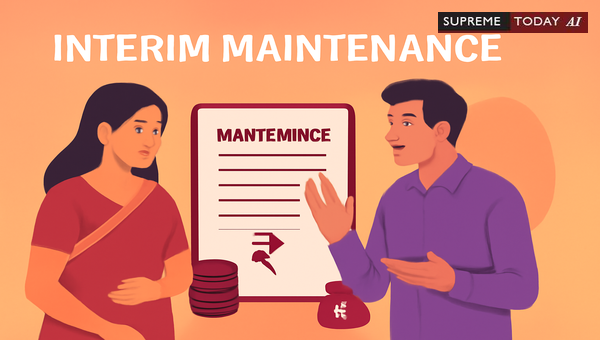
In family law disputes, particularly those involving divorce or separation, securing financial stability during ongoing litigation is crucial. One common query arises: What is the judgement on ? This question often comes from spouses or guardians seeking immediate support for themselves or minor children while courts deliberate final outcomes. serves as a provisional lifeline, preventing hardship amid prolonged proceedings.
This blog post delves into the legal principles governing in the Indian judiciary, drawing from established case laws and related precedents. We'll cover its nature, judicial considerations, key judgments, conditions, and practical insights. Note: This is general information based on judicial trends and is not specific legal advice. Consult a qualified lawyer for your situation.
is a temporary financial order granted by courts to provide support to a spouse or minor child during the under laws like , or . Its primary goal is to maintain the applicant's standard of living and meet immediate needs without prejudging final rights.
Courts emphasize that is granted to ensure that a party, usually a spouse or minor child, is provided with financial support during the pendency of a legal proceeding, such as divorce or maintenance claims. This principle ensures equity, as delays in family cases can exacerbate financial distress.
Relatedly, under , courts may issue for the interim protection of a minor's person and property, which often intersects with maintenance claims for child support. 2025 0 Supreme(Guj) 1292
Indian courts adopt a balanced, case-specific approach. Key factors include:- Financial position of both parties: Income, assets, and liabilities of the respondent.- Applicant's needs: Reasonable expenses for housing, food, education (for children), and medical care.- Standard of living: Pre-litigation lifestyle to avoid undue hardship.- Conduct and circumstances: Though not punitive, relevant if claims appear frivolous.
Courts consider the financial position of the parties, the needs of the applicant, and the standard of living while deciding . This discretionary power allows flexibility, prioritizing justice without causing prejudice. 1964 0 Supreme(SC) 119
The has stressed that interim relief, including maintenance, should be granted considering the circumstances of each case, balancing the interests of both parties, and ensuring that justice is served without prejudice.
Several judgments underscore these principles:
Shah, J. Case: This ruling highlights the need for timely and fair adjudication of claims, where interim orders should not adversely affect the administration of justice or cause undue hardship. 2003 3 Supreme 449
Precedents: Emphasizing provisional nature, courts view as non-final, adjustable upon final decree. The focus remains on demonstrated need and payer's capacity.
In family court contexts, appeals against under the Guardians and Wards Act or Hindu Marriage Act are limited. The established precedent confirms appeals do not lie against under Section 12 of the Guardians and Wards Act. A reference to a larger bench requires conflicting decisions, not mere precedent creation. 2025 0 Supreme(Guj) 1292
is inherently provisional:1. Not a final determination: It supports during proceedings but can be modified or vacated.2. Amount determination: Based on applicant's needs and respondent's ability. Courts exercise discretion rooted in fairness and equity.3. Procedural adherence: Claims must include affidavits of income/expenses; non-compliance may lead to rejection.
The amount awarded depends on the applicant’s needs and the respondent’s ability to pay, and courts have discretion based on the facts of each case.
Interim orders are typically prospective unless specified otherwise. In one clarification, the general rule regarding interim orders is that they are typically prospective, requiring the party asserting otherwise to prove retrospection. 2025 Supreme(SRI)(CA) 413
Courts may deny or limit if:- The claim is .- Respondent proves genuine inability to pay, backed by evidence.- Applicant suppresses facts or has independent means.
Courts may refuse if the applicant’s claim is found to be frivolous or if the respondent demonstrates inability to pay. An application for can be challenged if it is made mala fide or without proper grounds.
In disciplinary or administrative contexts, interim stays are scrutinized similarly— cases must show merit. For instance, directions granting liberty for proceedings were held not to constitute a 'judgment' amenable to special appeal if purely processual. 2023 0 Supreme(All) 59
While focused on maintenance, parallels exist in other interim orders:- Guardianship Matters: Courts protect minors via interim custody/maintenance without finality on appeals. 2025 0 Supreme(Guj) 1292- Employment/Regularization: Directions for expeditious decisions align with urgency in maintenance claims. 2014 0 Supreme(MP) 1167- Construction/Contempt: Violation of interim invites strict enforcement, reminding parties to comply faithfully. 2003 0 Supreme(J&K) 250 2003 0 Supreme(J&K) 214
These reinforce that interim relief demands good faith; breaches erode credibility in maintenance disputes.
Courts in India generally favor to prevent hardship during litigation, provided the applicant demonstrates genuine need and the respondent’s capacity to pay. 1964 0 Supreme(SC) 119 2003 3 Supreme 449
Practical Tips:- Substantiate claims: File detailed financial affidavits early.- Highlight urgency: Emphasize child welfare or immediate needs.- Prepare for challenges: Anticipate respondent's counter-evidence on capacity.- Seek timely hearings: Leverage ' fast-track provisions.
Key Takeaway: The legal framework positions as a protective measure, with courts exercising discretion to balance equities. The legal framework supports as a protective measure during ongoing proceedings, with the court exercising discretion based on the circumstances of each case, ensuring that justice is balanced with fairness. Always approach with transparency to secure favorable relief.
For personalized guidance, consult a family law expert. Stay informed on evolving precedents to navigate these matters effectively.
#InterimMaintenance, #FamilyLawIndia, #DivorceLaw


Shahid Khan, 2015(2) Marriage L.J. 147 (SC), (2015) 5 SCC 705 cited the judgement in Chander Parkash (supra) with approval, and held that the obligation of the husband to provide maintenance stands on a higher pedestal than the wife. ... Vide the impugned has been order passed by the Family Court, the aspect of interim maintenance has been decided. ... Kalyani Sanjay Kale 2020 SCC Online Bom 694 while relying upon the judgement in Sunita Ka....

The Affidavit of Disclosure of Assets and Liabilities annexed at Enclosures I, II and III of this Judgement, as may be applicable, shall be filed by the parties in all maintenance proceedings, including pending proceedings before the concerned Family Court/District Court/Magistrate’s Court, as the case ... Vide the impugned order passed by the Family Court, the aspect of interim maintenance has been decided. ... the car for purpose of appellant’s practice as....

Present appeal has been filed under Section 19 of the Family Courts Act, 1984, arising from the judgement and order dated 26.07.2024 passed by the Additional Principal Judge, Family Court, Etawah in HMA Case No. 654 of 2022 (Neeraj Kumar Dhakrey Vs. Smt. Karishma). ... or different interim/final maintenance allowance, in that subsequent proceeding. ... (b) Payment of Interim Maintenance 129. ... However, in view of our clear observation -t....

Section 12 of the Guardians and Wards Act, which empowers the Court to make interlocutory orders for the production of a minor and for the interim protection of the person and property of the minor. a href="./..
C. 36-Application for restitution in interim in D. C. Colombo, 12,416. Restitution in interim-Petitioner interned at time of action-Unable to instruct Proctor and place him in funds-Grounds for relief. ... It is the reinstatement of an individual in the position he occupied before some occurrence that had resulted to his prejudice-the act of rescission is called restitution in interim. ... The cases in which application for r....
We, therefore, affirm the principle that a purely processual order of the nature upon which the reference is made would not be amenable to a special appeal not being a judgement. ... The Hon'ble Single Judge, while passing the impugned interim order, though noted the aforesaid dictum of the Apex Court but erred in issuing direction in paragraph-14 of the impugned interim order, granting liberty to the respondents to continue the disciplinar....

“Ad-interim” literally means “in the meantime”. ... In a case where the Court has granted ex-parte ad-interim maintenance/ad-interim maintenance, the Court ought to take a conscious decision upon the plea for interim maintenance expeditiously.” 6. ... The statute provides for grant of interim maintenance but there is no express provision for grant of ad-interim maintenance. At the same ....

was valid upto 13.02.2025, the moment the interim order was issued salary from 03.01.2025 would become payable in terms thereof and that, this Court has made no indication whatsoever that the interim order is prospective only. ... order as prayed for in prayer b) in the petition, the Respondents had only paid the Petitioner half of his salary and emoluments for the period of 14 days in which the interim relief was in operation as well in bl....
Act includes interim order. Any reading of expression 'order' not including interim order would amount to re-writing of legislation. ... It cannot be approved that Magistrate has power to pass interim order, however, appellate court has no power to pass interim order. ... In case of DV Act, there is provision for passing interim order as well as appeal, however, there is no specific inhibition for filing ....
If one invokes the jurisdiction of the Court of Appeal under Article 138 an appeal would lie from any final order or judgement of the Court of Appeal to the Supreme Court with leave of Court of Appeal first obtained (Article 128(1) of the Constitution). ... a fair chance of winning no interim injunction can be issued. ... to determine the question of the extension of the interim orders. ... But it must be noted, that, the interim....

JUDGMENT 1.Heard on the question of admission and interim relief.

JUDGMENT 1.Heard on the question of admission and interim relief.

The learned Single Judge also referred to the insensibility of the concerned authorities towards the breach committed by the appellant and, apart from initiating suo moto contempt against the appellant, directed the Chief Secretary to fix responsibility on the erring authorities and officials. Interim directions shall be deemed to have merged in this judgement." Accordingly, these writ petitions are disposed of along with CMPs with the direction to the respondents to proceed ....
Accordingly, these writ petitions are disposed of along with CMPs with the direction to the respondents to proceed ahead in accordance with law with the action initiated. Interim directions shall be deemed to have merged in this judgement.

Therefore, this judgement is hereby stayed for the period of two months. In case the respondents, takes up the matter to the Supreme Court, they shall give prior notice of one week to the petitioner before the matter is taken to the Supreme Court. The learned Counsel for the petitioner Shri Agrawal, has not opposed this request, provided the respondents shall give one week's prior notice before the matter is taken up to the Supreme Court.


An indispensable Tool for Legal Professionals, Endorsed by Various High Court and Judicial Officers
Please visit our Training & Support
Center or Contact Us for assistance

Scan Me!
India’s Legal research and Law Firm App, Download now!


For Daily Legal Updates, Join us on :



 Back to top


