




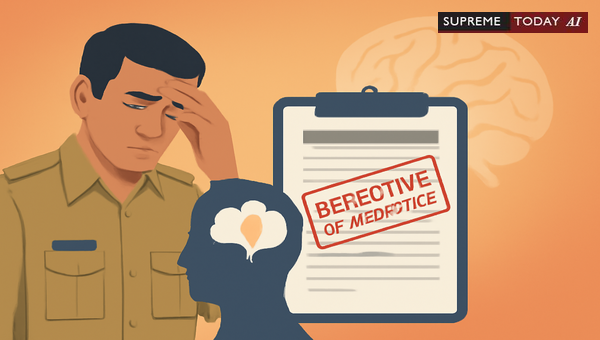
Consequences of Investigating Officer Suppressing Accused's Mental Illness
In high-stakes criminal investigations, the role of the investigating officer (IO) is pivotal. But what happens when an IO purposefully suppresses evidence of the accused's mental illness? This raises serious questions about fairness, , and the validity of prosecutions. Investigating officer purposefully suppressing the mental illness of accused, legal consequence—this is a critical issue under Indian law, particularly .
Courts have repeatedly held that such suppression can lead to defective charge sheets, for the accused, acquittals, and even disciplinary action against the IO. This article delves into key legal principles, landmark judgments, and practical implications, drawing from authoritative case law. Note: This is general information based on judicial precedents and not specific legal advice. Consult a qualified lawyer for your situation.
The Duty of the Investigating Officer Under IPC
mandates that every police officer investigating an offence must inquire into facts that may affect liability under , including under . When indicators like prior treatment history, bizarre behavior, or lack of motive surface, the IO must probe the accused's mental state—not just to aid the defense, but to confirm if an offence exists at all. 2012 0 Supreme(Ker) 1088
As observed: An investigation into the mental state of an accused at the time of commission of offence will be inevitable in certain cases, to confirm that such offence is committed by him, when definition of offence or penal provision is read with (S.84 I.P.C.), as stated in S.6 I.P.C. 2012 0 Supreme(Ker) 1088 (para 91). The IO should secure a psychiatrist's opinion: examination of accused by a medical expert will be necessary 2012 0 Supreme(Ker) 1088 (para 94).
Failure to do so, especially with evidence like post-incident treatment records, breaches this duty. In one case, witnesses informed the IO of the accused's acute mental disorder, yet it was omitted from the charge sheet summary 2018 0 Supreme(Raj) 226.
Other judgments reinforce this: If insanity comes to the IO's notice, such as from the complaint itself, they must investigate and place material before the court. Neglect reflects negligence and perfunctory attitude 2018 0 Supreme(AP) 456. Similarly, prior treatment at clinics during incarceration highlights facts warranting inquiry 2022 0 Supreme(All) 1547.
Legal Consequences of Suppression or Failure to Investigate
Purposeful suppression infers deliberate misconduct to secure a conviction. Courts infer: it is only reasonable to infer that investigating officer deliberately failed to conduct investigation into mental condition... since he must have been aware that if such investigation is done... acts of accused would not constitute any offence, by virtue of S.84 I.P.C. 2012 0 Supreme(Ker) 1088 (para 95).
Key fallout includes:- : The charge itself becomes defective for want of investigation into 2012 0 Supreme(Ker) 1088 (para 90).- Prosecution Infirmity: Creates serious infirmity in the prosecution case, warranting acquittal under serious charges like 2024 0 Supreme(Ker) 1618 2021 0 Supreme(Ker) 1199.- : Accused entitled to benefit due to doubt on 2012 0 Supreme(Ker) 1088 (para 99, citing ); has to be given to the accused 2021 0 Supreme(Ker) 1199 (paras 27-28).- Acquittal: Direct result in multiple cases, as non-enquiry despite prior mental treatment evidence leads to reasonable doubt 2021 0 Supreme(Ker) 1199.
In a murder case with axe assaults amid mental imbalance claims, lack of pre-incident fit evidence upheld conviction, but underscored need for thorough probes 2022 0 Supreme(All) 1547.
Burden of Proof: Interplay with
Under , sanity is presumed, and the accused bears the burden to prove . However, IO failure strengthens the defense: it projects as strong circumstance in favour of accused 2012 0 Supreme(Ker) 1088 (para 89). Prosecution must still prove guilt beyond reasonable doubt, including .
Legal vs. differs—mere medical condition isn't enough; incapacity to know act's nature/wrongfulness at the time is key 2023 1 Supreme 405. Mere unsound mind per se would not suffice, and it should be to the extent of not knowing nature of act 2023 1 Supreme 405. Courts assess via , not beyond doubt 2023 1 Supreme 405.
Prosecution isn't burdened to disprove insanity absent plea, but fairness demands probe if history emerges early 2012 0 Supreme(Ker) 1088 (paras 99-100).
Accountability and Disciplinary Action
Courts don't stop at acquittals. They direct action: forward a copy of this judgment to ... for taking appropriate action against the erring police officer and issue necessary instructions 2018 0 Supreme(Raj) 226. This ensures future compliance.
In insanity-accepted cases, even post-acquittal, detention in safe custody under may follow if risk persists 2018 0 Supreme(AP) 456.
Exceptions and Limitations
No absolute duty without prima facie indicators:- Rational acts, no history—no probe needed 2012 0 Supreme(Ker) 1088 (para 92).- ≠ 2012 0 Supreme(Ker) 1088 2023 1 Supreme 405.- Applies to strange/bizarre behavior cases 2021 0 Supreme(Ker) 1199 (para 29).- Accused must discharge Section 105 burden; IO lapse aids but doesn't absolve 2013 0 Supreme(SC) 392 2008 7 Supreme 493.
Recent frameworks like mandate board referrals for mental illness claims, emphasizing rights-based care 2023 0 Supreme(Del) 4808.
Practical Recommendations for Stakeholders
To avoid pitfalls:- IOs: Subject accused to psychiatric evaluation if indicated; document in charge sheet.- Courts: Order re-investigation under or medical boards if suppression evident; forward judgments to police heads.- Prosecution: Anticipate insanity pleas; seek further probes if late surfacing.- Police Departments: Issue standing instructions on mental health sensitivity 2018 0 Supreme(Raj) 226.
In matrimonial cases, suppressing spouse's pre-existing psychiatric illness doesn't automatically quash cruelty claims but demands specifics 2025 0 Supreme(Ker) 1576 2020 0 Supreme(Ker) 1080.
Key Takeaways
- IO suppression of mental illness evidence typically renders investigations defective, casting doubt on and favoring acquittal/ 2012 0 Supreme(Ker) 1088 2024 0 Supreme(Ker) 1618 2021 0 Supreme(Ker) 1199.
- Mandatory duty under to probe when warranted; failure invites administrative repercussions 2018 0 Supreme(Raj) 226.
- Distinguish legal from ; burden interplay tilts with IO lapses 2023 1 Supreme 405.
This underscores the need for thorough, unbiased investigations. Mental health in criminal justice demands vigilance to uphold justice. For tailored advice, reach out to a legal expert.
References:1. 2012 0 Supreme(Ker) 1088: Core on duty, suppression, defective charge.2. 2024 0 Supreme(Ker) 1618: Acquittal via infirmity.3. 2021 0 Supreme(Ker) 1199: from non-evaluation.4. 2018 0 Supreme(Raj) 226: Disciplinary directives.5. Additional: 2018 0 Supreme(AP) 456, 2022 0 Supreme(All) 1547, 2023 1 Supreme 405, 2023 0 Supreme(Del) 4808.
#IODuty #MentalIllnessLaw #LegalInsanity












