


Is Lathi a Under ?
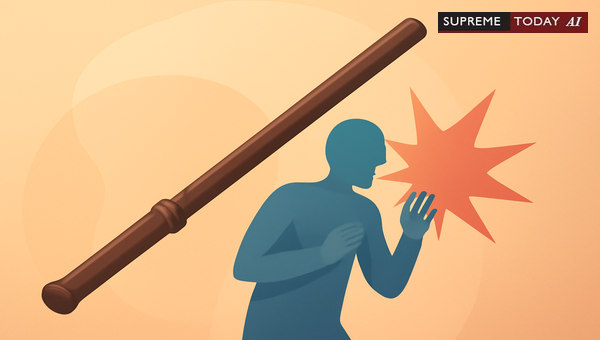
In rural India, altercations often involve everyday items like a lathi—a sturdy bamboo stick commonly carried by villagers for protection or herding livestock. But when tempers flare and injuries occur, a pressing legal question arises: Does a lathi qualify as a that falls under (IPC), which deals with ?
This query, Lathi is Falls under , is more common than you might think, especially in cases involving village disputes or family feuds. requires proof of intent to kill or cause death by an act done with knowledge that it could lead to death. However, courts have repeatedly clarified that not every weapon—or every use of it—meets this threshold. This blog post analyzes key judicial precedents, the nature of injuries, and intent, providing general insights (not legal advice) into why a lathi is typically viewed as non-lethal.
Disclaimer: This is for informational purposes only and does not constitute legal advice. Consult a qualified lawyer for case-specific guidance.
Main Legal Finding: Lathi Generally Not a
Indian courts have consistently held that a lathi is not inherently a lethal or dangerous weapon under . As a traditional tool carried by villagers, it is classified as non-lethal unless wielded in a manner causing or demonstrating clear murderous intent. For instance, the court in 2019 0 Supreme(Jhk) 1191 noted that lathi is generally carried by villagers and it is not considered a weapon of dangerous nature.
Key factors include:- Nature of the weapon: Common, non-sharp implements like lathis differ from firearms or knives.- Injuries inflicted: Superficial wounds lead to lesser charges like or 324 (hurt by dangerous weapons).- Intent (): Mere use doesn't imply without evidence of aiming for vital areas or repeated blows intending death. 2015 0 Supreme(Pat) 1349
In 2016 0 Supreme(All) 502, the court emphasized that superficial injuries from a lathi do not justify Section 307, reinforcing that classification hinges on circumstances, not the object alone.
Nature of Lathi and Judicial Classification
A lathi is often described as a blunt, wooden stick—hardly the stuff of deadly weapons. Courts distinguish it from lethal arms:- In 2019 0 Supreme(Jhk) 1191, it's explicitly called non-dangerous, with injuries typically superficial.- Similarly, 2015 0 Supreme(Pat) 1349 observed that injuries caused by a lathi are often superficial and not necessarily dangerous to life.
This aligns with broader IPC principles under Section 307, where the weapon's inherent lethality matters. Even in riot cases, as in 2015 0 Supreme(All) 4046, lathi has been used in the present matter by them as weapon but in all circumstances, lathi has not been recognised as , leading to convictions under instead.
Role of Injuries and Manner of Use
The severity of injuries is pivotal. Courts examine medical reports:- Simple vs. : Superficial abrasions or bruises? Likely Sections 323/324. Deep wounds to vital parts? Possible escalation. In 2015 0 Supreme(Pat) 1498, injuries caused with weapons like lathi were superficial and not life-threatening, ruling out .- Vital Parts Targeted? Blows to the head or repeated assaults could shift classification, but proof is required. 2016 0 Supreme(All) 502
From additional precedents:- 2020 0 Supreme(Gau) 509 highlights mechanical addition of Section 307 without serious injury: The has been added by the I.O. mechanically, as no such serious injury was caused to the victim to attract the offence under by any weapon etc.- In contrast, lethal weapons like a farsa (axe) on the head vitalize Section 307 claims 2016 0 Supreme(Jhk) 469: petitioner no.1 had used Farsa (a ) for assaulting the informant on the head (vital part of the body), therefore, offence under section 307 of the I.P.C. made out.
Intent: The Requirement for Section 307
Section 307 demands clear intent or knowledge of potential death. Mere possession or use of a lathi falls short:- Courts set aside convictions without this proof 2025 0 Supreme(Jhk) 1150, 2025 0 Supreme(Jhk) 1444. Injuries not indicating kill-intent lead to downgrades to Section 324.- The presence of lethal weapons alone does not automatically establish the offense under Section 307; the intent behind using such weapons is crucial. 2025 0 Supreme(Raj) 2134
Even in assemblies, weapon type matters little if not deadly: 2024 0 Supreme(Jhk) 627 notes, It matters little, whether she wielded tangi, or lathi or she had no weapon in her hand.
Exceptions: When Lathi May Attract Section 307
While rare, exceptions exist:- Grievous or Fatal Injuries: If used to fracture bones or target vitals with intent, it may qualify. 2019 0 Supreme(Jhk) 1191, 2016 0 Supreme(All) 502- Contextual Factors: Multiple assailants, prior enmity, or repeated blows. 2024 0 Supreme(Raj) 279 affirms Section 307 but notes no actual hurt occurred.- : Arming with lathi in riots may sustain lesser charges, not automatically 307/149. 2015 0 Supreme(All) 4046
Prosecutors must prove beyond doubt; defenses highlight lathi's non-lethal norm.
Practical Recommendations for Cases Involving Lathi
- For Prosecutors: Document injuries meticulously, prove intent via witnesses/medical evidence.
- For Defense: Emphasize lathi's everyday use, argue simple hurt under 323/324. 2015 0 Supreme(Pat) 1349
- Courts: Scrutinize circumstances holistically.
In bail or , lack of often sways outcomes 2020 0 Supreme(Gau) 509.
Key Takeaways and Conclusion
A lathi does not automatically fall under as a . Judicial consensus 2019 0 Supreme(Jhk) 1191, 2015 0 Supreme(Pat) 1349, 2016 0 Supreme(All) 502 views it as non-dangerous, with charges depending on injuries, use, and intent. Superficial harm? Lesser IPC sections apply. Grievous? Possible escalation—but proof is key.
This nuanced approach protects against over-criminalization of rural disputes while upholding justice. For deeper dives, review full judgments.
References:1. 2015 0 Supreme(Pat) 1498 - Superficial lathi injuries.2. 2019 0 Supreme(Jhk) 1191 - Lathi non-dangerous.3. 2016 0 Supreme(All) 502 - Superficial injuries exclude 307.4. 2015 0 Supreme(All) 4046 - Lathi not deadly in riots.5. Others: 2020 0 Supreme(Gau) 509, 2025 0 Supreme(Raj) 2134, etc.
Stay informed, but seek professional advice for your situation. (Word count: 1028)
#Section307IPC, #LathiWeapon, #IPCIndia












