


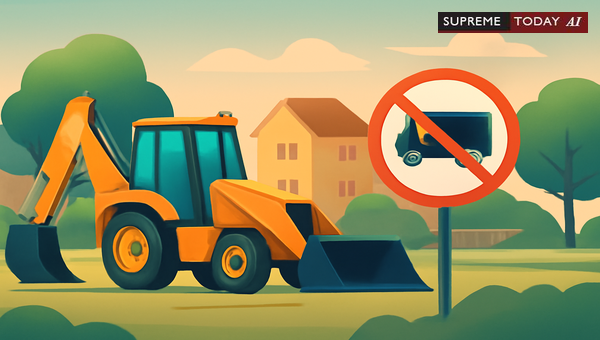
JCB Ban in Residential Areas: Key Court Judgments
In bustling urban and suburban neighborhoods across India, residents often face disruptions from the rumble of heavy machinery. Questions like Can you find a judgment that prohibits heavy vehicles like JCB working in residential areas? are increasingly common as construction booms and environmental concerns rise. While no single universal ban exists, Indian courts have issued rulings emphasizing strict regulations, permissions, and prohibitions in sensitive zones. This post dives into key judicial precedents, regulatory principles, and practical takeaways to help you understand the legal landscape.
Judicial Stance on Heavy Vehicles in Residential Zones
Courts in India have consistently highlighted the risks posed by heavy vehicles such as JCBs, tipper lorries, and Poclains in residential areas. These machines, classified as non-transport or construction equipment vehicles, are not inherently permitted in living spaces due to noise pollution, safety hazards, and ecological damage.
A pivotal explicitly restricts their use: If permission is granted for construction of a building or demolition of a building, in such case, one may use heavy vehicle like JCB, tipper lorries or Pocline on permission, but otherwise, we find no ground made out as to why JCB, tipper lorries and Pocline should be used for agriculture or any other purpose. 2012 0 Supreme(Mad) 3397 2012 0 Supreme(Mad) 3293
This ruling underscores that heavy vehicles should not operate in hilly, ecologically sensitive, or residential regions without . Unauthorized use is often deemed illegal, aligning with urban planning and environmental preservation goals. 2012 0 Supreme(Mad) 3293
Specific Judgments Addressing JCB and Heavy Machinery
Several cases provide clarity on restrictions:
Permission Requirements: Heavy motor vehicles like JCBs require specific licenses and explicit authorization for residential zones. Their operation without approval is unlawful, as noted in judgments on construction and repair works. 2014 0 Supreme(Del) 2720
Industrial and Noxious Activities: Courts have ruled against hazardous activities, including those involving heavy construction vehicles, in . 2004 3 Supreme 503
Ecological Enforcement: In cases involving sand mining or quarrying near residential or reserved lands, authorities seize JCBs and heavy trucks found operating illegally. For instance, reports confirm no heavy trucks or JCB machines at compliant sites, with seizures for violations.
Smuggling and Illegal Use: Heavy equipments like JCBs, excavators, and earthmovers are flagged in illegal mining, where Heavy and high-cost equipments and vehicles like excavators, earthmovers, JCB, Poclain, Hitachi are used to excavate and heavy lorries viz., Taurus and Tata Benz are being used in the illegal mining business flouting all rules. 2020 0 Supreme(Mad) 2271
These precedents establish that JCBs, as non-transport vehicles, face limitations in residential contexts beyond permitted construction or demolition.
Restrictions and Regulatory Principles
Indian law imposes layered regulations:
Local Authority Permissions: Entry and operation in residential zones typically need nods from Panchayats, Corporations, or Collectors. Without this, use is prohibited. 2012 0 Supreme(Mad) 3293
Zoning and Urban Policies: Residential layouts must earmark lanes for emergency vehicles like ambulances and fire tenders, implicitly discouraging heavy machinery that hinders access. The policy relating to residential areas also provides that a lane must be earmarked for unhindered movement of vehicles like ambulances, fire tenders, police vehicles; etc. 2020 0 Supreme(Del) 1267 2019 7 Supreme 327
Sensitive Areas: In ecologically fragile zones like Kodaikanal or Nilgiris, or reserved lands, JCBs are barred to prevent soil compaction, tree uprooting, and community disturbance. Even for invasive species removal, machinery use is tightly controlled. 2025 Supreme(Online)(Mad) 55408
Enforcement Actions: Tahasildars and forest departments monitor sites, seizing vehicles in cases of unauthorized sand transport or construction. 2023 Supreme(Online)(NGT) 521
| Key Restriction | Legal Basis | Example Citation ||---------------|-------------|------------------|| No use without permission | Construction/Demolition only | 2012 0 Supreme(Mad) 3397 || Ban in sensitive zones | Ecological protection | 2012 0 Supreme(Mad) 3293 || Seizure for illegal mining | Regulatory oversight |
|| Emergency access priority | Urban planning | 2020 0 Supreme(Del) 1267 |
Environmental and Social Concerns Driving Prohibitions
Heavy vehicles contribute to pollution, noise, and accidents, prompting judicial intervention. Residents report inconvenience from operations destroying common areas or blocking paths. Courts prioritize safety, often invoking principles from multiple rulings: 2012 0 Supreme(Mad) 3293 2014 0 Supreme(Del) 2720 2004 3 Supreme 503.
In one NGT matter, affidavits confirmed no JCB or heavy vehicles at sites to comply with orders, highlighting proactive avoidance.
Practical Recommendations for Compliance
Seek Permissions Early: For legitimate construction, apply to local bodies with detailed plans.
Alternatives: Opt for manual labor or lighter equipment in residential settings.
Reporting Violations: Residents can approach authorities citing these judgments to enforce restrictions.
Business Owners: Ensure JCB drivers hold appropriate licenses, as seen in compensation claims where JCB operation was scrutinized.
Conclusion and Key Takeaways
While no blanket judgment universally prohibits JCBs in all residential areas, courts strongly regulate their use, requiring explicit permissions and banning operations in sensitive zones. Key principles from rulings like 2012 0 Supreme(Mad) 3293, 2014 0 Supreme(Del) 2720, and 2004 3 Supreme 503 emphasize safety, ecology, and order.
Takeaways:- Heavy vehicles like JCBs are generally restricted in residential areas without approval.- Unauthorized use may lead to seizures, fines, or legal action.- Invoke these precedents for enforcement.
This post provides general information based on public judgments and is not legal advice. Consult a qualified lawyer for specific cases.
#JCBBan #ResidentialHeavyVehicles #IndiaCourtRulings












