


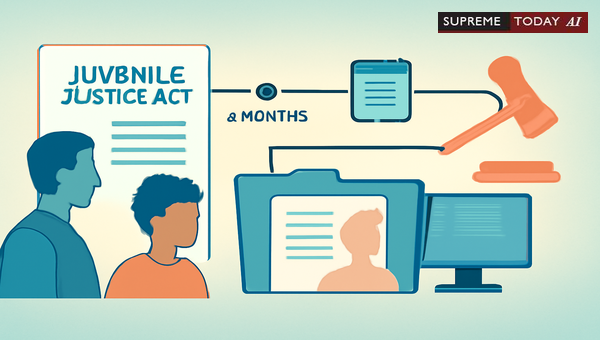
: 4-Month Timeline Post-
In the realm of juvenile justice, timely proceedings are crucial to protect the rights of while ensuring justice is served efficiently. A common query arises: Sec 14 Shall be Concluded in 4 Months after Filing Not Production of CCL. This question highlights a critical distinction in timelines under the (). Understanding whether the clock starts from the child's first production before the () or from the filing is essential for legal practitioners, families, and advocates.
This blog post delves into Section 14 of the , clarifying the mandated timelines, implications of delays, judicial interpretations, and practical recommendations. Note that this is general information based on statutory provisions and case insights; it is not specific legal advice. Consult a qualified lawyer for your situation.
Key Provisions of
Section 14 addresses the for children alleged to have committed , particularly those aged 16-18 years. The provision aims to determine if the child should be tried as an adult.
Core Timelines
- : Under , the must complete the within three months from the date of first production of the CCL before the Board. 2019 0 Supreme(Guj) 1097
- Investigation Completion: For by children aged 16 and above, , requires the investigation to conclude within one month. 2019 0 Supreme(Guj) 1097
- Overall Timeline: Critically, the under Section 14 must be concluded within 4 months of filing the , not merely from the production of the CCL. This is emphasized to ensure swift resolution: The Act stipulates that any conducted under Section 14 should be concluded within 4 months of filing the , not merely from the production of the CCL (Charge Sheet). 2022 0 Supreme(Pat) 465
These timelines balance child protection with procedural efficiency, preventing prolonged uncertainty for the CCL.
Implications of Delays in Proceedings
Delays can significantly impact the CCL's rights, but they do not automatically invalidate the trial.
- Non-Compliance Effects: If the exceeds three months, it may prejudice the CCL's rights. However, the trial proceeds as an inquiry under , treating the child as alleged to have committed a serious offence. 2019 0 Supreme(Guj) 1097
- Statutory Balance: The harmonizes timelines with broader procedural requirements, safeguarding CCL rights while adhering to deadlines. 2019 0 Supreme(Guj) 1097
- Broader Judicial View: Courts have noted that proceedings under earlier versions like the were to conclude in 4-6 months, underscoring a consistent emphasis on speed: The proceedings were liable to be concluded in terms of the and the Rules framed thereunder within a period of 4 – 6 months, however, the proceedings are still pending. 2019 0 Supreme(Del) 2306
Failure to meet the 4-month post- deadline is generally seen as contrary to , potentially affecting . 2022 0 Supreme(Pat) 465
Judicial Interpretations and Amendments
Indian courts and legislative amendments reinforce strict adherence to these timelines.
Amendments Strengthening Timelines
- Insertions and substitutions via (w.e.f. ) and clarify under Section 14.
- These changes emphasize completing enquiries within prescribed periods, including and 14(2) frameworks. 2022 0 Supreme(Pat) 465
Court Rulings on Similar Contexts
Judicial precedents across statutes highlight a preference for time-bound enquiries:- In departmental proceedings, courts have directed completion within six months from the date of production/communication of this Order. 2019 0 Supreme(Pat) 332 2018 0 Supreme(Pat) 19- Another case mandated: The was also directed to be concluded within 4 months.2014 0 Supreme(All) 596- Courts recognize delays beyond 4 months from as undermining fairness, aligning with goals. 2022 0 Supreme(Pat) 465
Related statutes like the and others echo this: proceedings under Sec. 14 must proceed efficiently post- stages. 2024 0 Supreme(Guj) 1317
Practical Recommendations for Compliance
For lawyers, JJBs, and stakeholders, adhering to these timelines is vital:- Timely Documentation: Ensure filing triggers the 4-month clock; monitor from production to assessment. 2022 0 Supreme(Pat) 465- Progress Tracking: Closely oversee investigations (1 month for heinous cases) and assessments (3 months from production). 2019 0 Supreme(Guj) 1097- Advocacy Strategies: If delays occur, argue prejudice without halting proceedings, invoking . 2019 0 Supreme(Guj) 1097- Best Practices: File necessary documents promptly and request extensions only if justified, considering amendments like Act 5 of 2009.
Legal practitioners should integrate these into client strategies to protect CCL interests.
Conclusion and Key Takeaways
Under Section 14 of the , the timeline pivots on the filing—4 months to conclusion, distinct from the CCL's production date. This framework, supported by rules, amendments, and judicial insights, prioritizes swift justice while upholding child rights.
Key Takeaways:- : 4 months post-. 2022 0 Supreme(Pat) 465- Assessment: 3 months from first production. 2019 0 Supreme(Guj) 1097- Investigation: 1 month for . 2019 0 Supreme(Guj) 1097- Delays prejudice rights but do not vitiate trials. 2019 0 Supreme(Guj) 1097- Adhere strictly to avoid statutory non-compliance. 2022 0 Supreme(Pat) 465
By respecting these timelines, the juvenile justice system maintains its rehabilitative ethos. For personalized guidance, reach out to a legal expert familiar with nuances.
(Word count: 1028. Sources cited are for illustrative purposes from judicial documents; verify latest amendments.)
#JJActSection14, #JuvenileJustice, #LegalTimelines












