


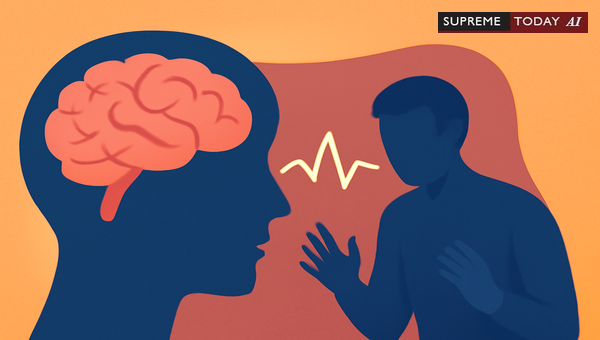
Unpredictable Human Mindset in Legal Cases
In the realm of law, few concepts are as elusive as the human mind. Courts frequently grapple with questions like: Cannot how Human Mindset Think? This awkwardly phrased inquiry captures a profound legal truth—the human mindset and behavior defy uniform prediction or definition. Whether assessing in matrimonial disputes, evaluating , or determining reactions in cases, judges emphasize the inherent variability of individual responses. This post delves into why human behavior remains unpredictable in legal contexts, drawing from landmark judgments and principles to provide clarity for those navigating such complexities.
The Complexity of Human Behavior
Human behavior is not a one-size-fits-all phenomenon. It is shaped by a tapestry of personal and societal factors, making it challenging to apply rigid definitions in court. Key influences include:
- Upbringing and family dynamics
- Sensitivity levels and emotional resilience
- Educational background and intellectual capacity
- Cultural influences, customs, and traditions
- Financial status and social standing
- Religious beliefs and personal value systems
2015 0 Supreme(MP) 47
This multifaceted nature complicates legal assessments, particularly for subjective concepts like cruelty. Courts have repeatedly noted that human behavior is inherently complex and cannot be universally defined, requiring case-by-case evaluation
2015 0 Supreme(MP) 47.
For instance, in evolving societal contexts, what once constituted may no longer hold true today. Legal interpretations must adapt to cultural shifts, ensuring fairness without outdated benchmarks.
Variability in Individual Reactions
No two people react identically to the same stimulus—a principle enshrined in numerous rulings. The in highlighted this: individuals in similar situations may respond with shock, denial, or proactive action, underscoring the unpredictability of human reactions 2018 0 Supreme(All) 308.
This variability extends beyond personal disputes. In criminal law, courts recognize that different persons react differently to a same situation. The reaction of a or right thinking member of the society to the words spoken or written is the litmus test for issues like 2019 0 Supreme(Bom) 1742. A balanced individual might shrug off words that devastate someone more sensitive, illustrating how mindset influences perception 2019 0 Supreme(Bom) 731.
Even in recruitment for sensitive roles like police constables, trivial offenses are often attributed to human error and not perpetrated by a criminal mindset. Authorities must draw lines based on facts, as trivial offences may often occur by human error 2021 0 Supreme(All) 406 2021 0 Supreme(All) 263.
The Dynamic Nature of and
, a common ground for divorce, exemplifies mindset's fluidity. It is not static but evolves over time influenced by cultural shifts and societal changes, demanding contextual analysis
2015 0 Supreme(MP) 47. Courts avoid fixed parameters, opting for nuanced judgments.
Similarly, in criminal proceedings, evolving social structures challenge outdated laws. Judges must match the existing law, how old it is, with changing social structure and mindset, ensuring justice aligns with contemporary realities 2022 0 Supreme(Bom) 1632.
Prison administration further underscores mindset's malleability. To curb suicides, inmates receive counseling to change their mindset, recognizing that anxiety and tension stem from cognitive patterns amenable to intervention 2024 0 Supreme(Mad) 408. This proactive approach replaced probation officer posts with psychologists, prioritizing mental well-being through mindset shifts.
Key Legal Principles Guiding Courts
Indian jurisprudence offers clear guidelines for handling human unpredictability:
- No Fixed Definitions: lacks strict parameters; it is assessed individually
2015 0 Supreme(MP) 47.
- Contextual Evaluation: Facts and circumstances dictate outcomes, not generalizations 2019 0 Supreme(MP) 696.
- Behavioral Predictions Impossible: Human behavior cannot be predicted with certainty; reactions can differ widely 2018 0 Supreme(All) 308.
In cases, courts apply the test, acknowledging diverse assessments based on human nature, mindset, approach, thinking ability 2019 0 Supreme(Bom) 731. Petitions quashing emphasize reading statements in context, avoiding subjective overreactions.
For employment, do not automatically clear candidates if doubts linger about integrity. Yet, youth indiscretions may be condoned, as young people often commit indiscretions without criminal bent 2021 0 Supreme(All) 406.
Broader Implications in Modern Law
These principles ripple across domains. In , interfere sparingly with , focusing on evidence appreciation amid mindset variances 2022 0 Supreme(Bom) 1632. Recruitment processes weigh antecedents holistically: The competent authority has to determine where the threshold lies between error and criminality 2021 0 Supreme(All) 263.
rulings protect free speech while curbing abuse. Courts quash processes where words, though sharp, do not incite hatred, contempt and ridicule when viewed objectively 2019 0 Supreme(Bom) 1742. This balances expression under with reasonable restrictions.
Prison reforms highlight preventive mindset counseling, as rising suicides prompted scrutiny by and courts 2024 0 Supreme(Mad) 408. Replacing roles with psychologists affirms evolving needs for mental health support.
Practical Recommendations for Legal Practitioners
When handling cases involving human behavior:
- Gather Comprehensive Backgrounds: Document upbringing, culture, and stressors to contextualize actions.
- Argue Subjectivity: Emphasize cruelty's personal nature and societal evolution.
- Monitor Societal Shifts: Stay updated on norms influencing judicial views.
- Use Objective Tests: Invoke the standard in or reaction-based claims.
Conclusion and Key Takeaways
The human mindset's unpredictability demands a tailored legal lens. Courts consistently affirm that behavior varies by countless factors, precluding blanket rules. From to and , justice hinges on context, not conjecture.
Key Takeaways:- Human reactions are inherently diverse—no universal predictions 2018 0 Supreme(All) 308.- Evaluate cases individually, adapting to cultural changes
2015 0 Supreme(MP) 47.- Trivial acts often reflect error, not malice 2021 0 Supreme(All) 406.- Mindset counseling can mitigate risks in institutional settings 2024 0 Supreme(Mad) 408.
This article provides general insights based on judicial precedents and is not legal advice. Consult a qualified attorney for case-specific guidance. References: 2015 0 Supreme(MP) 47 2018 0 Supreme(All) 308 2019 0 Supreme(MP) 696 2024 0 Supreme(Mad) 408 2022 0 Supreme(Bom) 1632 2021 0 Supreme(All) 406 2021 0 Supreme(All) 263 2019 0 Supreme(Bom) 1742 2019 0 Supreme(Bom) 731.















