


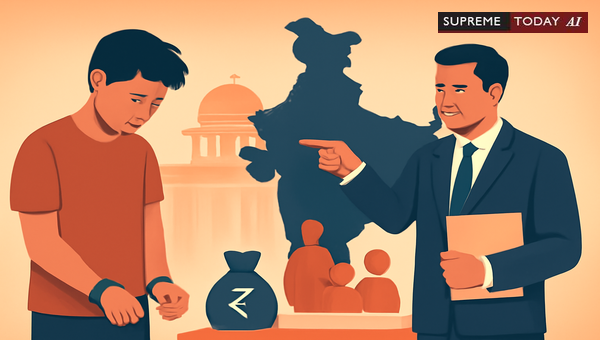
Juvenile Crime Due to Economic Family Issues in India
In today's fast-paced society, remains a pressing concern, particularly when rooted in . Many families in India grapple with financial instability, poverty, and emotional distress, which can push children toward criminal activities. But what happens in court when cases when children commit crime due to economic family problems come to light? This blog delves into the Indian legal framework, examining how courts view these circumstances, key precedents, and strategies for rehabilitation.
Understanding this intersection is crucial for parents, legal professionals, and policymakers. While economic hardships do not excuse crime, they often serve as in sentencing, emphasizing rehabilitation over punishment. This post synthesizes judicial insights, statutes, and case law to provide a comprehensive overview.
The Link Between Economic Family Problems and Juvenile Crime
Economic distress within families can profoundly impact children's behavior. Children from low-income households may face mental distress and behavioral issues due to lack of opportunities, poor education, and inadequate support systems. Studies and legal observations highlight that such backgrounds increase the likelihood of criminal involvement 2021 0 Supreme(All) 370 2010 1 Supreme 606.
Family breakdown exacerbates this. Divorce, separation, or instability disrupts emotional well-being, heightening delinquency risks 2021 0 Supreme(All) 473 2002 0 Supreme(SC) 97. For instance, courts have noted that Crime could be committed on account of stress or depression also. It could be on account of the company that one keeps. One could commit crime in order to help his family and friends2024 Supreme(Online)(Chh) 14570. This underscores how financial pressures and poor social influences compromise a child's decision-making abilities.
In cases of large families, financial crunch is common. it appears that one of the reasons may be financial crisis to maintain the family because of being mother of six children. Ordinarily, we have noticed that when the number of the children is more in the family, the family suffers from financial crunch2014 0 Supreme(All) 1465. Such scenarios often lead to neglect, pushing children into wrong company and crime.
Unstable relationships, like live-in arrangements, add layers of vulnerability. The children born from such relationships face lots of problems. When their parents separate, they became burden on society. They fall in wrong company and national loss of good citizen occurs2023 0 Supreme(All) 1168. These children may turn to crime amid social stigma and lack of stability.
Mitigating Circumstances in Sentencing Juvenile Offenders
Indian courts typically consider socio-economic backgrounds as during sentencing, especially for first-time offenders. A poor economic condition, coupled with no prior record, can lead to lighter sentences 2023 0 Supreme(Pat) 692 2012 2 Supreme 161.
Rehabilitation potential is key. Juveniles from disadvantaged families often show strong reform capacity, influencing favorable outcomes 2010 1 Supreme 606 2013 7 Supreme 161. decisions also weigh family ties and personal problems. requests must balance individual rehabilitation needs with societal safety concerns... aims to maintain family ties and public interest2025 Supreme(Online)(HP) 3736. Courts may grant to allow solving personal and family problems, promoting reintegration.
However, this is not absolute. Courts scrutinize testimony carefully, especially in enmity-driven cases, recognizing human failing tends to exaggerate, over implicate and distort the true version against the person(s) with whom there is rivalry, hostility and enmity2022 0 Supreme(All) 413 2021 0 Supreme(All) 353 2020 0 Supreme(All) 554 2019 0 Supreme(P&H) 422. Interested witnesses' evidence is not discarded outright but examined rigorously, ensuring fairness.
Judicial Precedents and the Juvenile Justice Act
The prioritizes rehabilitation for children in conflict with the law, viewing their actions as impulsive rather than malicious 2015 0 Supreme(Bom) 95. This rehabilitative approach aligns with considering economic distress.
In precedents involving extreme poverty, courts have shown leniency. For serious crimes under economic pressure, life imprisonment may replace harsher penalties, factoring in mental state and socio-economic strains 1999 2 Supreme 227 1978 0 Supreme(SC) 196.
Even in adult cases with juvenile-like factors, economic pleas influence outcomes. Courts emphasize stricter standards... while judging their cases on the parameters of good conduct, but allow opportunities for reform 2025 Supreme(Online)(HP) 3736.
Exceptions: When Socio-Economic Factors Fall Short
While mitigating, economic issues do not absolve guilt, particularly in like murder or sexual assault. Courts prioritize crime severity 2013 7 Supreme 161. Public safety trumps background if the offense is premeditated or violent 2012 2 Supreme 161 1999 2 Supreme 227.
Enmity cases highlight caution: Cases are not unknown where an entire family is roped in due to enmity and simmering feelings although one or only few members of that family may be involved in the crime2020 0 Supreme(All) 554. Reliable can uphold convictions despite investigative lapses, but false implications due to rivalry are scrutinized 2019 0 Supreme(P&H) 422.
Strategies for Legal Advocacy and Rehabilitation
For legal representatives handling such cases:- Highlight Rehabilitation: Stress the juvenile's reform potential and family support needs.- Leverage Precedents: Cite cases where economic distress led to leniency 2023 0 Supreme(Pat) 692 2012 2 Supreme 161.- Advocate Mental Health: Push for assessments to address root causes like stress 2024 Supreme(Online)(Chh) 14570.- Family Interventions: Seek or programs to resolve economic woes 2025 Supreme(Online)(HP) 3736.
Broader recommendations include government support for at-risk families, counseling, and education to prevent delinquency.
Conclusion and Key Takeaways
Economic family problems significantly influence juvenile crime in India, with courts increasingly factoring them into sentencing for fair, rehabilitative justice. However, crime gravity and societal protection remain priorities. This is general information based on precedents; outcomes vary by case.
Key Takeaways:- Socio-economic hardships often mitigate sentences but never excuse crimes.- Juvenile Justice Act favors rehabilitation.- Always scrutinize evidence in conflict-laden cases.- Early intervention through family support can prevent escalation.
Consult a qualified lawyer for personalized advice. References: 2021 0 Supreme(All) 370 2010 1 Supreme 606 2021 0 Supreme(All) 473 2002 0 Supreme(SC) 97 2023 0 Supreme(Pat) 692 2012 2 Supreme 161 1999 2 Supreme 227 1978 0 Supreme(SC) 196 2015 0 Supreme(Bom) 95 2013 7 Supreme 161 2024 Supreme(Online)(Chh) 14570 2025 Supreme(Online)(HP) 3736 2023 0 Supreme(All) 1168 2022 0 Supreme(All) 413 2021 0 Supreme(All) 353 2020 0 Supreme(All) 554 2019 0 Supreme(P&H) 422 2014 0 Supreme(All) 1465
This post is for informational purposes only and not legal advice.
#JuvenileJustice #ChildCrimeIndia #EconomicHardshipLaw












