


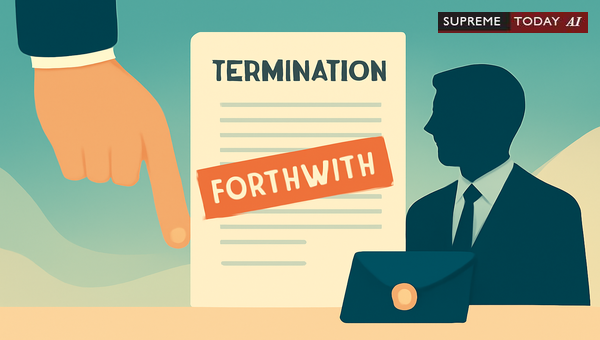
Does '' Mean Immediate Termination in Law?
In the world of contracts, notices, and legal proceedings, precise language is everything. A single word like can spark disputes over timing, especially in high-stakes scenarios like terminating an agreement or employment. But what does really mean? Should it be done immediately, or is there some flexibility?
This question—should means should be done immediately—arises frequently in business disputes, employment terminations, and contractual obligations. While interpretations can vary slightly based on context, legal documents and case law generally emphasize prompt action without . This post breaks down the meaning, supported by key references, and explores nuances from broader sources. Note: This is general information, not specific legal advice. Consult a qualified attorney for your situation.
The Core Legal Interpretation of ''
The phrase shall be done immediately or in legal contexts typically connotes action without delay, implying immediacy. Legal documents consistently interpret these terms as requiring prompt or immediate performance, unless qualified otherwise.
- Prompt or Instantaneous Action: and shall be done immediately signal urgent compliance. For instance, in termination scenarios, it's understood as effective upon notice without a waiting period.
- No Room for Delay: Absent qualifiers like as soon as possible, the intent is immediate execution.
In
, a termination letter dated invoked clauses allowing for defaults like missed installments. This underscores immediacy, as the action takes effect promptly upon notice.
Key Case Law and Document Insights
Multiple sources reinforce that demands swift action. Courts align with standard legal dictionaries, viewing it as synonymous with immediately or without delay.
Contractual Termination Examples
- In hiring agreements, clauses permit owners to the hiring and retake possession of the property without notice upon default.
- Termination under facility agreements can occur at absolute discretion if fail within stipulated periods, exercised promptly.
A notable example: In such situations, instant would obviously have been intended as it is fair and necessary - without having to give 60 days notice.
Probationary and Employment Contexts
During probation, terminations align with for prompt execution. Cases like
and
clarify that actions at the end of probation must be timely, mirroring urgency.
However, even temporary employees may require , but immediate effect terminations post-arrest have been challenged if stigmatic without inquiry. 2025 0 Supreme(Gau) 2029
Nuances: vs. Strict Immediacy
While dominant interpretations favor immediacy, some precedents introduce practicality. The has noted: When a statute requires that something shall be done ‘’ or ‘immediately’ or even ‘instantly’, it should probably be understood as allowing a for doing it. 2022 0 Supreme(Chh) 264 2018 6 Supreme 693
- Without : does not mean instantaneous but without and within . Unexplained delays can vitiate actions, like in detention cases. 2018 6 Supreme 693
- Explanation for Delay Required: However, when an act is done after an interval of time and there is no explanation forthcoming for the delay it cannot be held to have been done ‘’. 2011 0 Supreme(AP) 664
In administrative contexts, such as convening meetings for , the Collector must act upon requisition, without verifying allegations upfront. Delays without reason invalidate compliance. 2022 0 Supreme(Chh) 264
For reviews under clauses like cl 9, communications occur immediately via meetings, reflecting the clause's structure for prompt termination if needed.
Exceptions and Practical Considerations
Though generally implies no significant postponement:
- Procedural Steps: Notice periods (e.g., seven days in some clauses) or formalities may temper strict instantaneity.
- Allowance: Statutes often permit what's feasible, per Oxford definitions of related terms like ‘practicable.’ 2025 0 Supreme(Gau) 2029
- No Unilateral Delays: Practices contrary to prompt action, like unsigned draft orders, must cease immediately. 2016 0 Supreme(Del) 2434
Courts interpret based on context—contractual intent, statutory mandates, and fairness. Delays without justification risk non-compliance claims.
Recommendations for Compliance
To avoid disputes:
- Assume Immediacy: Draft or interpret clauses as requiring immediate action.
- Explicit Clarification: Specify timeframes (e.g., within 24 hours) to prevent ambiguity.
- Document Justification: If delay occurs, provide clear reasons, as unexplained gaps undermine claims. 2011 0 Supreme(AP) 664
- Seek Legal Review: In terminations, ensure , especially for employment. for has issued for invalid processes. 2025 0 Supreme(Gau) 2029
Businesses terminating facilities or leases should exercise rights promptly post-breach.
Conclusion: Prioritize Prompt Action
In summary, generally means action should be taken immediately or without , as affirmed across documents like
,
, and cases emphasizing urgency. While some statutes allow , courts scrutinize delays closely—unexplained ones can invalidate proceedings.
Key Takeaways:- Treat as a call for speed in contracts and notices.- Back any timing with documentation and context.- Always tailor to specific agreements; professional advice is essential.
Stay informed on legal terms to safeguard your interests. For personalized guidance, reach out to a legal expert.
References:1.
- on default.2.
- Prompt contractual compliance.3.
- Probationary terminations.4. 2018 6 Supreme 693 - nuance.5. 2011 0 Supreme(AP) 664 - Delay explanations required. #ForthwithLaw, #ContractTermination, #LegalTerms















