


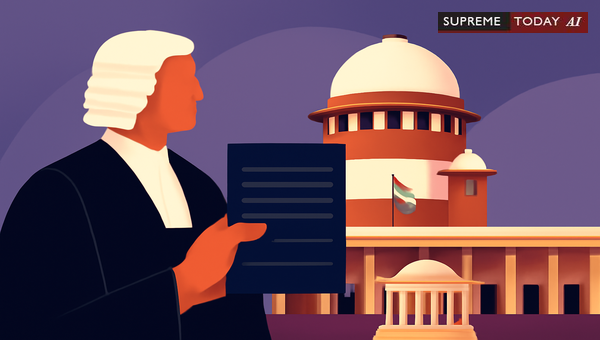
Can Legislators Circumvent Judgments?
In the dynamic interplay of India's democratic framework, tensions often arise between the legislative and judicial branches. A pressing question frequently debated is: Can legislators enact acts to circumvent judgments passed by the ? This issue strikes at the heart of constitutional governance, raising concerns about the supremacy of judicial pronouncements versus the legislature's law-making authority.
This blog post delves into the legal principles, landmark cases, and practical implications, providing a comprehensive overview. Note: This is general information and not specific legal advice. Consult a qualified lawyer for personalized guidance.
Understanding the Core Issue
The Indian Constitution establishes a delicate balance through the , distributing functions among the legislature, executive, and judiciary. declares judgments as binding on courts, underscoring . But can lawmakers simply pass new legislation to nullify or sidestep these rulings?
Typically, no. Attempts to undermine decisions through legislative maneuvers are viewed as unconstitutional, as they erode the foundational checks and balances. Courts have repeatedly affirmed that while legislatures can amend laws prospectively, they cannot retroactively override judicial interpretations without violating constitutional norms. 2007 0 Supreme(Pat) 1609
Key Legal Principles at Play
Several foundational doctrines govern this terrain:
Supremacy of the : Under , rulings are the law of the land. Lower courts and authorities must adhere strictly, preventing circumvention via new laws.
of Statutes: Laws must align with their intended purpose. In , the Court emphasized interpreting provisions to fulfill legislative objectives, not to contradict judicial findings. 2020 0 Supreme(Cal) 636
Prohibition on Circumvention: Governments or legislatures cannot truncate judicial orders through rules or enactments. As held in , the government cannot truncate the effect of its orders through legislative means. 2007 0 Supreme(Pat) 1609
Legislative Limits: Parliament's power to legislate is broad but bounded by the Constitution. Legislation negating a ruling on constitutional grounds would likely face and invalidation.
These principles ensure judicial independence, preventing .
Landmark Cases Reinforcing Judicial Authority
Indian jurisprudence is replete with precedents safeguarding judgments:
(2007 0 Supreme(Pat) 1609): The explicitly ruled against using legislative tools to bypass its orders, stressing their binding nature. This case sets a clear precedent against circumvention.
(2018 0 Supreme(Ori) 585): Here, the Court criticized procedural maneuvers to evade final judgments, noting that cannot circumvent established rulings.
Krishna Kumar Birla v. Rajendra Singh Lodha (2020 0 Supreme(Cal) 636): Reinforcing purposive construction, it clarified that subsequent legislation cannot alter judicial interpretations misaligned with statutory intent.
Beyond these, related rulings echo this stance. For instance, in land acquisition disputes, courts have mandated adherence to directives, allowing appeals only as per prior judgments: This being the case, this Court has got no other go but to allow the appeal filed by the appellants in terms of the judgement of the Hon'ble referred to supra. 2021 Supreme(Online)(MAD) 37918
In criminal proceedings, the power to quash FIRs is exercised sparingly, guided by benchmarks like : This Court is also conscious of the fact that the power of should be exercised very sparingly and with circumspection and that too in the rarest of rare cases. 2021 0 Supreme(Jhk) 321
Insights from Broader Legal Contexts
The theme of permeates various domains:
Land Acquisition and Compensation: In cases under the , inaction by authorities leading to lapsed proceedings must follow guidelines, as seen in references to . 2017 0 Supreme(Kar) 1221
Motor Accident Claims: Tribunals must respect interpretations on revisions and amendments, restricting remedies to statutory appeals: In the light of recent judgement (supra)... the Division Bench judgement leaves no scope for . 2016 0 Supreme(All) 864
and Drug Cases: Even in regulatory offenses, courts uphold notifications and judgments without circumvention, dismissing charges only where exceptions apply explicitly. 2015 0 Supreme(All) 3348
These examples illustrate a consistent judicial pushback against any dilution of authority, whether through legislation or administrative sleight-of-hand.
Practical Implications and Strategies
For individuals or entities affected by such legislative attempts:
Challenge Constitutionality: File petitions under or 226 questioning the new law's validity if it contravenes a ruling.
Monitor Developments: Track bills that might indirectly impact judgments, such as amendments to existing statutes post-rulings.
Leverage Precedents: Rely on cases like T. R. Dhananjaya to argue binding effect. 2007 0 Supreme(Pat) 1609 2018 0 Supreme(Ori) 585 2020 0 Supreme(Cal) 636
In practice, legislatures often respond to judgments by enacting clarifying or prospective amendments—e.g., post-Bhajan Lal guidelines for quashing—but retrospective overrides are rare and risky. 2021 0 Supreme(Jhk) 321
Conclusion and Key Takeaways
In summary, legislators generally cannot enact laws to circumvent judgments without inviting constitutional scrutiny. The doctrines of separation of powers, , and form an impregnable barrier. As affirmed across cases, such actions undermine the rule of law. 2007 0 Supreme(Pat) 1609
Key Takeaways:- rulings under are binding and non-negotiable.- Legislative changes must respect judicial interpretations.- Proactive litigation is advisable against suspect enactments.- Stay vigilant: Judicial authority protects democratic balance.
This analysis draws from established precedents, offering clarity amid evolving legal landscapes. For tailored advice, engage legal professionals.
#SupremeCourtIndia, #SeparationOfPowers, #IndianConstitution















