


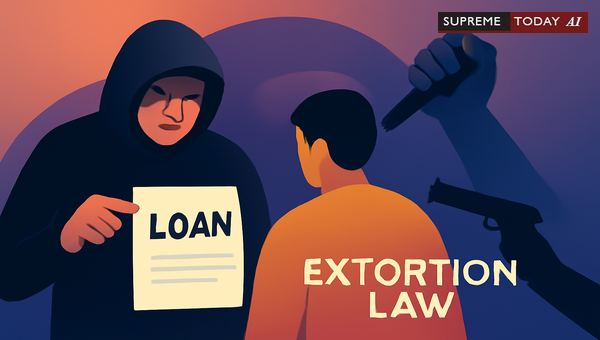
Loan Repayment Threats: When Do They Cross into Territory?
In today's fast-paced financial world, lending money to friends, family, or even through informal agreements is common. But what happens when repayment demands turn aggressive? Specifically, when asking for repayment of loan money coupled with threats of physical harm is considered to fall under ? This question arises frequently in disputes, especially in India where informal loans are prevalent.
As a lender seeking what's rightfully yours or a borrower facing pressure, understanding the legal line between rightful recovery and criminal is crucial. This blog dives deep into the legal analysis, drawing from Indian law precedents and related cases. We'll explore definitions, key elements, real-world applications, and practical recommendations. Note: This is general information, not legal advice. Consult a qualified attorney for your specific situation.
Understanding Under Indian Law
is a serious criminal offense defined under . It involves intentionally putting a person in fear of any injury (such as death or grievous hurt) to them to , , or to do/omit any act. Key elements include:
- Threat of physical harm: Specifically, threats of death or grievous hurt. 2023 0 Supreme(Bom) 493
- Dishonest inducement: The threat must aim to wrongfully obtain property or compliance. 2023 0 Supreme(Bom) 497
- Resulting delivery: The victim parts with property due to fear induced by the threat.
Merely demanding repayment—even aggressively—doesn't automatically trigger . The threats must create a and be used dishonestly. For instance, under Indian law involves inducing a person, through threats of death or grievous hurt, to or , or to do or not do certain acts. 2023 0 Supreme(Bom) 493 2023 0 Supreme(Bom) 497
Loan Repayment Demands vs. : The Critical Distinction
Demanding loan repayment is a legitimate right, but coupling it with threats changes everything. Courts have clarified that:
- Verbal or administrative threats don't suffice: Threats to report to authorities, initiate legal action, or even demolish property (without immediate fear of death/grievous hurt) are typically not . 2019 0 Supreme(Bom) 351
- Physical harm threats elevate the risk: Promises to kill or cause grievous hurt to force payment may constitute if they induce genuine fear and lead to property delivery.
In one analysis, merely demanding repayment of a loan, even coupled with threats, does not automatically constitute unless the threats are of such nature as to put the person in fear of death or grievous hurt and are used to the delivery of property or security. 2023 0 Supreme(Bom) 493 1986 0 Supreme(Pat) 59
However, words alone might not be enough without overt acts. Physical gestures, prior violence, or repeated intimidation strengthen the case. the absence of overt physical acts or overt acts reflecting the threat's effect weakens the case for . Use of words alone, without physical acts, may not suffice unless they induce a . 1986 0 Supreme(Pat) 59
Real-World Examples from Case Law
Consider scenarios from legal documents:- Gang members targeting taxi companies for money to be able to pay the , involving threats to the petitioner and family. While distressing, context matters—no further threats post-altercation weakened claims. 2024 Supreme(US)(ca1) 48- Threats to frame someone in a false bribery case for asking repayment of the hand loan if demands aren't met. This blends administrative pressure with potential harm but hinges on fear induced. 2023 Supreme(Online)(Kar) 35187
In loan shark contexts, persons who intimidate by threats or use of physical violence or other unlawful means to part with movable or immovable properties or in the habit of collecting money by from shopkeepers, traders and other residents including 'loan sharks'. 2020 0 Supreme(AP) 743 2020 0 Supreme(AP) 77
These highlight that habitual or violent debt collection often crosses into territory.
Threats of Physical Harm: The Game-Changer
When repayment demands include threats of physical harm, they align closely with statutes. Legal interpretations emphasize:
- Coercion through injury fear: Threats to cause physical injury compel compliance, fitting 's core. Courts link this to offenses like robbery. Threatening someone to demand repayment of a loan, coupled with threats of physical harm, can be classified as . 2023 0 Supreme(Bom) 493 2024 Supreme(US)(cadc) 12 2023 Supreme(US)(ca2) 117
- No actual harm needed: The threat itself, if credible, suffices. 2023 Supreme(US)(ca6) 153 2024 0 Supreme(AP) 1589
For example, She had received repeated threats of physical harm to her. 2019 0 Supreme(All) 1880 or These articles were given by the accused to him at the time of of money from him under threats. 2019 0 Supreme(Bom) 2202
Yet, if threats are to report to authorities or demolish property without grievous hurt fear, they remain civil matters. 2023 0 Supreme(Bom) 493 2023 0 Supreme(Bom) 497
and Related Charges
Accusations often include conspiracy, but this requires proof of an agreement for illegal acts. Mere threats without collusion fail. An allegation of conspiracy requires an agreement between parties for doing an illegal act. Mere threats or demands, without evidence of such an agreement, do not establish conspiracy. 2023 0 Supreme(Bom) 493
Preventive detention laws target repeat offenders like goondas or loan sharks using violence for . Persons detained under the AP Prevention of Dangerous Activities of Bootleggers, Dacoits, Drug Offenders, Goondas, Immoral Traffic Offenders and Land Grabbers Act, 1986 or other P.... 2020 0 Supreme(AP) 20
Key Factors Courts Consider
To determine if loan threats = :1. Nature of threats: Death/grievous hurt vs. legal action?2. Victim's fear: Reasonable and genuine?3. Intent: Dishonest inducement for property?4. Overt acts: Violence, weapons, or history?5. Context: Legitimate debt vs. fabricated claim?
Evidence like recordings, witnesses, or injury marks bolsters cases. 2024 Supreme(US)(ca9) 380
Practical Recommendations for Lenders and Borrowers
- Lenders: Stick to written agreements, legal notices. Avoid any physical threats—use courts for recovery.
- Borrowers: Document threats (record calls, save messages). Report to police if fear of harm exists.
- Evidence gathering: Focus on threats inducing fear of death or grievous hurt. 2023 0 Supreme(Bom) 493 1986 0 Supreme(Pat) 59
Be cautious: Frivolous claims can backfire.
Conclusion: Navigating the Fine Line
Asking for loan repayment with threats of physical harm can be considered if it induces fear of death or grievous hurt to dishonestly obtain property. However, administrative or non-violent pressure generally doesn't qualify. Context, threat severity, and evidence are pivotal. Simply demanding repayment, or issuing threats without causing or intending to cause such fear, generally does not constitute .
Key Takeaways:- Threats must meet specific IPC criteria.- Physical harm threats heighten risk.- Gather solid evidence before alleging crimes.
Stay informed, act legally, and seek professional advice to avoid pitfalls in debt disputes. Your financial dealings deserve clarity and compliance.
#ExtortionLaw, #LoanRecovery, #LegalThreats















