Searching Case Laws & Precedent on Legal Query.....!
Analysing the retrieved Case Laws
Scanned Judgements…!



Searching Case Laws & Precedent on Legal Query.....!
Analysing the retrieved Case Laws
Scanned Judgements…!
Liability of Vehicle Owner and Driver - Many sources indicate that the owner and driver of the vehicle are primarily liable to pay compensation in case of a vehicular accident resulting in death or injury. The liability arises from neglect to maintain the vehicle, rash driving, or violations of traffic laws. For example, sources 2023 0 Supreme(Gau) 940, 2025 0 Supreme(AP) 581, and
SADIQ S/O MAHABOOB SETASANADI Vs SADIQ BASHA S/O ZAINULLADDIN - Karnataka
emphasize that the owner and driver are liable to pay compensation, and the insurance company’s liability depends on policy terms and whether the driver was authorized or covered under the policy.Insurance Company’s Liability - The liability of the insurance company varies based on the policy coverage, the status of the driver (owner-cum-driver or third-party), and compliance with policy conditions. Sources 2025 0 Supreme(AP) 581, 2024 Supreme(Online)(MAD) 4861, and 2024 0 Supreme(Sikk) 19 clarify that if the driver is an authorized owner-driver with appropriate coverage, the insurer is liable to pay compensation. However, if the vehicle was uninsured, improperly insured, or the driver was unauthorized, the insurer may not be liable (e.g.,
DAWALSAB @ DAWALAMALIKSAB Vs SADIQ BASHA S/O ZAINULLADDIN - Karnataka
).Deceased Driver as Owner - When the deceased was also the owner and driver, the insurer’s liability depends on whether the policy covered the owner-driver explicitly. Source 2023 0 Supreme(Jhk) 1005 discusses that in cases where the deceased was an owner-cum-driver with valid coverage, the insurer is liable. Conversely, if the vehicle was uninsured or the policy did not cover owner-drivers, the owner alone may be liable.
Deceased as a Gratuitous Passenger or Unauthorized User - In cases where the deceased was a gratuitous passenger or traveling without authorization, the insurer’s liability may be limited or absent, and the owner or driver may be solely liable. For instance, 2025 0 Supreme(AP) 581 and 2024 0 Supreme(Sikk) 19 highlight that unauthorized use or violation of policy conditions can exclude insurer liability.
Court’s Approach and Principles - Courts apply the Pay and Recover principle, holding that the insurer pays initially and recovers from the owner or driver if found liable. The determination also depends on whether the driver had a valid license, whether the vehicle was insured at the time, and compliance with policy conditions (2023 0 Supreme(Gau) 940, 2024 Supreme(Online)(MAD) 4861).
Analysis and Conclusion:A deceased driver who was also the owner of the vehicle can be liable to get compensation if the vehicle was insured under a policy covering owner-drivers and if the driver was authorized and driving within policy terms. The liability of the insurer hinges on policy coverage, driver authorization, and adherence to legal and contractual conditions. When the vehicle is properly insured and the driver is authorized, the insurer is generally liable to pay compensation, which can then be recovered from the owner or driver if they are at fault. Conversely, if the vehicle was uninsured, improperly insured, or the driver was unauthorized, the owner or driver alone bears liability, and the deceased driver/owner may still claim compensation under applicable laws.
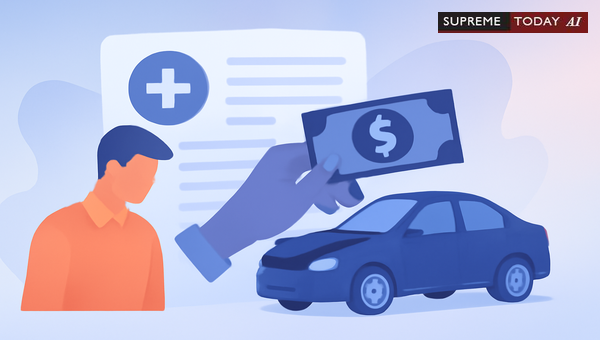
Motor vehicle accidents in India often lead to complex legal battles over compensation, especially when the driver is also the vehicle owner and tragically passes away. A common question arises: Can a deceased of the vehicle be liable to get compensation in MACT? This query touches on critical aspects of the , including liability, insurance coverage, and the rights of .
In this post, we break down the legal principles, relevant case law, and practical implications. Whether you're a family member seeking claims or an insurer assessing liability, understanding these nuances is essential. Note that this is general information based on precedents and should not replace professional legal advice.
The handles compensation claims for accidents involving death, injury, or property damage. When the driver is also the owner (), liability hinges on negligence, insurance policy terms, and statutory provisions.
Under typical MACT rulings, the owner and driver are for compensation. This means claimants can pursue either or both for the full amount. Even if the driver-owner is deceased, their estate or may face claims if negligence is proven. For instance:
The owner and driver of a vehicle are generally held for compensation in the event of an accident. 2008 0 Supreme(P&H) 959 2016 0 Supreme(All) 1509
In cases like the one involving opposite party No. 1 as owner cum driver, the tribunal directed payment since the vehicle was uninsured, holding the deceased's representatives accountable. 2022 0 Supreme(Gau) 780
Insurance companies play a pivotal role, but coverage for owner-drivers isn't automatic. Policies often require additional premiums for owner-drivers, separate from public risk or paid drivers.
If the policy covers the owner-driver explicitly, the insurer pays compensation to claimants. However, courts frequently apply the , allowing insurers to reimburse themselves from the owner/driver if negligence or breaches (e.g., no valid license) are found.
In cases where the insurance company is directed to pay compensation, it may subsequently recover the amount from the owner or driver if they are found liable for negligence. 2023 0 Supreme(Gau) 940
One case emphasized: The amount of compensation be deposited with the learned MACT within three weeks... failing which, the Insurance Company shall be liable to pay penal interest @ 18% p.a. 2024 0 Supreme(Del) 285
Conversely, without coverage for owner-cum-drivers:
Whether the Insurance Company is liable to pay compensation for the death of owner-cum-driver? By contending that... without additional premium/coverage for owner-cum-driver, the Insurance Company is not liable. 2013 0 Supreme(Mad) 1326 2013 0 Supreme(Mad) 1333 2013 0 Supreme(Mad) 1324
Sources confirm that premiums for paid driver and/or conductor do not extend to gratuitous owner-drivers. 2015 0 Supreme(Bom) 2383
For uninsured vehicles, the owner-cum-driver (or their estate) bears full liability. In a claim by legal representatives of deceased parties, the MACT awarded compensation, apportioning it equally. 2025 0 Supreme(AP) 806
Compensation may be reduced if the deceased driver contributed to the accident via or violations. Courts assess fault percentages:
of the deceased driver-owner can file claims for compensation under the Motor Vehicles Act, irrespective of the deceased's role. This ensures victims' families aren't denied remedies.
The of a deceased individual can file for compensation regardless of the deceased's role in the accident. 2008 0 Supreme(P&H) 959 1991 0 Supreme(MP) 464
In death claims involving owner-drivers like Sadiq Basha (owner of the vehicle), tribunals examined policy details and driver status.
Heirs of multiple deceased (e.g., Poonati Malakondaiah and Vankayalapati Naganjaneyulu) successfully claimed before MACT. 2025 0 Supreme(AP) 806
These precedents (e.g., 2019 0 Supreme(Gau) 756, 2016 0 Supreme(Bom) 2195) illustrate courts' balanced approach: protecting claimants while enforcing policy terms.
| Factor | Impact on Liability ||--------|---------------------|| Valid Insurance Covering Owner-Driver | Insurer primarily liable, may recover 2023 0 Supreme(Gau) 940 || Uninsured Vehicle | Owner/estate fully liable 2022 0 Supreme(Gau) 780 || | Reduces award 2007 0 Supreme(P&H) 2041 || Filing | Eligible to claim 2008 0 Supreme(P&H) 959 |
A deceased may be liable for MACT compensation if negligence is proven, particularly with uninsured vehicles or policy breaches. However, can pursue claims, and insurers often step in under Pay and Recover—provided coverage exists. Liability typically depends on accident circumstances, policy terms, and fault apportionment.
Key Takeaways:- Owner-drivers need specific policy endorsements for coverage.- Joint liability persists post-death via heirs/estate.- Courts prioritize claimant protection with recovery mechanisms.
Always consult a qualified lawyer for case-specific advice, as outcomes vary. References: 2019 0 Supreme(Gau) 756 2023 0 Supreme(Gau) 940 2008 0 Supreme(P&H) 959 1991 0 Supreme(MP) 464 2016 0 Supreme(Bom) 2195 2024 0 Supreme(Del) 285 2025 0 Supreme(AP) 806 2022 0 Supreme(Gau) 780.
(Word count: 1028. This post provides general insights from Indian jurisprudence; individual cases require professional evaluation.)
#MACTClaims, #MotorAccidentLaw, #OwnerDriverLiability


The amount of compensation be deposited with the learned MACT within three weeks from today, failing which, the Insurance Company shall be liable to pay penal interest @ 18% p.a. from the date of this judgment till the realisation. 20. ... The respondent No.2/owner and respondent No.3/insurer stated that the petition is bad for non-joinder of necessary parties as the driver, owner and in....

It shows that the vehicle owner and the driver had neglected to maintain the vehicle in good condition which resulted to vehicular accident by causing death of the deceased. Therefore, the owner of the vehicle is liable to pay compensation to the claimant. ... The insurance company is liable for the payment of compensation to the claimant and is at lib....

Respondent No.2 is the owner of the offending vehicle. Respondent No.3 is the insurer. Hence all respondents are liable to pay compensation. ... The deceased was not authorized to travel on the vehicle. Therefore, the Insurance is not liable owner and driver of the offending vehicle alone are liable. 12. ... As per the authorities vide AIR 2003 Supreme....

SADIQ BASHA S/O ZAINULLADDIN AGE: MAJOR, OCC: BUSINESS, R/O PEERSAB COMOUND, HOLEKERE ROAD, CHITRADURGA (OWNER OF THE VECHICLE BEARING NO. ... SADIQ BASHA S/O ZAINULLADDIN AGE: MAJOR, OCC: BUSINESS, R/O PEERSAB COMOUND, HOLEKERE ROAD, CHITRADURGA (OWNER OF THE VECHICLE BEARING NO. ... SADIQ BASHA S/O ZAINULLADDIN AGE: MAJOR, OCC: BUSINESS, R/O PEERSAB COMOUND, HOLEKERE ROAD, CHITRADURGA (#....
SADIQ BASHA S/O ZAINULLADDIN AGE: MAJOR, OCC: BUSINESS, R/O PEERSAB COMOUND, HOLEKERE ROAD, CHITRADURGA (OWNER OF THE VECHICLE BEARING NO. ... SADIQ BASHA S/O ZAINULLADDIN AGE: MAJOR, OCC: BUSINESS, R/O PEERSAB COMOUND, HOLEKERE ROAD, CHITRADURGA (OWNER OF THE VECHICLE BEARING NO. ... SADIQ BASHA S/O ZAINULLADDIN AGE: MAJOR, OCC: BUSINESS, R/O PEERSAB COMOUND, HOLEKERE ROAD, CHITRADURGA (#....

Legal representatives of Poonati Malakondaiah (deceased No.1) and legal representatives of Vankayalapati Naganjaneyulu (deceased No.2) moved the Chairman, Motor Accidents Claims Tribunal-cum-VII Additional District & Sessions Judge (for short “the learned MACT”) claiming compensation for the death ... (iii) Enhanced part of the compensation shall be apportioned equally among all the cla....

The most of the cases are pertaining to the case whether the insured was owner-cum-driver and there was policy conditions and payment of additional premium for the driver-cum-owner to the maximum extent of Rs.2 lakhs. In the instant case, the deceased was employed as a driver by its owner (O.P. ... Moreover, the deceased#HL_....

It was also certified by the learned Tribunal that the Insurance P.A coverage was owner cum driver package in which additional premium of Rs.50/- (Rupees Fifty only) was also paid by the deceased to cover the owner cum driver insurance coverage. ... Hence, the learned Tribunal proceeded to conclude that the claimants are entitled to get the ....

The opposite party No. 1 owner cum driver of the offending vehicle was directed to pay the awarded amount to the claimant as the vehicle was not insured at the time of relevant accident. ... The opposite party No. 1 i.e. the owner cum driver of the motorcycle by filing his written statement denied the claim of the claimant and also took the plea that the deceased son of....

That, as the deceased was riding pillion on the scooty, which was driven in a rash and negligent manner and the scooty was duly insured vide a package policy, Exhibit 9, the Respondent No.6 was liable to pay the compensation granted and not the Appellant, the owner of the scooty. ... Reliance on Jit Man Rai (supra) by the Respondent No.6 is misplaced and of no assistance to its case as in the said case Jit Man Rai, the #HL....

vs. Meera Bai. 9. We have carefully considered the above provision as well as the decision of this Court. Perusal of the schedule of premium mentioned in the insurance policy shows that apart from liability to public risk, the owner has paid premium only for "paid driver and/or conductor". In support of his contention, learned counsel for the appellant heavily relied on section 147 of the Motor Vehicles Act, 1988 which speaks about the statutory liabilities and a decision of this Court in New ....

On the above pleadings and evidence, a Division Bench of this Court framed two issues for consideration, 1. Whether the Insurance Company is liable to pay compensation for the death of owner-cum-driver? By contending that in the case on hand, the deceased being the owner-cum-driver and without additional premium/coverage for owner-cum-driver, the Insurance Company is not liable to pay any compensation for death of the deceased who was owner-cum-driver and not paid d....

On the above pleadings and evidence, a Division Bench of this Court framed two issues for consideration, By contending that in the case on hand, the deceased being the owner-cum-driver and without additional premium/coverage for owner-cum-driver, the Insurance Company is not liable to pay any compensation for death of the deceased who was owner-cum-driver and not paid driver as mentioned in the Schedule of Premium. In support of his contention, learned Counsel for the Appella....
Perusal of the Schedule of Premium mentioned in the Insurance Policy, shows that apart from liability to public risk, the owner has paid premium only for paid driver and/or conductor. By contending that in the case on hand, the deceased being the owner-cum-driver and without additional premium/coverage for owner-cum-driver, the Insurance Company is not liable to pay any compensation for death of the deceased who was owner-cum-driver and not paid driver as mentioned in the Schedule of....
On the above pleadings and evidence, a Division Bench of this court framed two issues for consideration: (1) Whether the insurance company is liable to pay compensation for the death of owner-cum-driver? (2) Whether the insurance company is right in contending that policy, Exh. B2, does not cover personal accident to the insured/owner?


An indispensable Tool for Legal Professionals, Endorsed by Various High Court and Judicial Officers
Please visit our Training & Support
Center or Contact Us for assistance

Scan Me!
India’s Legal research and Law Firm App, Download now!


For Daily Legal Updates, Join us on :



 Back to top


