Does Magazine Fall Under Arms Act? Key Legal Analysis
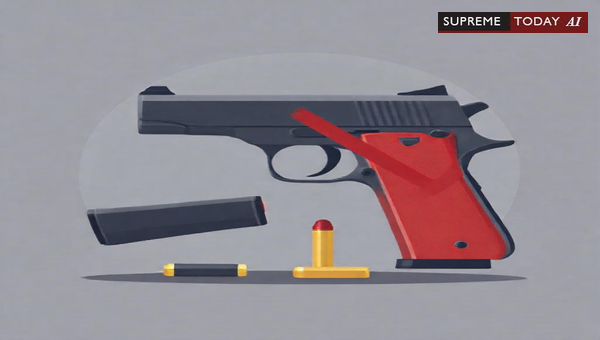
In the realm of Indian firearms law, a common query arises: Whether the Magazine Come under the Purview of Arms Act or Not? Here, magazine typically refers to the detachable ammunition holder for firearms, not a periodical publication. This distinction is crucial, as courts have repeatedly addressed firearm magazines in cases involving illegal possession under the Arms Act, 1959.
This blog post examines judicial interpretations, key sections of the Act, and case law to clarify when magazines fall under the Act's ambit. Note: This is general information based on precedents and not specific legal advice. Consult a qualified lawyer for your situation, as outcomes depend on facts.
Understanding the Arms Act, 1959
The Arms Act, 1959 regulates possession, manufacture, sale, and use of arms and ammunition in India. Key definitions include:
- Section 2(1)(a): Arms covers firearms, artillery, and accessories like barrels or breech blocks.
- Section 2(1)(b): Ammunition includes cartridges, bullets, and components.
- Prohibited arms (Section 2(1)(i)): Automatic or semi-automatic weapons, often requiring special licenses.
Magazines, as components enabling ammunition feeding, are scrutinized under Sections 25 (possession without license), 25(1-AA) (prohibited arms/ammunition), and 26 (concealed possession). Mere possession isn't always criminal; context matters—e.g., if linked to prohibited firearms or unlicensed. 2005 5 Supreme 414
When Do Magazines Attract the Arms Act?
Courts have held that empty magazines or those for specific calibers fall under the Act's purview if they qualify as arms or ammunition components.
- In the Parliament attack case, recoveries included: Exhibit E-1 to E-5 are five number of empty 9 mm magazines come under the purview of Indian Arms Act. The Supreme Court confirmed their admissibility as evidence under POTA and Arms Act provisions. 2005 5 Supreme 414
- Ballistic experts opined: Firearm exhibit A,B, C and D are 9 mm, country made, semiautomatic pistol which are in working order and come under the purview of Indian Arms Act... Exhibit E-1 to E-5 are five number of empty 9 mm magazines come under the purview of Indian Arms Act. 2005 5 Supreme 414
This establishes that 9mm magazines, even empty, are regulated due to association with prohibited or licensable firearms.
Judicial Precedents on Magazines
Supreme Court and High Court rulings provide clarity:
1. Parliament House Attack Case (Mohd. Afzal Guru)
In this landmark judgment:- Intercepted calls, confessions, and recoveries linked accused to arms.- Magazines explicitly deemed under Arms Act: Cartride exhibits F-1 to F-76 are 76 nos. of 9 mm... Exhibit E-1 to E-5 are five number of empty 9 mm magazines come under the purview of Indian Arms Act. 2005 5 Supreme 414- Court upheld convictions under Sections 3 & 4 of Explosive Substances Act alongside Arms Act, emphasizing magazines' role in terrorist conspiracy. Death sentences confirmed for key accused. 2005 5 Supreme 414
2. Other Recovery Cases
- Firearm and Magazine Recoveries: In multiple instances, courts noted: L-1 to L-4 come under the purview of Indian Arms Act... Cartridge exhibits G-1 to G-17 are 17 nos. of 7.65mm KF make live cartridges and come under the purview of Indian Arms Act.
RAMA CHANDRA DAS vs STATE OF ORISSA
2016 0 Supreme(Ori) 1214 Conviction Under Section 25(1B): Possession of pistols with magazines led to upheld convictions, as ballistic reports confirmed functionality. 2019 0 Supreme(Cal) 445
Non-Prohibited Context: If magazines are for non-prohibited arms and licensed, no offense. But unlicensed 9mm or automatic pistol magazines trigger Section 25(1-AA). 2022 0 Supreme(Pat) 402
3. Key Tests from Case Law
Courts apply these criteria:1. Conscious Possession: Accused must know and control the magazine (Section 35). Mere presence insufficient. 2016 0 Supreme(Ori) 12142. Prohibited Bore/Caliber: 9mm, 7.65mm magazines often linked to prohibited arms. 2005 5 Supreme 4143. Expert Opinion: Ballistic examination mandatory: This witness had not even loaded any of the three firearm with bullets... to ascertain whether it is an automatic firearm. Failure dooms prosecution. 2022 0 Supreme(Pat) 4024. Licensing: No license? Offense under Section 25. 2023 0 Supreme(Ker) 185
| Section | Applies When | Penalty ||---------|--------------|---------|| 25(1) | Unlicensed possession | Up to 3 years RI + fine || 25(1-AA) | Prohibited arms/ammo | 7-14 years RI + fine || 26 | Concealed carry | Up to 7 years RI + fine | 2022 0 Supreme(Pat) 402
Exceptions and Defenses
- Non-Prohibited Arms: Mere possession of non-prohibited arms does not constitute offenses under relevant sections. If magazine for licensed rifle (e.g., .22 bore), generally safe. 2023 0 Supreme(Ker) 185
- Empty Magazines: Still covered if for prohibited firearms. 2005 5 Supreme 414
- Bail/Quashing: Courts quash if no license proof or expert link absent. 2024 0 Supreme(Jhk) 409
In State of Bihar (AIR 1965 SC 843), intent matters, but for Arms Act, possession suffices if unlicensed. 2004 2 Supreme 351
Practical Implications for Gun Owners
- License Check: Ensure magazine matches licensed firearm.
- Storage: Avoid concealment (Section 26).
- Raids/Recoveries: Demand ballistic report; challenge vague opinions.
- Compliance: Magazines for air guns or antiques may exempt.
Pro Tip: Always verify with local licensing authority. Recent notifications expand prohibited categories.
Conclusion and Key Takeaways
Yes, firearm magazines generally come under the Arms Act's purview, especially 9mm/7.65mm types linked to pistols or automatics, as affirmed in Supreme Court rulings like the Parliament attack case. Empty magazines aren't exempt if part of illegal assemblies. 2005 5 Supreme 414 and 2016 0 Supreme(Ori) 1214
Key Takeaways:- Require License: For any functional magazine.- Expert Evidence Essential: Ballistics confirm arms status.- No Mere Presence: Prove knowledge/control.- Seek Legal Aid: In FIRs, challenge via quashing petitions.
Legal landscapes evolve; stay updated via official gazettes. This analysis draws from precedents—courts decide case-by-case.
Disclaimer: This post provides general insights from public judgments. Laws vary by state; professional advice is recommended for personal matters. Not liable for actions based hereon.