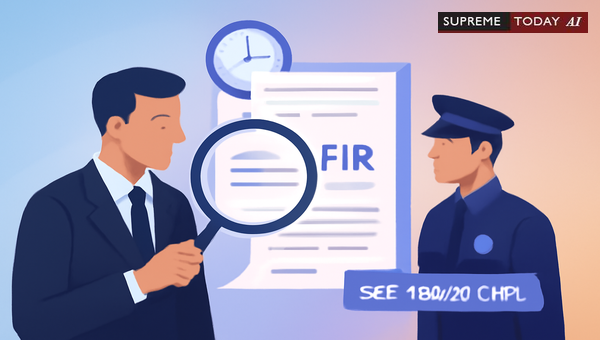
Can Magistrate Order Monitoring of FIR? CrPC Explained
In the Indian criminal justice system, ensuring a fair and thorough police investigation is crucial, especially when First Information Reports (FIRs) are involved. A common question arises: Can a Magistrate order monitoring of an FIR? This issue often surfaces when complainants feel the police are not investigating properly. This blog post delves into the legal framework under the , particularly Section 156(3), supported by judicial precedents. Note that this is general information and not specific legal advice—consult a qualified lawyer for your case.
Understanding FIR and Magistrate's Role
An FIR is the first step in initiating a police investigation for under . However, police inaction or inadequate probes can frustrate victims. Here, Magistrates step in as overseers.
Yes, a Magistrate can order monitoring of an FIR. This power stems from , which empowers a Magistrate to direct police to investigate , register an FIR if needed, and oversee the process 2021 0 Supreme(MP) 292 2007 0 Supreme(MP) 1177 2007 8 Supreme 226. As held in key rulings, this acts as a check on police duties under 2007 0 Supreme(MP) 1177 2007 8 Supreme 226.
The Magistrate doesn't conduct the investigation but ensures it's done properly—monitoring progress, issuing directions, and preventing misconduct 2007 0 Supreme(MP) 1177 2007 8 Supreme 226.
Legal Basis:
Section 156(3) is a powerful tool for Magistrates. It states that any Magistrate may order an investigation into a cognizable case and require submission of a police report.
- Power to Order FIR Registration: Even if not explicitly requested, a Magistrate can direct FIR registration if satisfied a cognizable offense exists 2016 1 Supreme 447 2006 1 Supreme 6 2007 6 Supreme 153.
- Monitoring Authority: In our opinion section 156(3) Cr.P.C. is wide enough to include all such powers in a Magistrate which are necessary for ensuring a proper investigation, and it includes the power to order registration of an F.I.R. and of ordering a proper investigation if the Magistrate is satisfied that a proper investigation... 2023 0 Supreme(MP) 26.
- Judicial Check: This prevents police from shirking duties, ensuring fairness 2021 0 Supreme(MP) 292 2007 0 Supreme(MP) 1177 2007 8 Supreme 226.
Courts have reiterated that Magistrates have very wide powers to direct registration of an FIR and to ensure a proper investigation, and for this purpose he can monitor the investigation to ensure that the investigation is done properly though he cannot investigate himself 2023 0 Supreme(Gau) 520 2021 0 Supreme(P&H) 756.
Scope of Monitoring Powers
Monitoring isn't unlimited but focused on propriety:
- Ensure police fulfill duties and conduct a fair probe 2021 0 Supreme(MP) 292 2007 0 Supreme(MP) 1177 2007 8 Supreme 226.
- Issue suitable orders, like changing investigating officers if needed 2023 0 Supreme(Gau) 520.
- Direct expeditious completion or additional steps
.
For instance, in bank fraud cases, courts have directed to monitor investigations and pass orders for proper probes 2021 0 Supreme(P&H) 756. The aforesaid order would be in addition to the monitoring by the Magistrate concerned
.
However, Magistrates cannot step into the investigator's shoes—they oversee, not probe themselves 2023 0 Supreme(Gau) 520.
Who Can Seek Monitoring? Key Limitations
This remedy is typically for complainants or victims, not accused persons. In a case, the court held: the remedy for monitoring of the investigation is available to the complainant or victim, not to the accused 2023 0 Supreme(UK) 547. An accused's application under Section 156(3) was dismissed, emphasizing limited accused participation during investigation.
discourage bypassing Magistrates with writs or petitions: If despite approaching the Superintendent of Police... he can approach a Magistrate under Section 1563 CrPC instead of rushing to the High Court... 2025 0 Supreme(Gau) 212. The appropriate remedy for non-registration of an FIR is to approach the Magistrate under , rather than filing a writ petition 2025 0 Supreme(Gau) 212.
Insights from Landmark Cases
Judicial precedents reinforce these powers:
- Direct Registration and Oversight: Even with a pending petition, Magistrates retain jurisdiction to order FIRs and monitor, without judicial impropriety 2021 0 Supreme(P&H) 1247.
- Alternative Remedies: Victims have multiple paths—approach SP first (), then Magistrate under 156(3), or file under . Writs are last resorts 2025 0 Supreme(Gau) 212 2023 0 Supreme(Gau) 520.
- Fair Investigation Emphasis: In fraud cases, courts urge SOPs and monitoring to combat delays and tampering 2021 0 Supreme(P&H) 756.
- Broad Interpretation: Section 156(3) applications are maintainable without prior complaints 2023 0 Supreme(MP) 26.
These cases highlight Magistrates as safeguards against police lapses, promoting effective justice.
Practical Recommendations
If facing investigation issues:
- Gather Evidence: Present facts showing police inaction or bias to the Magistrate.
- File Under 156(3): Request FIR registration (if needed) and monitoring. Be prepared for satisfaction 2023 0 Supreme(Gau) 520.
- Exhaust Alternatives: Approach police hierarchy first 2025 0 Supreme(Gau) 212.
- Monitor Progress: Magistrates can recommend officer changes or timelines 2022 0 Supreme(All) 498.
This tool protects rights and ensures fair outcomes, but success depends on merits.
Conclusion and Key Takeaways
Magistrates play a vital supervisory role under , enabling FIR monitoring for proper investigations—a crucial check on police powers. While broad, it's for victims, not accused, and courts favor statutory remedies over extraordinary writs.
Key Takeaways:- Magistrates can order FIRs and monitor probes 2021 0 Supreme(MP) 292 2007 0 Supreme(MP) 1177.- Focus: Fairness, not substitution of investigation.- Victims: Approach Magistrate early with evidence.- Avoid: Direct High Court rushes when remedies exist.
This framework upholds justice principles. For personalized guidance, seek professional legal counsel. Stay informed on your rights!
Disclaimer: This post provides general insights based on legal precedents and is not a substitute for legal advice.
#FIRMonitoring, #CrPC1563, #LegalRemedies