




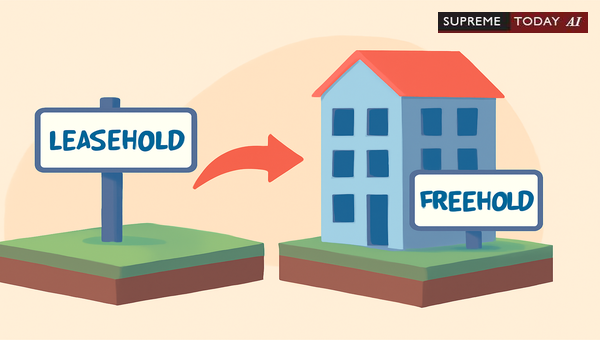
Can You Convert to in Malaysia?
Owning property is a major milestone, but many buyers in Malaysia grapple with the distinction between and . A common question arises: Can we convert a property to property? If you're a landowner eyeing full ownership without time limits, this post breaks down the legal realities, drawing from key court decisions and statutory frameworks. While this provides general insights, consult a qualified lawyer for advice tailored to your situation.
vs : Key Differences
- : Perpetual ownership with no expiration date, offering maximum control and heritability.
- : Time-bound (e.g., 99 years), reverting to the state or lessor upon expiry. Extensions are possible but not guaranteed.
Converting to promises security but isn't straightforward. emphasize strict adherence to law, deeming unauthorized changes invalid.
Legal Framework Under the
The (NLC) governs land matters in Malaysia. Converting from to requires specific statutory authority. Authorities lack inherent power to alter casually; any attempt outside prescribed bounds is (beyond powers) and void.
As courts have ruled, the authority's power to convert land from to or vice versa is limited and must be exercised within the bounds of the law.
Property rights are constitutionally protected under . Unlawful conversions infringe these rights, rendering them null.
Landmark Court Decisions
Case Analysis: Conversions
In a pivotal ruling, the court declared a 's attempt to convert to for lacking statutory power under the NLC. Acts performed cannot create legal rights, including .
Similarly, reducing land from to without authority was held , infringing constitutional rights and requiring reversion.
These cases underscore: mere administrative acts, agreements, or policies don't suffice. Formal procedures and approvals are mandatory.
No Against the State
Even if landowners rely on assurances, courts reject . Agreements or administrative acts cannot estop the government from asserting lawful powers. Principles like don't apply in public law contexts.
Is Conversion Ever Possible?
Generally, no simple process exists. However:
- Statutory Mechanisms: If legislation explicitly allows (e.g., via NLC amendments), applications to authorities may succeed with compliance.
- No Automatic Rights: Courts recognize no inherent right to convert outside legal processes.
Practical implication: Submit formal applications, secure approvals, and ensure statutory backing. Unauthorized changes risk invalidation.
Comparative Insights: Lessons from India
While Malaysia's framework is rigid, Indian cases (especially Delhi) offer contrasts, highlighting policy-driven conversions.
In one matter, refusal to convert to without conditions was challenged. The petitioner sought substitution of rights unconditionally.
Courts have mandated conversions via decrees before execution. First a decree has to be passed for directing conversion...
Savida Sadh vs Narender Pal Malik
A policy enabled conversions for plots, but required indemnity bonds and joint applications for linked properties. Rejection for treating plots as a 'single unit' was quashed due to no lease deed prohibition on partial transfers. 2025 0 Supreme(Del) 518
Auction purchasers of properties faced hurdles; bids differ from . rights are limited rights, subservient to rights. No applies to government grants. 2022 0 Supreme(All) 729 2019 2 Supreme 397
In disputes, failure to convert post-agreement led to claims, but statutory liabilities persist. 2017 0 Supreme(Del) 1806 2016 0 Supreme(Del) 1285
These illustrate that in jurisdictions like India, policies, court orders, or auctions facilitate conversions under conditions—unlike Malaysia's stricter stance.
Practical Steps and Recommendations
If pursuing conversion:
- Review Title Documents: Confirm current and expiry.
- Apply to Authorities: Follow NLC procedures; pay fees if applicable.
- Seek Approvals: Obtain consent where statutorily required.
- Legal Consultation: Engage counsel to navigate risks.
- Avoid Informal Deals: Agreements alone won't bind authorities.
Authorities must act within powers to prevent invalid outcomes. Landowners: Proceed cautiously to safeguard investments.
Key Takeaways
- Not Generally Permissible: -to- conversion demands explicit statutory authority; otherwise, and invalid.
- Protected Rights: Constitutional safeguards block unlawful changes.
- Formal Processes Only: Applications, approvals, and compliance essential.
- Seek Advice: This is general information—professional guidance is crucial.
In summary, while desirable, converting to in Malaysia isn't a simple administrative step. Adhere to the NLC and precedents to avoid pitfalls. Stay informed on policy updates, and prioritize legal expertise for your property journey.
References:1.
: Invalidity of unauthorized conversions.2.
: reductions in land status.
(Word count approx. 950. Not legal advice; laws may evolve.)
#LeaseholdToFreehold, #MalaysiaPropertyLaw, #LandTenure















