Searching Case Laws & Precedent on Legal Query.....!
Analysing the retrieved Case Laws
Scanned Judgements…!



Searching Case Laws & Precedent on Legal Query.....!
Analysing the retrieved Case Laws
Scanned Judgements…!
Court Fees and Filing Procedures - No case can proceed without proper court fees being paid and following the prescribed filing directions. Filing of court fees is a mandatory step before a case can be effectively registered and heard in court. Failure to pay or adhere to filing directions can result in delays or the case not being admitted. ["2024 Supreme(Online)(MP) 27625"], ["2021 Supreme(Online)(MAD) 51362"], ["R.TAMILARASAN Vs HEMA PRIYA - Madras"]
Filing of Affidavits and Compliance - In family and civil cases, courts often require affidavits of assets and liabilities to determine interim reliefs such as maintenance or financial claims. Courts have emphasized the importance of filing these affidavits as per directions, and non-compliance can impact the proceedings. Pandemic-related delays have been acknowledged, but courts expect compliance once circumstances permit. ["2021 Supreme(Online)(MAD) 51362"], ["R.TAMILARASAN Vs HEMA PRIYA - Madras"]
Refunds of Court Fees - In settled cases, authorities are expected to refund court fees promptly. Orders for refunds are issued, but delays can occur, as seen in cases where refunds have not been realized despite orders. Ensuring timely refunds aligns with the principles of justice and the spirit of settlement in Lok Adalats. ["2024 Supreme(Online)(MP) 27625"]
Court Directions and Compliance - Courts issue specific directions for filing representations, paying late fees, or submitting returns, especially in tax and registration matters. Compliance with these directions is crucial for case progression and legal remedies. Non-compliance can lead to adverse orders or delays. ["2025 Supreme(Online)(Guj) 8721"], ["2021 Supreme(Online)(Chh) 2748"], ["R.TAMILARASAN Vs HEMA PRIYA - Madras"]
Fees in Educational and Administrative Cases - Courts have addressed issues related to school fees, especially during the COVID-19 pandemic. Directions have been given to consider cases on a 'case to case' basis, and authorities are directed to fix fees fairly, considering the circumstances. These cases highlight the importance of following legal procedures for fee fixation and the necessity of court orders for fee-related disputes. ["R.TAMILARASAN Vs HEMA PRIYA - Madras"], ["R.TAMILARASAN Vs HEMA PRIYA - Madras"], ["2021 Supreme(Online)(Chh) 2748"]
Analysis and Conclusion:The overarching principle is that no case can proceed without the payment of court fees and adherence to filing directions. Courts consistently emphasize the importance of complying with procedural requirements, including filing affidavits and following specific directions, to ensure justice is served efficiently. Delays or non-compliance can hinder case progress, but courts also recognize exceptional circumstances like the pandemic and may provide relief or extensions. Refunds of court fees are expected to be processed without delay once cases are settled, reinforcing the integrity of the legal process. Overall, following the prescribed directions of the court, including payment of fees, is essential for the smooth functioning of judicial proceedings.
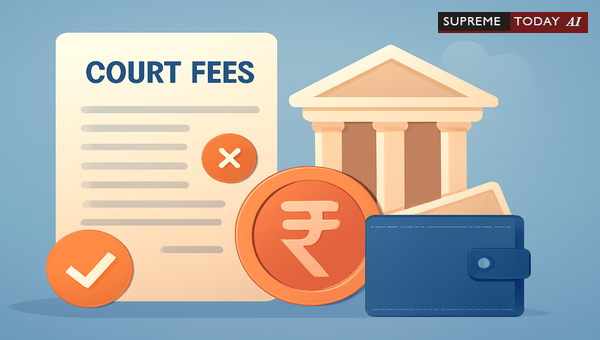
Filing a lawsuit or appeal is a critical step in seeking justice, but what happens if you skip paying court fees? Many litigants wonder: Without Court Fees Filed no Case is Run Without Following Direction of Filing Court Fees. This question highlights a fundamental requirement in Indian courts. Generally, courts cannot proceed without proper court fees, leading to potential rejection of the or dismissal of the appeal. However, there are provisions to rectify deficiencies.
In this post, we'll explore the legal position, key rulings, and practical advice. This is general information based on judicial precedents—not specific legal advice. Consult a lawyer for your case.
The established legal position is clear: payment of full and requisite court fees at the time of filing is a for registration and further proceedings2025 0 Supreme(Raj) 1241. Without it, the court generally cannot entertain the case. This stems from the and provisions under the .
That said, courts may allow curing the defect if the deficiency is made good within a specified period. Once rectified, the proceedings relate back to the date of original institution2025 0 Supreme(Raj) 1241. This balances procedural rigor with fairness.
Court fees fund judicial administration and ensure serious intent from litigants. Under and the , non-payment is a . Failure to pay proper court fee leads to rejection of the appeal2022 0 Supreme(Raj) 2912. This principle applies uniformly to suits and appeals.
Without fees, your case typically halts at the threshold. Courts reject plaints under (d) for insufficient fees. In appeals, memos are dismissed unless rectified. This prevents frivolous filings and upholds procedure.
Courts often grant time to pay deficits, especially if bona fide. Payment of court fees as the scheme suggests is merely deferred1970 0 Supreme(SC) 200. Once paid, if the deficiency in the fees is made good in terms of an order of the court, it must be held that... the defect must be treated as remedied from the date of its original institution2025 0 Supreme(Raj) 1241. The period for curing doesn't count against the defendant.
Courts exercise discretion judiciously. For indigent litigants, permission to defers fees until success. In other cases, short extensions for hardship are common 2006 0 Supreme(Raj) 117. However, repeated delays may lead to dismissal.
Recent cases illustrate this. In a family court matter, directions were issued for filing affidavits alongside payments, emphasizing compliance before merits
. Similarly, writ petitions have been disposed with payment directions, without opining on merits 2021 Supreme(Online)(MAD) 12686. These show courts linking procedural payments to progression.
In education fee disputes, courts have clarified no blanket payment orders exist without specific directions, but non-payment bars further relief
KARNATAKA EDUCATION BOARD, Vs THE STATE OF KARNATAKA
2021 Supreme(Online)(KER) 7447. Analogously, without making payments, petitioners cannot agitate further grievances2021 Supreme(Online)(KER) 7447. This reinforces that court-directed fees must be followed.Schools in fee waiver cases were directed to handle representations sympathetically, subject to higher court outcomes
. While not suit filings, these highlight courts' balanced approach to payment mandates.
Timely rectification validates the filing date, preserving . The period during which the deficiency is made good should not be counted against the other party2025 0 Supreme(Raj) 1241. Yet, persistent non-compliance is fatal.
Exceptions are narrow:- : under , but success requires fee payment.- Genuine Hardship: Courts may extend briefly, but not indefinitely.- No Automatic Validation: Mere filing without fees doesn't institute the suit.
The defect of non-payment of full court fees is a fundamental defect that affects the of the case2025 0 Supreme(Raj) 1241. Courts won't condone willful defaults.
To avoid pitfalls:- Pay Full Fees Upfront: Calculate via court fee schedules based on relief claimed.- Seek Extension Promptly: File applications if deficient, citing hardship.- Rectify Immediately: Comply with court timelines to relate back.- Consult Experts: Verify fee amounts; errors are common in complex valuations.- Track Directions: Follow all court orders on payments, as non-compliance halts progress
.
Courts should grant extensions judiciously, prioritizing genuine cases.
In summary, without court fees at filing, no case can run—it's a mandatory . Courts generally reject or dismiss non-compliant filings, but deficiencies cured timely are retroactively validated 2025 0 Supreme(Raj) 1241 1970 0 Supreme(SC) 200. Always prioritize compliance to safeguard your case.
Key Takeaways:- Court fees are essential for institution.- Non-payment risks rejection/dismissal.- Cure within time to proceed.- Discretion exists but is limited.
This underscores procedural discipline in Indian jurisprudence. For tailored advice, engage a legal professional.
References:1. 2025 0 Supreme(Raj) 1241: Core principles on mandatory fees and curing defects.2. 1970 0 Supreme(SC) 200: Deferral and condonation limits.3. 2022 0 Supreme(Raj) 2912, 2006 0 Supreme(Raj) 117: Appeal specifics and discretion.
#CourtFees #LegalFiling #IndianLaw


The real facts are that the appellant is running a Call Taxi on hire basis, driving the vehicle on his own as driver without even hiring out the said vehicle and there is no restaurant run by him. ... But before filing the affidavit of Assets and Liabilities, accepting the case of the 1st respondent, the Family Court has reached a conclusion that the appellant-husband shall pay a sum of Rs.25,000/- every....

But before filing the affidavit of Assets and Liabilities, accepting the case of the 1st respondent, the Family Court has reached a conclusion that the appellant-husband shall pay a sum merits and demerits of the allegation and counter allegation made by both the parties, we hereby issue the following directions: 1. ... These aspects are to be clarified by filing ....

Vaghasiya and without prejudice to the rights of the petitioner, the petitioner is permitted to pay the amount of late fees of Rs. 2,46,500/- on or before 31.10.2025 along with returns to be filed under the provisions of the GST Act and on making such payment of late fees and filing of the return, the ... Rahul Sharma had taken over the business and due to misdeeds of the erstwhile Director, business of ....

The present petition has been preferred under Article 226 of the Constitution seeking following reliefs:- (i) That, the respondent no 2 may kindly be directed to relies the refundable court fee amount as instructed by this Hon'ble Court and by concerning civil court Gwalior without any ... (Revenue), Lashkar, Gwalior passed order dated 15.02.2023, in which permission has been granted to refund the #HL_S....

run corporations etc. ... 7.In the said circumstances, this Court without expressing any views on the claim of the petitioner is inclined to dispose of this Writ Petition with the following directions: p class="sub_para" left_margin ... in a batch of Writ Appeals filed by the petitioner. ... against a particular decision by a learned Single Judge of this Court. ... 1.4.The dispute in t....

THIS WRIT PETITION COMING ON FOR ORDERS THIS DAY, THE COURT MADE THE FOLLOWING: ORDER The petitioner has sought for writ of certiorari to quash the order dated ... Per contra, learned HCGP submits that there is no specific direction or order to the petitioner to pay the entire tuition fees. ... On perusal of the Annexure-E, it is evident that there is no such direction or order by th....

order, it would be brought to the notice of the school concerned by filing a representation; which has been directed to be dealt with on a 'case to case' basis, sympathetically. ... It is made clear that, this however shall be subject to the outcome of the issue pending consideration before the Apex Court in the matters referred to above and is without prejudice to the rights and liberties of the parties ....
order, it would be brought to the notice of the school concerned by filing a representation; which has been directed to be dealt with on a 'case to case' basis, sympathetically. ... It is made clear that, this however shall be subject to the outcome of the issue pending consideration before the Apex Court in the matters referred to above and is without prejudice to the rights and liberties of the parties ....

order, it would be brought to the notice of the school concerned by filing a representation; which has been directed to be dealt with on a 'case to case' basis, sympathetically. ... ... 10.5 Any other relief/order/direction, which this Hon'ble Court may deem fit and proper, may also kindly be granted in the interest of justice and the reliefs prayed may kindly be moulded accordingly. ... 10.6 Cost of the....

Without making the payments of the fees in respect of their wards, the petitioners cannot agitate any further grievances before this Court. This writ petition is ordered accordingly. ... JUDGMENT Dated this the 25th day of March 2021 1.The writ petition is filed seeking the following reliefs:- p class ... (C).No.19023 of 2020 and connected cases where the direction was confined to a 15 ....


An indispensable Tool for Legal Professionals, Endorsed by Various High Court and Judicial Officers
Please visit our Training & Support
Center or Contact Us for assistance

Scan Me!
India’s Legal research and Law Firm App, Download now!


For Daily Legal Updates, Join us on :



 Back to top


