Searching Case Laws & Precedent on Legal Query.....!
Analysing the retrieved Case Laws
Scanned Judgements…!



Searching Case Laws & Precedent on Legal Query.....!
Analysing the retrieved Case Laws
Scanned Judgements…!
SMT. MAMTA TOMAR vs State of U.P. AND 3 OTHERS - Allahabad
"], and another states, main apne sasural jana chahti hu ["SMT. PRIYANKA DEVI THRU HER HUSBAND SATYAVEER vs State of U.P. AND 5 OTHERS - Allahabad
"]. This suggests that the girls claim the right to live either with their parents or in-laws based on their choice.SMT. PRIYANKA DEVI THRU HER HUSBAND SATYAVEER vs State of U.P. AND 5 OTHERS - Allahabad
"], mujhe apni jaan ka khatra hai ["NEHA KUMARI CORPUS AND ANOTHER vs State of U.P. AND 4 OTHERS - Allahabad
"], and main apne pita ke saath nahi jana chahti ["SEJAL @ SAHAJAL (DETENUE) vs State of U.P. AND 3 OTHERS - Allahabad
"]. These indicate that their consent is crucial and that they may oppose forced or involuntary stay with parents.Several cases mention that girls married of their own free will and are living happily with their spouses: she has married of her freewill ["
SONI RAJPUT AND ANOTHER vs STATE OF U P AND 7 OTHERS - Allahabad
"], she states she married voluntarily ["SONI RAJPUT AND ANOTHER vs STATE OF U P AND 7 OTHERS - Allahabad
"], and she is not in any illegal confinement ["SONI RAJPUT AND ANOTHER vs STATE OF U P AND 7 OTHERS - Allahabad
"].Legal insights and implications:
SONI RAJPUT AND ANOTHER vs STATE OF U P AND 7 OTHERS - Allahabad
"] and she is staying with her husband of her own free will ["SONI RAJPUT AND ANOTHER vs STATE OF U P AND 7 OTHERS - Allahabad
"].SMT. PRIYANKA DEVI THRU HER HUSBAND SATYAVEER vs State of U.P. AND 5 OTHERS - Allahabad
"].When girls express fear or claim that they are not willing to stay with parents, courts tend to uphold their right to choose their residence, especially if they are major and assert their independence ["
SEJAL @ SAHAJAL (DETENUE) vs State of U.P. AND 3 OTHERS - Allahabad
"], ["NEHA KUMARI CORPUS AND ANOTHER vs State of U.P. AND 4 OTHERS - Allahabad
"].Conclusion:
SONI RAJPUT AND ANOTHER vs STATE OF U P AND 7 OTHERS - Allahabad
"], ["SMT. PRIYANKA DEVI THRU HER HUSBAND SATYAVEER vs State of U.P. AND 5 OTHERS - Allahabad
"], ["NEHA KUMARI CORPUS AND ANOTHER vs State of U.P. AND 4 OTHERS - Allahabad
"].References:["MONA JAIN D/O SHRI DHARMENDRA JAIN B/C JAIN vs STATE OF RAJASTHAN THROUGH PP - Rajasthan"]["
ALVINA AND ANOTHER vs State of U.P. AND 2 OTHERS - Allahabad
"]["SMT. PRIYANKA DEVI THRU HER HUSBAND SATYAVEER vs State of U.P. AND 5 OTHERS - Allahabad
"]["MADHURI ALIAS UMAIRA KHATTON AND ANOTHER vs STATE OF U P AND 4 OTHERS - Allahabad
"]["SMT. DIVYA SHARMA AND ANOTHER vs State of U.P. AND 6 OTHERS - Allahabad
"]["2002 0 Supreme(SC) 2326"]["Anil Kumar Saxena VS State of Chhattisgarh - Crimes
"]["Anil Kumar Saxena VS State of Chhattisgarh - Crimes
"]["ARPITA SHARMA AND ANOTHER vs State of U.P. AND 6 OTHERS - Allahabad
"]["SONI RAJPUT AND ANOTHER vs STATE OF U P AND 7 OTHERS - Allahabad
"]["2006 0 Supreme(Chh) 41"]["SUMAELA vs State of U.P. AND 4 OTHERS - Allahabad
"]["SRI SUDARSHAN AND ANOTHER vs State of U.P. AND 10 OTHERS - Allahabad
"]["NEHA KUMARI CORPUS AND ANOTHER vs State of U.P. AND 4 OTHERS - Allahabad
"]["SEJAL @ SAHAJAL (DETENUE) vs State of U.P. AND 3 OTHERS - Allahabad
"]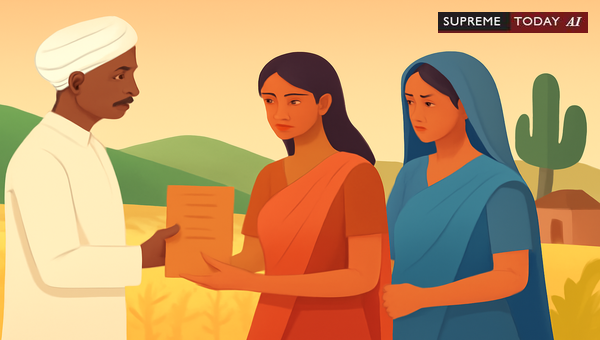
In India, property inheritance often sparks family disputes, especially when it comes to agricultural land. A common question arises: Ek married ladki ka apne pita ki agriculture land mein kya right hai? (What rights does a married daughter have in her father's agricultural land?) This query reflects concerns of many women navigating complex laws, customs, and family dynamics. While laws have evolved to promote gender equality, rights depend on factors like inheritance type, regional customs, and applicable statutes. This post breaks down the legal landscape, drawing from court judgments and principles to provide clarity—remember, this is general information, not personalized legal advice. Consult a qualified lawyer for your specific case.
A married woman's rights to her father's agricultural land hinge on her status as a legal heir under succession laws. Generally, she can inherit as a successor, but these rights are not absolute and vary by context. Under personal laws like the (amended in 2005), daughters are in , entitling them to equal shares. However, for self-acquired agricultural land, inheritance follows rules.
Key court observations emphasize that a woman’s inheritance rights to ancestral or paternal land are governed by applicable succession laws and customs, which vary regionally and by tribe or community1996 4 Supreme 192 2007 6 Supreme 652. In many cases, especially tribal areas, customs limit women's claims, recognizing them only with a ''—meaning rights to use but not the land freely 1996 4 Supreme 192.
The principle is clear: unless a woman is recognized as an heir under statutory or customary law, her rights to land inherited from her father are not absolute1996 4 Supreme 192 2007 6 Supreme 652.
Courts examine each case based on evidence. In one ruling, the court has held that unless there is clear evidence of statutory inheritance rights, a woman’s claim to ancestral land may be contested or limited1996 4 Supreme 192. For instance:
Related property disputes highlight proof's importance. In a ownership tussle, courts upheld claims via registered documents like , dismissing unregistered ones per Suraj Lamp & Industries Pvt. Ltd. v. State of Haryana (AIR 2012 SC 206). This underscores that for agricultural land claims, a married daughter needs solid proof—, will, or records
2018 0 Supreme(Del) 1123.
In tribal societies, succession laws are often based on customs, which may exclude women from inheritance or limit their rights1996 4 Supreme 192. Courts recognize potential discrimination but uphold proven customs. Exceptions arise if statutory laws override, like under the Hindu Succession Act for non-tribals.
For example, in family property rows involving cruelty or separation, evidence like electricity disconnections or maintenance by brothers doesn't automatically grant land rights but shows dependency, potentially strengthening inheritance pleas 2018 0 Supreme(Del) 1123. However, dowry death cases stress direct evidence nexus, irrelevant here but cautioning against unsubstantiated claims 2015 0 Supreme(Del) 776 2013 0 Supreme(Del) 1569.
To assert rights:
Courts value registered documents; contradictory statements weaken claims, as in GPA-based ownership wins
. In or lease disputes, long possession aids but doesn't create title without inheritance base 2007 6 Supreme 652.
Recommendations:- Seek proof of heir status via , will, or customary declaration.- Courts must probe community/tribal customs.- Early legal intervention prevents disputes.
In unnatural death probes, like bride burn cases, courts demand reliable evidence (e.g., credible dying declarations), mirroring inheritance scrutiny 2013 0 Supreme(Del) 1569. Child custody or POCSO matters indirectly touch family assets but prioritize welfare 2017 0 Supreme(Del) 3001.
A married daughter's rights in father's agricultural land are primarily determined by her status as an heir under applicable laws and customs. She can inherit if established via statute (e.g., Hindu Succession Act) or custom, but limitations persist in tribal setups or without proof. In summary, her rights may be limited or contested based on local traditions or absence of formal recognition1996 4 Supreme 192 2007 6 Supreme 652.
Trends favor equality, yet customs endure. Families should draft wills clearly. For disputes, act swiftly with evidence.
Disclaimer: This article provides general insights based on judgments like 1996 4 Supreme 192 and 2007 6 Supreme 652. Laws vary; professional advice is essential.
References:1. 1996 4 Supreme 192: Tribal women's inheritance, customs.2. 2007 6 Supreme 652: Land rights principles.3. Other cases on property proof
, family disputes 2018 0 Supreme(Del) 1123. #InheritanceRights #WomensLandRights #PropertyLawIndia


She has further stated that “mere paas Zafar Chishty uske mail se hui thi, usne mere poochhne par mujhe bataya ki uski shadi ek ke liye kaha, mai uske sath jane ko taiyar hui, lekin yah sab ki wahan mujhe Zafar Chishty ek dusra talak nama dinank 18/11/2015 ka apni pahli patni ka lekar mere ghar aya, or usne hamse mafi mangi or mujhe apne

Apne mummy-papa ke saath. Q. Aap apne maata-pita ke saath apne marji se rah rahi thi ya jabardasti rakhi gai thi? A. Nahi, mai apni marji se rah rahi thi. Q. ... Aap kiske saath rahna chahti hain, apne pita ji ke saath ya Intzar Ahmad ke saath? A. Mummi-papa ke saath. ... In case, the petitioner does not deposit the said amount within the time stated above, the Collector, Bijnor shall take steps to recover the said amount as arrears of land revenue from t....

On being asked ' app apne pita ji se milna chahti hai, she informed the Court 'bilkul bhi nahi mujhe unse apni jaan ka khatra hai'. ... On being asked 'ki app ka naam kaya hai', she informed the Court 'ki mera naam Priyanka hai' On being asked 'ki app ke pita ji ka kya naam hai', she informed the Court 'ki mere pita ji ka naam Ram Khelawan hai'. ... On being asked 'app kaha jana chahti hai', she informed the Court 'main apne sasural jana chahti hu'. ... The respondents are restrained and they ....
Mata pita. Q. Aap apne mata pita ke paas apni marji se rah rahi hai ya jabardasti rakhi gai hain? A. Jabardasti rakhi gai hoon. Q. Aap kiske sath jaana chahti hain? A. ... Apne Pati, Badre Alam ke saath. Q. Aap apne pitaji ke saath nahi jana chahti hain? A. Nahi. It is evident from the record that the Corpus/detenue is major as her date of birth is 7.7.2002. ... 1 stated that she had voluntarily gone with petitioner no. 2 and had married him and was living as his wife....
Q: Aap ke pita ka naam? A: Sri Chandra Prakash Sharma. Q: Aap ki umar? A: 27 saal. Q: Aap kiske saath rehte hai? A: Apne pati ke saath. Q: Aapke pati ka naam? ... The statement of the daughter, who has been produced after considerable exertion, shows that she has left her husband and in-laws without securing divorce and married a man named, Irshad Ahmad. ... In case the requisite sum of money is not deposited within 45 days, it is directed that the said sum of money be recovered from the second petitioner....

HAMNE PITA KE BACHAO MEN DANDE CHALAYE. USE SE DURJAN KO CHOT AAI. PHIR HAM APNE PITA KO GHAR LAD KAR LEGAYE." 9. ... Incised wound 25 cm x .5 cm x skin deep on the back of the right fore arm middle of the right fore arm middle part. 3. Complain of pain on the outer and middle of the right thigh. No sign of external injury." ... Shri Kishan, PW. 3, was digging earth with a spade from the land of Gaon Samaj at a place about 50 paces to the south of his house. ... Lacer....

Apne husband ke saath. Q. Aapke husband ka naam? A. Mohammad Zaid Q. Unke pita ka naam? A. Aziz Ahmad. Q. ... Going by the stand of the first petitioner, Arpita Sharma, she is staying with the fourth respondent, whom she claims to have married of her freewill. She says that she is not in any illegal confinement. ... Kya aap apni marzi se apne pati ke saath hain? A. Ji. Heard learned counsel for the petitioners and learned A.G.A. appearing on behalf of the State.

IS DORAN MERE PATI BHI RATRI ME MUJHE YAHI KAHTE THE KI APNE PITA SE DO LAAKH RUPEY LAO MAIN INKAR KARTI THE TO MUJHSE MAARPEET KARTE THE TATHA MUJHSE PASHUVAT VAYVAHAR KARTE THE RATRI ME V.C.R. ... (3)YAH KI ME VIVAH KE BAAD PRATHAM BAAR KARIB 15 DIN BAAD KAVARDHA AAI TO APNE PITA KO UKT GHATNA BABAT BATAI IS PAR MERE PITA DEEGAR PARIVAR VALO KE SAATH BILASPUR GAI, UNSE BHI MERE PATI AND SASUR NE DO LAAKH RUPYE KI MAANG KIYA IS PAR UNHONE 50 HAZAR RUPYA MERE PATI KO DIYA THA ... VIVAH KE TURANT BAAD DI....
IS DORAN MERE PATI BHI RATRI ME MUJHE YAHI KAHTE THE KI APNE PITA SE DO LAAKH RUPEY LAO MAIN INKAR KARTI THE TO MUJHSE MAARPEET KARTE THE TATHA MUJHSE PASHUVAT VAYVAHAR KARTE THE RATRI ME V.C.R. ... (3)YAH KI ME VIVAH KE BAAD PRATHAM BAAR KARIB 15 DIN BAAD KAVARDHA AAI TO APNE PITA KO UKT GHATNA BABAT BATAI IS PAR MERE PITA DEEGAR PARIVAR VALO KE SAATH BILASPUR GAI, UNSE BHI MERE PATI AND SASUR NE DO LAAKH RUPYE KI MAANG KIYA IS PAR UNHONE 50 HAZAR RUPYA MERE PATI KO DIYA THA ... VIVAH KE TURANT BAAD DI....
Kya apne Praveen se khud shaadi ki hai? A. Nahi zabardasti karwaya gaya hai. Q. Whatsapp messages aapne nahi bheje the? A. Nahi, dara-dhamka ke bhejwaye gaye hain. Q. Aap apne mata-pita ke saath rehna chahti hain? ... Learned counsel for the petitioner submits that petitioner nos. 1 and 2 have married according to Hindu Rites, of their free will, on 23.02.2020 at Shri Jatashankar Dham, Vijavar, District - Chhatarpur, Madhya Pradesh ... In case, the aforesaid sum of money is not remitted by the second....

Ek din mere dono dewar Ramesh ve Anil, Chacha sasur Joginder ve Rajinder ve Mama sasur Mahender ghar par aae mujhpar makaan bechne ka dabaav dalne lage mere mana karne par in sabhi ne mere saath maar peet ki. Kuch dino baad mera pati bina batay meri ladki ko apne sath lekar chala gya ve usne mere ghar ki bijli ka connection katwa diya. Us din se aaj tak mein us ghar mein akeli reh rahi hoon ve mera saara kharch mere bhai chala rahe hain. Mera pati kabhi bhi akar mere saath ladai jhagda ve maar peet karta hai.

The contention of the appellant that the father of the child victim claimed that he informed the PCR whereas the informant is some Dal Chand, is not fully correct as in the PCR Form, it is recorded as under:- ‘DCR No. Received 44 Report Received from VAN 29/12/2013 15:20:21 CALL SATAYA HAI CALLER GANGA SINGH S/O CHANADAN SINGH AGE 35 SAL JO ABOVE ADD. PER CHOKIDAR HA NE BATAYA KI MERI LADKI KHUSHI AGE 4 SAL KO PADOS ME ANE WALE EK LADKE AGE KAREEB 30/32 SAL JO LADKI KO DIN ME 1100 HRS PER APNE SATH KHELANE KE LIYE LE GAYA THA LAEDKI CALLER KO 1330 HRS GHAR MILI HAI JO LADKI KO KHUD....

Q. Aapke virudh yah bhi sachya hai ki aapki patni ka lash murari pain se baramad hua jo mitti me chhipakar rakha tha aur ladki ke pita ko khabar bhi nahi kiya.
Mere marne ke baad mera jo kuch bhi hai wo sab meri beti ke naam kar dein. Meri maut ke baad mere pati ko kuch nahi kaha jaaye. Main apne zameer ke saath jeena chahti thi ek naukrani ki tarah nahi.
Ham ladki ko tatha ladke ko samjha bujha kar bhej diya karte thei. Jiase hi vardat ka pata chala hai, ladki ne bayan diya hai ki ladki ke dahej ke jewar tatha saaman saas sasur ne pahle hi apne kabje mein kar liya tha. Kuch din pahle ladki apne saas ke kahne par peeher se apni bhabhi ke jewar tatha bahan ka guchha sasural mein kisi shadi par pahnane ke liye le gayi thi. Saas Sasur ne yah jewar bhi apne paas jabta kar liye hein.


An indispensable Tool for Legal Professionals, Endorsed by Various High Court and Judicial Officers
Please visit our Training & Support
Center or Contact Us for assistance

Scan Me!
India’s Legal research and Law Firm App, Download now!


For Daily Legal Updates, Join us on :



 Back to top


