




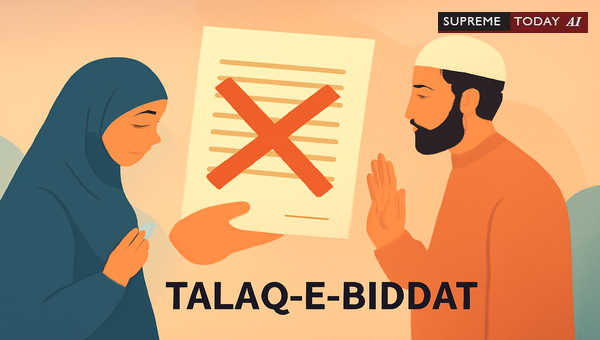
Masroor Ahmed Case: Essential Reference for Muslim Law on Divorce
In the realm of family law in India, Muslim personal law governs critical aspects like marriage and divorce for the Muslim community. A common query from individuals navigating these matters is: Can you provide me a reference link of Masroor Ahmed Muslim Law? This question points to the landmark judgment in Masroor Ahmed vs. State (NCT of Delhi) & Anr., a pivotal decision that clarifies divorce procedures under Muslim law, emphasizing and validity of . While direct links to judgments may vary by legal database, this post provides a comprehensive reference, key principles, and related case insights drawn from authoritative sources. Note: This is general information and not specific legal advice; consult a qualified lawyer for personalized guidance.
Overview of the Masroor Ahmed Case
The Masroor Ahmed vs. State (NCT of Delhi) & Anr. case, reported in ILR () II Delhi 1329, delves into the nuances of Muslim divorce law, particularly (divorce pronounced by the husband). The court underscored that Islam views divorce as a last resort, discouraged unless the marriage is irretrievably broken.
Key themes include:- The necessity of for .- Mandatory attempts at involving family .- The role of the (waiting period post-divorce pronouncement).
This judgment aligns with Quranic principles and hadiths, promoting harmony over hasty separations. It serves as a cornerstone for courts interpreting Muslim personal law () in India.
Core Principles of Under Muslim Law
Discouragement of Divorce and Efforts
Islam permits divorce pragmatically but prioritizes . The court in Masroor Ahmed held that requires and must be preceded by mediation. Specifically:1. Two , one from each spouse's family, must attempt .2. For irrevocable , efforts should occur before or after pronouncement but before iddat ends.
This echoes the Hanafi school's beneficial principles, applicable across sects via the . 2014 0 Supreme(Del) 1307
Communication of : A Vital Ingredient
A recurring theme in references to Masroor Ahmed is the communication of to the wife. The observed: communication of to wife is a vital ingredient of pronouncement. 2022 0 Supreme(J&K) 69 2022 0 Supreme(J&K) 223
For a Muslim husband to evade post-divorce, he must prove:- Valid pronouncement per Muslim law.- Effective communication to the wife.
Failure to discharge this burden means the marriage subsists for maintenance purposes under (or equivalent). 2022 0 Supreme(J&K) 69
-e-Biddat: Instantaneous Scrutiny
The case critiques -e-biddat ( in one sitting), which operates instantaneously but may not align with core Islamic tenets. The court advocated interpreting it consistently with the Quran and hadiths. 2017 5 Supreme 577
This foreshadowed the 's ruling in Shayara Bano v. Union of India, declaring unconstitutional. Masroor Ahmed's principles influenced later ordinances like the , aimed at protecting women's rights. 2018 0 Supreme(Del) 2225
Insights from Related Cases Referencing Masroor Ahmed
Masroor Ahmed is frequently cited in maintenance, domestic violence, and disputes:
Maintenance Claims: In a J&K case under , the court relied on Masroor Ahmed to affirm: For a Muslim husband to avoid his liability to maintain his wife... he has also to show that divorce has been communicated to wife. Petition dismissed for lack of proof. 2022 0 Supreme(J&K) 223
Domestic Violence and Cruelty: Referenced in a appeal under the , and . The upheld proceedings despite alleged divorce, noting FIR predated it. 2014 0 Supreme(SC) 984
and Dissolution: In dissolution under the , Masroor Ahmed supported applying beneficial schools. Section 4 clarified dissolves marriage ipso facto, allowing suits under Section 2(ix). 2014 0 Supreme(Del) 1307
Ordinance Challenge: Courts upheld the Ordinance per Shayara Bano, aligning with Masroor Ahmed's mandate. 2018 0 Supreme(Del) 2225
Other snippets, like bail denials in conversion-related crimes or inheritance PILs, highlight broader applications but tie back to divorce equity. 2025 0 Supreme(HP) 581 2015 0 Supreme(Ker) 665
Practical Implications for Muslim Couples in India
For those seeking divorce:- Document Attempts: Record arbitration efforts to validate .- Iddat Compliance: Observe the waiting period for revocability.- Legal Proof: Especially for maintenance avoidance, prove communication via witnesses or writing.
Courts increasingly favor women's protections, blending with constitutional equality (Articles 14, 15, 21). Practices like -e-biddat face stricter scrutiny post-Shayara Bano.
Disclaimer: These principles apply generally; outcomes depend on facts, jurisdiction, and sect (Sunni/Shia). Always seek professional legal counsel.
Key Takeaways
- Masroor Ahmed reinforces as central to valid .
- Communication is key to dissolving marital obligations. 2022 0 Supreme(J&K) 69
- Influences modern reforms against arbitrary divorces.
This case remains a vital reference for Muslim law practitioners. For full judgments, access via Indian Kanoon, SCC Online, or court websites using citations like ILR () II Delhi 1329.
References: Key documents include
, 2017 5 Supreme 577, 2022 0 Supreme(J&K) 69, 2022 0 Supreme(J&K) 223, 2014 0 Supreme(Del) 1307, 2014 0 Supreme(SC) 984, 2018 0 Supreme(Del) 2225. #MuslimLaw #TalaqDivorce #MasroorAhmed












