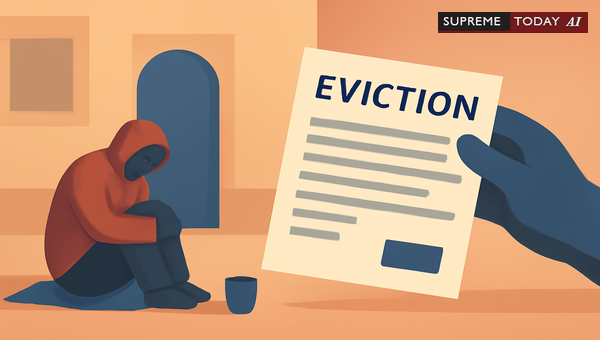
Court-Ordered Mass Dispossession: Homelessness Risks
In today's complex legal landscape, court orders enforcing evictions or dispossessions can have profound human impacts, especially when they risk rendering large groups of people homeless. The question at the heart of this issue is: Mass Dispossession in Pursuance of Order of Court that Would Render Individuals Homeless. This scenario raises critical questions about balancing property rights with the fundamental right to shelter, drawing from both Indian and U.S. jurisprudence. While courts generally uphold lawful evictions, they increasingly scrutinize orders that could lead to widespread homelessness, emphasizing humane alternatives and public welfare.
This blog post delves into key legal principles, court findings, and practical recommendations. Note that this is general information based on precedents and not specific legal advice—consult a qualified attorney for your situation.
Legal Context of Mass Dispossession and Homelessness
Mass dispossession through court orders often arises in land acquisition, eviction disputes, or requisition cases. Courts recognize the tension between owners' rights to reclaim property and the devastating effects on occupants, particularly vulnerable populations. For instance, the judiciary has stressed that while respondents may evict petitioners, the risk of homelessness demands careful consideration. Courts suggest alternatives like compensation or relocation to mitigate impacts T. Sanjiv Reddy VS State of Andhra Pradesh - Andhra Pradesh (2021).
In India, requisition orders must serve a public purpose of a temporary nature. The Supreme Court has ruled that indefinite requisitions, especially for housing homeless individuals, are invalid if they veer into permanent use TANDON BROS. VS STATE OF WEST BENGAL - Calcutta (1988). Similarly, during crises like the Covid-19 pandemic, courts mandated protections for the homeless, ensuring adequate care and facilities Sunil Kumar Aledia VS Govt. of NCT of Delhi - Delhi (2020).
Broadly, homelessness is defined to include both permanent and temporary involuntary removals, underscoring legal duties to safeguard affected rights AJAY MAKEN & ORS. vs UNION OF INDIA & ORS. - Delhi (2019).
Key Court Findings on Evictions and Homelessness
Court's Consideration of Homelessness Risks
Courts do not overlook the human cost of evictions. In one case, it was noted that respondents should consider providing compensation or alternative housing solutions to avoid rendering petitioners homeless T. Sanjiv Reddy VS State of Andhra Pradesh - Andhra Pradesh (2021). This reflects a compassionate judicial approach, prioritizing welfare alongside legal rights.
Validity of Requisition and Dispossession Orders
Requisitions must be temporary; permanent intents invalidate them. The Supreme Court clarified: requisition orders must serve a public purpose of a temporary nature. If the requisition is intended for a permanent purpose, it may be deemed invalidTANDON BROS. VS STATE OF WEST BENGAL - Calcutta (1988). Swift dispossessions without alternatives threaten homelessness and can be challenged, especially if they violate constitutional protections M/S Sonu Collections vs Smfg India Credit Co. Ltd. - Madhya PradeshPiyush vs The State Of Madhya Pradesh - Madhya Pradesh.
In agricultural contexts, courts have held that no act of parties or decree of court should render the agriculturists homeless, aligning with welfare state policies G. Chakrapani VS Jayapal - 2021 Supreme(Mad) 792 - 2021 0 Supreme(Mad) 792.
Vulnerability in Emergencies and Civil Disputes
During the Covid-19 crisis, courts emphasized proactive steps for homeless care Sunil Kumar Aledia VS Govt. of NCT of Delhi - Delhi (2020). U.S. cases echo this: In City of Grants Pass v. Johnson, the Court discussed rendering aid and support to the homeless, noting that when shelter beds are insufficient, unsheltered individuals are involuntarily homeless City of Grants Pass v. Johnson - Supreme Court of the United StatesGloria Johnson vs City of Grants Pass - Ninth CircuitCity of Grants Pass vs Johnson - Supreme Court. The Ninth Circuit ruled that punishing homeless people for camping when no shelter exists violates the Eighth Amendment City of Grants Pass vs Johnson - Supreme Court.
Civil disputes over possession fall under civil jurisdiction; invoking criminal proceedings for non-forceful dispossessions is often deemed an abuse. As one ruling stated: Such colourable exercise of jurisdiction would be against the object and spirit of Section 145 Cr. P.C. and it would render Civil and Criminal Courts irrelevantMahanth Bharat Das VS State of Bihar - 2024 Supreme(Pat) 208 - 2024 0 Supreme(Pat) 208Akbar Ali VS State of Bihar - PatnaBishwakarma Rai VS State of Bihar - Patna.
U.S. Perspectives: Eighth Amendment and Involuntary Homelessness
American courts provide valuable insights into homelessness from court actions. The Eighth Amendment prohibits cruel and unusual punishment, extended to cases where cities punish survival acts like sleeping outdoors due to lack of shelter. In Grants Pass, all unsheltered individuals qualified as involuntarily homeless because the homeless population exceeded available beds City of Grants Pass v. Johnson - Supreme Court of the United States.
District courts have intervened when cities' actions expose homeless individuals to dangers like extreme heat, granting injunctions against such conduct Sacramento Homeless Union vs City of Sacramento - 2024 Supreme(US)(ca9) 124 - 2024 Supreme(US)(ca9) 124. These precedents highlight that enforcing camping ordinances against homeless individuals when shelter options are insufficient violates the Eighth AmendmentCity of Grants Pass vs Johnson - Supreme CourtCity of Grants Pass v. Johnson - Supreme Court of the United States.
Protection for Long-Term Possessors and Humanitarian Concerns
Petitioners with long-standing possession often argue against demolition without rehabilitation. In one eviction notice case, courts noted that thousands of jhuggi dwellers would be left homeless without relocation plans, violating prior judgments Urmila VS Delhi Development Authority - 2022 Supreme(Del) 1192 - 2022 0 Supreme(Del) 1192. Similarly, in acquisition disputes, imminent dispossession rendering someone homeless tilts the balance toward interim relief Nirakar Samal VS Nisakar Samal - 2014 Supreme(Ori) 486 - 2014 0 Supreme(Ori) 486.
Lawful dispossessions, like tenant evictions or acquisitions, do not typically warrant recovery of possession suits unless rights are abrogated Challa Srinivasa Rao VS Challa Subbarao - 2011 Supreme(AP) 1052 - 2011 0 Supreme(AP) 1052Challa Srinivasa Rao VS Challa Subbarao - 2011 Supreme(AP) 1055 - 2011 0 Supreme(AP) 1055. However, courts intervene when orders lack justification or ignore circumstances M/S Sonu Collections vs Smfg India Credit Co. Ltd. - Madhya PradeshT SANJIV REDDY vs THE STATE OF AP - Andhra Pradesh.
Recommendations to Mitigate Homelessness Risks
To navigate these issues responsibly:- Provide Compensation and Alternatives: Respondents should offer financial aid or relocation to evicted parties, as suggested by courts T. Sanjiv Reddy VS State of Andhra Pradesh - Andhra Pradesh (2021).- Review Requisition Orders Regularly: Confirm temporary public purpose and periodicity to avoid invalidity TANDON BROS. VS STATE OF WEST BENGAL - Calcutta (1988).- Emergency Protocols: Develop plans for crises, ensuring shelter and care for vulnerable groups Sunil Kumar Aledia VS Govt. of NCT of Delhi - Delhi (2020).- Individualized Assessments: Conduct case-by-case reviews, especially where shelter scarcity makes homelessness involuntary City of Grants Pass vs Johnson - Supreme Court.- Proper Jurisdiction: Resolve possession disputes civilly, avoiding misuse of criminal forums Mahanth Bharat Das VS State of Bihar - 2024 Supreme(Pat) 208 - 2024 0 Supreme(Pat) 208.
Conclusion and Key Takeaways
Court-ordered mass dispossession that risks homelessness demands a balanced, humane approach. Indian courts focus on temporary requisitions, welfare during crises, and alternatives to eviction, while U.S. precedents under the Eighth Amendment protect against punishing involuntary homelessness. Legal frameworks consistently prioritize preventing cruel outcomes, urging compensation, relocation, and shelter availability.
Key Takeaways:- Evictions must consider homelessness risks; alternatives are often recommended T. Sanjiv Reddy VS State of Andhra Pradesh - Andhra Pradesh (2021).- Requisitions are temporary only TANDON BROS. VS STATE OF WEST BENGAL - Calcutta (1988).- No punishment for survival acts without shelter options City of Grants Pass vs Johnson - Supreme Court.- Civil disputes stay in civil courts Mahanth Bharat Das VS State of Bihar - 2024 Supreme(Pat) 208 - 2024 0 Supreme(Pat) 208.
By advocating for these protections, stakeholders can uphold justice without sacrificing humanity. For personalized guidance, seek professional legal counsel.
References:T. Sanjiv Reddy VS State of Andhra Pradesh - Andhra Pradesh (2021)TANDON BROS. VS STATE OF WEST BENGAL - Calcutta (1988)Sunil Kumar Aledia VS Govt. of NCT of Delhi - Delhi (2020)AJAY MAKEN & ORS. vs UNION OF INDIA & ORS. - Delhi (2019)City of Grants Pass v. Johnson - Supreme Court of the United StatesSacramento Homeless Union vs City of Sacramento - 2024 Supreme(US)(ca9) 124 - 2024 Supreme(US)(ca9) 124Mahanth Bharat Das VS State of Bihar - 2024 Supreme(Pat) 208 - 2024 0 Supreme(Pat) 208Urmila VS Delhi Development Authority - 2022 Supreme(Del) 1192 - 2022 0 Supreme(Del) 1192G. Chakrapani VS Jayapal - 2021 Supreme(Mad) 792 - 2021 0 Supreme(Mad) 792Nirakar Samal VS Nisakar Samal - 2014 Supreme(Ori) 486 - 2014 0 Supreme(Ori) 486Challa Srinivasa Rao VS Challa Subbarao - 2011 Supreme(AP) 1052 - 2011 0 Supreme(AP) 1052Challa Srinivasa Rao VS Challa Subbarao - 2011 Supreme(AP) 1055 - 2011 0 Supreme(AP) 1055Gloria Johnson vs City of Grants Pass - Ninth CircuitCity of Grants Pass vs Johnson - Supreme CourtCity of Grants Pass v. Johnson - Supreme Court of the United StatesM/S Sonu Collections vs Smfg India Credit Co. Ltd. - Madhya PradeshPiyush vs The State Of Madhya Pradesh - Madhya PradeshAkbar Ali VS State of Bihar - PatnaBishwakarma Rai VS State of Bihar - PatnaT SANJIV REDDY vs THE STATE OF AP - Andhra Pradesh
#MassDispossession, #HomelessnessLaw, #CourtEvictions