Searching Case Laws & Precedent on Legal Query.....!
Analysing the retrieved Case Laws
Scanned Judgements…!



Searching Case Laws & Precedent on Legal Query.....!
Analysing the retrieved Case Laws
Scanned Judgements…!
Arbitrator's Power to Consider Subsequent Events Arbitrators can consider subsequent events after the original claim if such events are relevant to the dispute. For example, in certain cases, the Arbitrator may evaluate events like subsequent tenders, auctions, or contractual developments that impact the claim or defense (e.g., participated in the subsequent tender held at their risk and costs and they were also successful tenderers ["2023 0 Supreme(Mad) 3021"], considering the fact that the appellants are the highest bidders in the subsequent auction ["2023 0 Supreme(Mad) 3021"]).
Impact on Award Validity and Claims The courts have emphasized that Arbitrators are not precluded from considering subsequent events if they are pertinent to the issues before them. Such events can influence the assessment of claims, damages, or contractual obligations, especially when they relate to the parties' conduct or contractual performance after the initial claim was made.
Main Points and Insights
The courts have acknowledged that subsequent events, such as new tenders or changes in circumstances, can be material to the arbitration process and its outcome, provided they are properly considered.
References
Arbitrators are permitted to consider subsequent events after the initial claim, especially when such events are relevant to the dispute's resolution. The courts recognize that these developments can influence the outcome and should be taken into account to ensure fair and comprehensive adjudication. Omitting relevant subsequent events may not automatically invalidate an award but could form the basis for challenge if their consideration is crucial to the issues at hand. Overall, the scope of an Arbitrator's discretion includes evaluating subsequent events that bear directly on the claims, defenses, or contractual obligations involved.
Note: The references provided are based on the extracted sources, which highlight instances where subsequent events, such as tenders or auctions, are considered relevant in arbitration contexts.
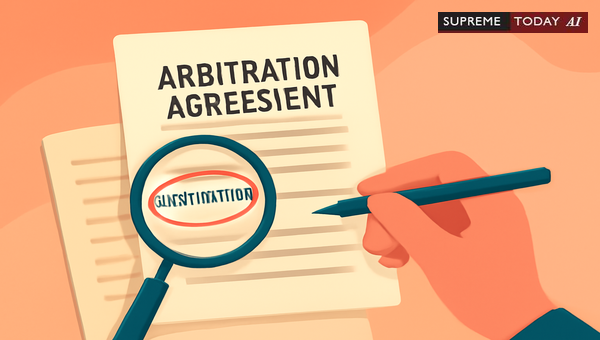
In the world of contracts, precision matters—but what happens when the word is misspelled in the agreement, such as arbitraction or arbitraton? Can a party still invoke proceedings? This question often arises in , where parties seek efficient resolution without courts. The of India has provided clarity on interpreting clauses, emphasizing substance over minor formal defects like misspellings. Generally, courts look to the parties' intent rather than literal perfection. However, success depends on the clause's scope and principles of fairness.
This post explores the 's perspective, drawing from key judgments on agreements, , and the arbitrator's power to consider . Note: This is general information based on judicial precedents and not specific legal advice. Consult a qualified lawyer for your situation.
The has consistently held that minor errors, such as misspellings in an clause, do not invalidate the agreement if the intent to arbitrate is clear. Such defects are typically viewed as , permissible for correction without derailing proceedings. For instance, modifications or clarifications are allowed for errors of computation, , or similar minor issues, not for substantive changes or new claims 2023 0 Supreme(Raj) 567 2022 0 Supreme(Manipur) 29.
Once invoked, an arbitrator may consider after the original claim, but only under strict conditions: when events materially affect the original claim, render it inappropriate, or are necessary for . This is confined to the agreement's scope, claim nature, and fairness principles 2016 0 Supreme(Cal) 118
2013 0 Supreme(Guj) 440.
decisions affirm broad interpretation of clauses. In cases emphasizing remedy alignment with realities, can be considered to ensure the remedy remains just and in accordance with current realities, but only if fairness is maintained and the events significantly impact the 2014 0 Supreme(All) 3061. Similarly, tribunals can account for events making original relief inappropriate 2016 0 Supreme(Cal) 118.
A misspelling falls under , correctable under frameworks like , limited to minor issues 2023 0 Supreme(Raj) 567. Parties may amend claims if events materially affect the original 2013 0 Supreme(Bom) 766 2023 0 Supreme(Raj) 567.
Arbitrators can incorporate when:- Original claim becomes obsolete or satisfied
2011 0 Supreme(Raj) 1313.- Events materially impact rights
2022 0 Supreme(Manipur) 29.- Needed for or to shorten litigation 2023 0 Supreme(Del) 4684 1975 0 Supreme(SC) 355.- Directly relevant, altering the dispute landscape 2022 0 Supreme(Megh) 279 2023 0 Supreme(Raj) 567.
The deposit of obscures the original claim and alters the cause itself 2022 0 Supreme(Raj) 2373 2022 0 Supreme(Raj) 470 2019 0 Supreme(All) 2158, highlighting risks of delay entrenching third-party rights or waiving claims via acquiescence.
under the reinforce finality, upholding awards despite claims of arbitrator oversight. In multiple cases, plaintiffs failed to set aside awards alleging failure to consider specific clauses (e.g., cl 25 Defence and Indemnity Claim), as arbitrators addressed essential issues without breaches
.
Courts emphasized: The burden of proof lies with the Plaintiff to demonstrate grounds for setting aside the award and limited intervention to specific statutory grounds. This mirrors pro- stance—minor defects like misspellings won't unsettle valid clauses if intent evident.
Delay can bar claims, as the delay would entrench independent third party rights, which cannot be dislodged and parties waive rights by untimely assertion 2022 0 Supreme(Raj) 2373 2019 0 Supreme(All) 2158 2019 0 Supreme(All) 1535 2019 0 Supreme(All) 1315. In compassionate appointment disputes, courts dismissed petitions after years of inaction, noting obscure original claims 2022 0 Supreme(Raj) 470.
Parties invoking despite a misspelling should act promptly to avoid arguments.
If is misspelled, a party can typically invoke proceedings if the clause clearly intends dispute resolution via . precedents support overlooking , allowing focus on merits 2023 0 Supreme(Raj) 567. Post-, may be considered narrowly to ensure justice, but not to rewrite the dispute.
In summary, the promotes efficacy, allowing despite minor flaws like misspellings and measured consideration of within bounds. Stay proactive in disputes for optimal outcomes.
): Upholding awards.
(Word count: approx. 1050)
#ArbitrationLaw, #SupremeCourt, #ContractDisputes


to consider the question of grant of interest pendente lite and award interest if he finds the claim to be justified. ... The learned Single Judge also held that the failure on the part of the Arbitrator to consider Clause 63 of the contract would vitiate the award. ... participated in the subsequent tender held at their risk and costs and they were also successful tenderers. ... Considering the fact that....

(in paras 423, 425, 480, 515 and 518 of the Award), the Arbitrator failed to- (a) include the cl 25 Defence and the Indemnity Claim as issues for him to decide; (b) consider the cl 25 Defence and the Indemnity Claim in his findings and reasonings; and (c) make any decision ... Under O 69, r 5(5) RoC 2012, the O.S. and affidavit have to be served on the Arbitrator. In this regard, the original#HL....
(in paras 423, 425, 480, 515 and 518 of the Award), the Arbitrator failed to- (a) include the cl 25 Defence and the Indemnity Claim as issues for him to decide; (b) consider the cl 25 Defence and the Indemnity Claim in his findings and reasonings; and (c) make any decision ... Under O 69, r 5(5) RoC 2012, the O.S. and affidavit have to be served on the Arbitrator. In this regard, the original#HL....
(in paras 423, 425, 480, 515 and 518 of the Award), the Arbitrator failed to- (a) include the cl 25 Defence and the Indemnity Claim as issues for him to decide; (b) consider the cl 25 Defence and the Indemnity Claim in his findings and reasonings; and (c) make any decision ... Under O 69, r 5(5) RoC 2012, the O.S. and affidavit have to be served on the Arbitrator. In this regard, the original#HL....
(in paras 423, 425, 480, 515 and 518 of the Award), the Arbitrator failed to- (a) include the cl 25 Defence and the Indemnity Claim as issues for him to decide; (b) consider the cl 25 Defence and the Indemnity Claim in his findings and reasonings; and (c) make any decision ... Under O 69, r 5(5) RoC 2012, the O.S. and affidavit have to be served on the Arbitrator. In this regard, the original#HL....
(in paras 423, 425, 480, 515 and 518 of the Award), the Arbitrator failed to- (a) include the cl 25 Defence and the Indemnity Claim as issues for him to decide; (b) consider the cl 25 Defence and the Indemnity Claim in his findings and reasonings; and (c) make any decision ... Under O 69, r 5(5) RoC 2012, the O.S. and affidavit have to be served on the Arbitrator. In this regard, the original#HL....
(in paras 423, 425, 480, 515 and 518 of the Award), the Arbitrator failed to- (a) include the cl 25 Defence and the Indemnity Claim as issues for him to decide; (b) consider the cl 25 Defence and the Indemnity Claim in his findings and reasonings; and (c) make any decision ... Under O 69, r 5(5) RoC 2012, the O.S. and affidavit have to be served on the Arbitrator. In this regard, the original#HL....
(in paras 423, 425, 480, 515 and 518 of the Award), the Arbitrator failed to- (a) include the cl 25 Defence and the Indemnity Claim as issues for him to decide; (b) consider the cl 25 Defence and the Indemnity Claim in his findings and reasonings; and (c) make any decision ... Under O 69, r 5(5) RoC 2012, the O.S. and affidavit have to be served on the Arbitrator. In this regard, the original#HL....
(in paras 423, 425, 480, 515 and 518 of the Award), the Arbitrator failed to- (a) include the cl 25 Defence and the Indemnity Claim as issues for him to decide; (b) consider the cl 25 Defence and the Indemnity Claim in his findings and reasonings; and (c) make any decision ... Under O 69, r 5(5) RoC 2012, the O.S. and affidavit have to be served on the Arbitrator. In this regard, the original#HL....
(in paras 423, 425, 480, 515 and 518 of the Award), the Arbitrator failed to- (a) include the cl 25 Defence and the Indemnity Claim as issues for him to decide; (b) consider the cl 25 Defence and the Indemnity Claim in his findings and reasonings; and (c) make any decision ... Under O 69, r 5(5) RoC 2012, the O.S. and affidavit have to be served on the Arbitrator. In this regard, the original#HL....

In certain situations, the party by its failure to raise the claim in time waives its right to assert it after long delay. The deposit of subsequent events obscures the original claim and alters the cause itself. The delay would entrench independent third party rights, which cannot be dislodged. The refusal to permit agitation of stale claims is based on the principle of acquiescence.

The delay would entrench independent third party rights, which cannot be dislodged. In certain situations, the party by its failure to raise the claim in time waives its right to assert it after long delay. The deposit of subsequent events obscures the original claim and alters the cause itself. The refusal to permit agitation of stale claims is based on the principle of acquiescence.

The refusal to permit agitation of stale claims is based on the principle of acquiescence. The delay would entrench independent third party rights, which cannot be dislodged. The deposit of subsequent events obscures the original claim and alters the cause itself. In certain situations, the party by its failure to raise the claim in time waives its right to assert it after long delay.

The delay would entrench independent third party rights, which cannot be dislodged. The deposit of subsequent events obscures the original claim and alters the cause itself. In certain situations, the party by its failure to raise the claim in time waives its right to assert it after long delay. The refusal to permit agitation of stale claims is based on the principle of acquiescence.

The delay would entrench independent third party rights, which cannot be dislodged. In certain situations, the party by its failure to raise the claim in time waives its right to assert it after long delay. The refusal to permit agitation of stale claims is based on the principle of acquiescence. The deposit of subsequent events obscures the original claim and alters the cause itself.


An indispensable Tool for Legal Professionals, Endorsed by Various High Court and Judicial Officers
Please visit our Training & Support
Center or Contact Us for assistance

Scan Me!
India’s Legal research and Law Firm App, Download now!


For Daily Legal Updates, Join us on :



 Back to top


