


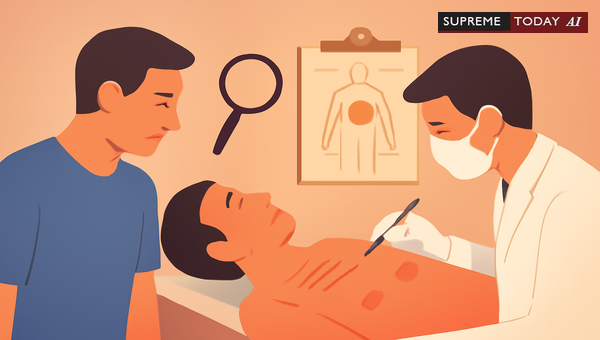
Multiple Minor Injuries: Murder or Lesser Offense?
In high-profile assault cases, a puzzling question often arises: How do medical professionals determine whether multiple minor hurts should be considered as murder or lesser offenses? This inquiry lies at the heart of distinguishing between grave crimes like murder and lesser charges such as or . Understanding this process is crucial for legal professionals, victims' families, and the public seeking justice.
This blog post delves into the medical and legal frameworks governing such determinations, drawing from key case law and forensic principles. We'll explore the role of , intent, and evidence—generally speaking, as laws can vary by jurisdiction.
The Role of Medical Evidence in Assessing Multiple Injuries
Medical professionals play a pivotal role by evaluating the nature, location, severity, and cumulative effect of injuries. Individually minor wounds—such as bruises, lacerations, or fractures—may not be fatal, but their aggregate can be deadly. Courts rely on medical reports and autopsy findings to establish .
As established in case law, the expression in includes also its plural, so that the clause would cover a case where all the injuries intentionally caused by the accused are cumulatively sufficient to cause the death in the even if none of those injuries individually measures up to such sufficiency1976 0 Supreme(SC) 342.
For instance, multiple bruises, fractures, and lacerations were deemed collectively sufficient to cause death, despite no single injury being fatal 1976 0 Supreme(SC) 342. Similarly, postmortem examinations confirming death from multiple stab injuries have led to murder convictions, while non-fatal fractures often result in lesser charges like under 2025 1 Supreme 324 2024 Supreme(Online)(SC) 12258.
Medical documentation is key:- Thorough injury catalogs: Note each wound's specifics.- Cumulative impact analysis: Assess risks like hemorrhage or shock.- Forensic correlation: Link injuries to the assault mechanism 2025 1 Supreme 324.
Legal Standards for Murder vs. Lesser Offenses
The distinction hinges on two pillars: sufficiency of injuries and intent or knowledge of the accused. Under typical homicide laws, an act qualifies as murder if injuries are sufficient in the to cause death and inflicted with intent to kill or knowledge of lethal potential.
Even without targeting vital parts or using deadly weapons, premeditated assaults causing smashed limbs and numerous bruises can meet this threshold: the injuries were not on a vital part of the body and no weapon was used which can be described as specially dangerous... it is obvious that his hands and legs were smashed and numerous bruises and lacerated wounds were caused... the injuries intended to be caused were sufficient to cause death in the 1976 0 Supreme(SC) 342.
Courts apply tests like the and to evaluate if multiple acts form one offense or multiples, aiding classification 2024 Supreme(US)(ca4) 241 2024 Supreme(US)(ca2) 211. In racketeering or conspiracy contexts, are scrutinized to determine if they involve crimes of violence, such as murder 2023 Supreme(US)(ca2) 213 2021 Supreme(US)(ca2) 50.
Application to Multiple Minor Hurts
When facing multiple minor injuries, experts consider:- Totality of harm: Could complications from combined wounds lead to death?- Assault circumstances: Premeditated beatings confined to limbs don't preclude murder: the mere fact that the beating was designedly confined by assailants to the legs and arms or that none of the multiple injuries inflicted was individually sufficient in the to cause death will not exclude the application of of 1976 0 Supreme(SC) 342.- Weapon and method: Sticks causing fractures may yield lesser offenses if non-fatal 2024 Supreme(Online)(SC) 12258.
Judges instruct juries on like if evidence supports it, ensuring nuanced verdicts 2024 Supreme(US)(ca9) 216 2022 Supreme(US)(ca9) 381.
Intent and Knowledge: Key Determinants
Intent elevates charges. Malicious infliction with sharp weapons leans toward murder, while lesser intent suggests 2025 1 Supreme 324. Premeditated acts smashing limbs demonstrate knowledge of lethality 1976 0 Supreme(SC) 342.
Florida law, for example, categorizes lesser offenses as necessarily included, influencing post-conviction reviews 2023 Supreme(US)(ca11) 43.
Exceptions and Lesser Charges
Not all cumulative injuries trigger murder:- Truly minor, non-lethal hurts without intent may classify as culpable homicide or hurt.- Absent robust medical evidence, courts struggle to prove sufficiency.- Accused with sticks causing fractures received lesser convictions 2024 Supreme(Online)(SC) 12258.
Sentencing weighs severity, victim innocence, and societal impact—potentially life imprisonment or death for fatal multiples 2025 0 Supreme(Telangana) 701 2023 0 Supreme(Cal) 1173.
Recommendations for Stakeholders
- Medical pros: Document exhaustively; evaluate aggregates in autopsies.
- Legal practitioners: Align findings with intent evidence.
- Investigators: Preserve scene for forensic ties.
Conclusion and Key Takeaways
Medical professionals determine if multiple minor hurts amount to murder by assessing their collective sufficiency to cause death in the , alongside the accused's intent or knowledge. Cases like those emphasizing plural bodily injuries illustrate this nuanced balance 1976 0 Supreme(SC) 342. Integrating forensic evidence with legal tests ensures fair classifications—from murder to 2025 1 Supreme 324.
Key takeaways:- Cumulative effects trump individual minor harms.- Intent bridges to murder.- Robust evidence is paramount.
This post provides general insights based on referenced cases and is not legal advice. Consult a qualified attorney for specific situations.
References
- 1976 0 Supreme(SC) 342 – Core case on cumulative injuries for murder.
- 2025 1 Supreme 324 – Differentiating fatal vs. non-fatal injuries.
- 2024 Supreme(Online)(SC) 12258 – Lesser offenses for non-fatal fractures.
- 2024 Supreme(US)(ca4) 241 – Divisibility tests for offenses.















