


Can a Muslim Grandmother Seek Permanent Custody of Her Deceased Son's Child?
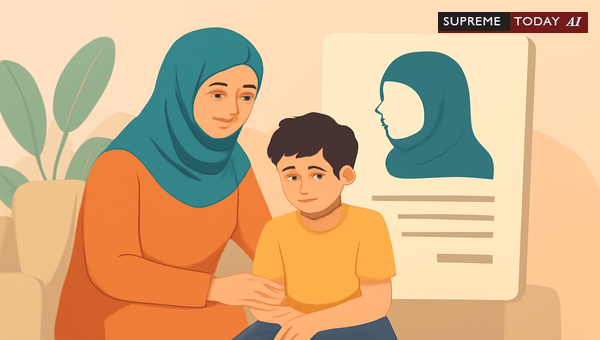
In the intricate world of family law, particularly under Muslim personal law, questions about guardianship and custody often arise during tragic circumstances like the death of a parent. Imagine a devoted Muslim grandmother, left to care for her young grandson after her son's untimely passing. Can she seek permanent custody of her grandson on behalf of her deceased son? This question touches on deep-rooted Islamic principles, legal precedents, and the paramount welfare of the child.
This article delves into the legal framework governing such scenarios, drawing from Islamic texts, scholarly interpretations, and relevant case insights. While this provides general information, it is —consult a qualified lawyer for your specific situation.
Understanding Guardianship Under Muslim Personal Law
Muslim personal law, derived primarily from the Quran, Hadith, and jurisprudential consensus, recognizes as a sacred duty to protect minors' person and property. Importantly, a Muslim woman can seek permanent custody of her grandson (her deceased son’s child), provided she meets the legal and religious criteria for guardianship2022 0 Supreme(Ker) 443.
Key principles include:- Women as capable guardians: Muslim law permits women to act as guardians of minors, including their own children or relatives’ children, under certain circumstances 2022 0 Supreme(Ker) 443.- No gender restriction: The Quran and Islamic scholarly interpretations affirm that women can be appointed as guardians of minors' property and persons, especially in the absence of a male guardian 2022 0 Supreme(Ker) 443.- Suitability over gender: Guardianship hinges on sound judgment and the minor's best interests, not solely on being male 2022 0 Supreme(Ker) 443.
explicitly states that guardians should protect the wealth of minors, emphasizing capability regardless of gender: guardians can be male or female based on circumstances 2022 0 Supreme(Ker) 443.
Legal Basis: Quranic and Prophetic Guidance
The foundation lies in core Islamic sources. The Prophet Muhammad's (PBUH) advice to Hind bint Utbah illustrates women's authority in family matters. He permitted her to take reasonable portions from her husband's wealth for herself and her children, underscoring women's role in familial welfare and custody 2022 0 Supreme(Ker) 443.
Under Muslim law, a woman can serve as a for her minor children or, by extension, grandchildren in the absence of closer guardians. For a grandmother seeking custody of her deceased son's child, her close blood relation strengthens her claim, as long as she demonstrates capacity to provide care 2022 0 Supreme(Ker) 443.
Custody Specifics for a Deceased Son's Minor Child
In scenarios where the father (the son) has passed away, the grandmother may step in as a potential guardian. Courts assess:- Child's welfare: The overriding principle is the minor's best interests.- Grandmother's suitability: Evidence of her ability to nurture, educate, and manage the child's property.- Absence of preferable guardians: If no father, paternal grandfather, or other male relatives are available or suitable, the grandmother's role is viable 2022 0 Supreme(Ker) 443.
The law does not bar women from such claims purely on gender; rather, it promotes fairness and protection 2022 0 Supreme(Ker) 443.
Insights from Related Legal Contexts
Broader case law reinforces women's roles in Muslim family matters. For instance, in a poignant narrative of an Indian Muslim woman abandoned by her husband abroad, her son took custody to protect her, highlighting familial protective instincts recognized under Muslim law 2024 Supreme(Online)(Mad) 67373. This echoes the grandmother's position in safeguarding her grandson.
In pension disputes, courts have acknowledged children's entitlements from deceased Muslim fathers, even amid marital complexities. One ruling noted that while a second wife's marriage might be void under the if a prior spouse lives, the son was entitled to his deceased father's pension share, affirming paternal lineage and family rights under Mohammedan law
. Such precedents underscore courts' willingness to prioritize minors' welfare and recognize extended family roles.
Another context involves property assignments under Muslim law, where a Muslim woman is a , and nothing prevents assets being assigned to her, showing women's independent legal capacity, which extends to guardianship
. These examples illustrate evolving judicial support for women's familial authority.
Exceptions and Court Considerations
While promising, claims are not automatic. Key limitations include:- Best interests test: Courts may prefer a male guardian (e.g., paternal uncle) if deemed more suitable for the child's welfare 2022 0 Supreme(Ker) 443.- Procedural requirements: The grandmother must prove her relationship, capacity, and the child's needs.- No absolute gender bar: Gender alone does not disqualify; suitability governs 2022 0 Supreme(Ker) 443.
In criminal matters tangentially related, like bail for Muslim family members, courts weigh custody and family circumstances, further emphasizing welfare
.
Practical Steps and Recommendations
If you're a Muslim grandmother in this position:1. File in family/guardianship court: Submit an application under relevant personal laws, attaching proof of relationship (birth/death certificates) and your fitness.2. Gather evidence: Demonstrate financial stability, living arrangements, and commitment to the child's Islamic upbringing.3. Invoke Islamic principles: Reference Quran 4:6 and prophetic traditions to support your suitability as guardian 2022 0 Supreme(Ker) 443.4. Seek legal counsel: Engage a lawyer versed in Muslim personal law for tailored guidance.
Courts typically evaluate holistically, often appointing the claimant if no better option exists.
Conclusion: Empowering Grandmothers Under Islamic Law
Under Muslim personal law, a grandmother may indeed seek permanent custody of her grandson following her son's death, backed by Quranic equity and legal recognition of women's guardianship roles 2022 0 Supreme(Ker) 443. This balances tradition with the child's paramount needs.
Key Takeaways:- Women are viable guardians; gender is not a barrier.- Prioritize the minor's welfare and prove your capability.- Leverage Islamic sources and precedents for strong claims.
This evolving area reflects Islam's emphasis on justice. For personalized advice, consult professionals. Stay informed on family rights to protect your loved ones.
Word count: Approximately 1050. General information only—not substitute for legal counsel.
#MuslimLaw #ChildCustody #Guardianship












