Searching Case Laws & Precedent on Legal Query.....!
Analysing the retrieved Case Laws
Scanned Judgements…!



Searching Case Laws & Precedent on Legal Query.....!
Analysing the retrieved Case Laws
Scanned Judgements…!
Negligence - Definition and NatureNegligence is a relative and comparative concept, meaning what constitutes negligence in one case may not in another. It involves a failure to exercise the required degree of care expected of a prudent person or driver, and is assessed based on what a reasonable person would do under similar circumstances. It is not always proved through direct evidence and requires establishing a breach of duty and resultant damage.References: ["2023 0 Supreme(All) 2341"], ["2023 0 Supreme(All) 609"], ["2024 0 Supreme(Guj) 1167"], ["2023 0 Supreme(All) 2353"], ["2023 0 Supreme(All) 474"], ["2024 0 Supreme(Guj) 1061"], ["2022 Supreme(Online)(All) 102"], ["2023 0 Supreme(All) 425"], [" Madras HC Rules Bhagavad Gita as Moral Science, Overturns FCRA Rejection - High Court of Madras
Legal Context and SpecificsThe term negligence is not explicitly defined in the Indian Penal Code (IPC). The Supreme Court has clarified that negligence must be culpable or gross, not merely an error in judgment, especially when negligence is an ingredient of an offence. In criminal law, proving negligence involves showing a breach of a duty that results in harm, with the negligence being culpable.References: ["2024 0 Supreme(Guj) 1167"], ["2024 0 Supreme(Guj) 1061"]
Contributory and Composite NegligenceContributory negligence occurs when the injured party has also contributed to the accident through their own negligence, reducing or barring their claim for damages. Composite negligence refers to negligence caused by multiple wrongdoers, where the extent of each party’s contribution may be difficult to quantify. The assessment of negligence involves factual and evidentiary considerations.References: ["2023 0 Supreme(All) 2341"], ["2023 0 Supreme(All) 474"], ["2023 0 Supreme(All) 425"], ["2022 0 Supreme(Bom) 1964"], ["2024 0 Supreme(Ker) 255"]
Principles and Legal TestsThe duty to take care is defined as behaving as a reasonably careful person would in similar circumstances. Negligence involves three elements: a legal duty, a breach of that duty, and resulting damage. The concept of proximate cause is relevant in establishing liability. The courts emphasize the importance of culpability and grossness in establishing negligence, especially in criminal cases.References: ["2024 0 Supreme(Ker) 255"]
Analysis and ConclusionNegligence is a legal concept characterized by a failure to exercise reasonable care, assessed comparatively rather than absolutely. It is context-dependent, requiring proof of breach of duty and resulting harm, with particular emphasis on culpability in criminal law. Contributory and composite negligence further complicate liability assessments, necessitating factual and evidentiary evaluation. While not explicitly defined in the IPC, courts interpret negligence based on established principles of reasonableness, duty, breach, and causation.References: All sources cited above
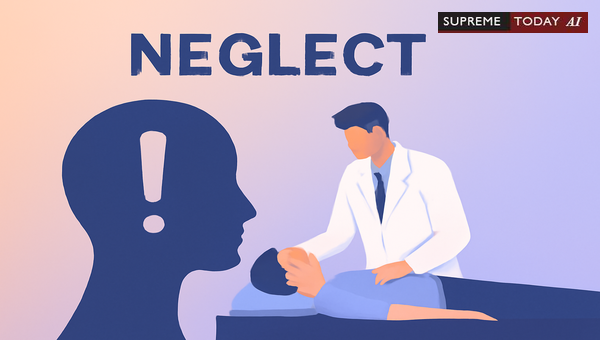
In everyday life, we often hear the term thrown around—perhaps after a car accident or a slip-and-fall incident. But where is defined in a legal sense? Understanding this concept is crucial for anyone navigating personal injury claims, professional liability, or even business risks. This blog post breaks down the legal definition of , its essential components, and real-world applications drawn from judicial sources. We'll explore how courts interpret , supported by key quotes and case examples.
forms the backbone of , typically allowing injured parties to seek compensation when someone's careless actions cause harm. However, it's not just about carelessness; it requires specific legal elements. Let's dive into the details.
is fundamentally the breach of a duty caused by the to do something which a reasonable man, guided by considerations that ordinarily regulate human conduct, would do, or doing something which a prudent and reasonable man would not do.2014 2 Supreme 134
This classic formulation emphasizes a —not perfection, but what an ordinary, prudent individual would do in similar circumstances. As articulated in key legal documents, is simply neglect of some care which we are bound by law to exercise towards somebody.2009 0 Supreme(SC) 1153
Key points include:- Often described as careless conduct or failure to exercise the expected standard of care. 2009 0 Supreme(SC) 1153 2014 2 Supreme 134- Involves or falling below the legal standard. 2009 0 Supreme(SC) 1153 2014 2 Supreme 134- Relative to circumstances; not always gross carelessness but can be or . 2009 0 Supreme(SC) 1153- Requires a duty to take care, breach of that duty, and resulting damages. 2009 0 Supreme(SC) 1153 2014 2 Supreme 134
Lord Macmillan's perspective in reinforces this: The law takes no cognizance of carelessness in the abstract. It concerns itself with carelessness only where there is a duty to take care and where failure in that duty has caused damage.2009 0 Supreme(SC) 1153
Courts consistently outline three core elements:1. Legal duty to exercise due care toward the claimant. 2009 0 Supreme(SC) 1153 2014 2 Supreme 1342. Breach of that duty through action or inaction. 2009 0 Supreme(SC) 1153 2014 2 Supreme 1343. Consequential damage resulting from the breach. 2009 0 Supreme(SC) 1153 2014 2 Supreme 134
This framework ensures isn't mere misfortune but a failure against an objective benchmark—the conduct of a reasonable person guided by considerations that normally regulate human conduct. 2009 0 Supreme(SC) 1153 2014 2 Supreme 134
is contextual and relative, varying from minor inadvertence to . It's not absolute carelessness but measured against specific situations. Courts recognize it can stem from passive acts, focusing on whether conduct fell below the expected standard. 2009 0 Supreme(SC) 1153
In civil contexts, it fixes liability for damages; in criminal law, it demands a higher threshold like or . 2009 0 Supreme(SC) 1153
Legal definitions come alive through cases. Here are examples illustrating across sectors.
In electrocution incidents, authorities' failure to maintain lines exemplifies . is defined as a breach of the duty caused by the to do something which a reasonable man, guided by those considerations which regulate the conduct of human affairs would do, or doing something which a prudent and a reasonable man would do.2017 0 Supreme(UK) 301
One case involved a woman's death from a hanging live wire; the court held respondents liable for neglecting to maintain electrical lines safely and failing to prevent energy escape, awarding Rs. 4,10,000 with 9% interest. 2017 0 Supreme(UK) 301
Similarly, may consist as well in not doing the thing which ought to be done as in doing that which ought not to be done when in either case it has caused loss & damage to another.2014 0 Supreme(Ori) 518 A minor suffered 70% disability from a snapped wire; opponents were liable for Rs. 6,75,000 plus 8% interest due to poor maintenance. 2014 0 Supreme(Ori) 518
Another ruling awarded Rs. 3 lakhs for a laborer's electrocution death, citing failure to trim trees near live wires as negligent discharge of . 2014 0 Supreme(Ori) 562
Even in regulatory contexts, arises from lax safety. A company lost liquor to fire; the court rejected claims, finding in safety measures for flammable goods, upholding excise duty demand. included preventing revenue loss through proper protocols. 2022 0 Supreme(SC) 88
Medical cases apply the : Did the professional act align with accepted practice? In an abortion death, doctors were negligent for lacking proper training in 2nd trimester procedures and poor record-keeping. What constitutes medical Based on the touchstone of the Bolam's test is well settled...
Discrepancies in records and deviation from standards led to upheld liability under .
These cases show 's breadth—from public utilities to private clinics—always hinging on breached duties causing harm.
Not all carelessness qualifies: There must be a owed duty; isolated mishaps without breach don't count. In criminal law, must be severe (e.g., ). 2009 0 Supreme(SC) 1153
This overview provides general insights into definitions and applications. Laws vary by jurisdiction, and outcomes depend on facts. This is not legal advice—consult a qualified attorney for your situation.
References:- 2009 0 Supreme(SC) 1153: Core definitions and judicial quotes.- 2014 2 Supreme 134: Detailed constituents and reasonable man standard.- Additional cases: 2022 0 Supreme(SC) 88, 2017 0 Supreme(UK) 301, 2014 0 Supreme(Ori) 518,
, 2014 0 Supreme(Ori) 562. #NegligenceLaw, #DutyOfCare, #LegalDefinition


Negligence is not an absolute term, but is a relative one. It is rather a comparative term. What may be negligence in one case may not be so in another. Where there is no duty to exercise care, negligence in the popular sense has no legal consequence. ... In view of the fast and constantly increasing volume of traffic, motor vehicles upon roads may be regarded to some extent as coming within the principle of liability defined#HL_E....

Negligence is not an absolute term, but is a relative one. It is rather a comparative term. What may be negligence in one case may not be so in another. Where there is no duty to exercise care, negligence in the popular sense has no legal consequence. ... In view of the fast and constantly increasing volume of traffic, motor vehicles upon roads may be regarded to some extent as coming within the principle of liability defined#HL_E....

The word “negligence” has not been defined in the IPC. ... In Mahadev Prasad Kaushik v State of U P. [(2009)2 SCC (C) 834] the Hon’ble Apex Court in regards to negligence has observed following:- “Though the term “negligence” has not been defined in the Code, it may be stated that negligence is the omission to do something which a ... “Where negligence is an essential....

In view of the fast and constantly increasing volume of traffic, motor vehicles upon roads may be regarded to some extent as coming within the principle of liability defined in Rylands v. Fletcher, (1868) 3 HL (LR) 330. ... Negligence is not an absolute term, but is a relative one. It is rather a comparative term. What may be negligence in one case may not be so in another. Where there is no duty to exercise care, negligence#HL_EN....

In view of the fast and constantly increasing volume of traffic, motor vehicles upon roads may be regarded to some extent as coming within the principle of liability defined in Rylands V/s. Fletcher, (1868) 3 HL (LR) 330. ... 'Composite negligence' refers to the negligence on the part of two or more persons. Where a person is injured as a result of negligence on the part of two or more wrong doers, it is said that the pers....

In Mahadev Prasad Kaushik v State of U P. [(2009)2 SCC (C) 834] the Hon’ble Apex Court in regards to negligence has observed following:- “Though the term “negligence” has not been defined in the Code, it may be stated that negligence is the omission to do something which a reasonable ... The prosecution is also required to prove the degree of negligence and rashness and it should not be to amount the crim....

A contributory negligence may be defined as negligence in not avoiding the consequences arising from the negligence of some other person, when means and opportunity are afforded to do so. The question of negligence would arise only when both parties are found to be negligent. ... The element of proportionality of contributory negligence is a subjective finding, the Tribunal has attribute....

The Court proceeded to hold, “Duty to take care is defined by Winfield as a restriction of the defendant's freedom of conduct, obliging him to behave as a reasonably careful man would behave in the like circumstances. In Donoghue v. ... Stevenson (1932 App, Cas 562, 580) Lord Atkin defined it thus : “You must take reasonable care to avoid acts or omissions which you can reasonably forsee would be likely to injure your neighbour. Who, the, in law is my neighb....
... (19) In view of the fast and constantly increasing volume of traffic, motor vehicles upon roads may be regarded to some extent as coming within the principle of liability defined in Rylands v. Fletcher, (1868) LR 3 HL 330. ... It is only in the case of contributory negligence that the injured himself has contributed by his negligence in the accident. ... On the other hand, where a person suffers injury, partly due to negligenc....
In view of the fast and constantly increasing volume of traffic, motor vehicles upon roads may be regarded to some extent as coming within the principle of liability defined in Rylands V/s. Fletcher, (1868) 3 HL (LR) 330. ... 'Composite negligence' refers to the negligence on the part of two or more persons. Where a person is injured as a result of negligence on the part of two or more wrong doers, it is said that the pers....

In Concise Oxford English Dictionary,10[11th Edition, p. 958.], the term “negligence” is defined and explained as under:-

It is a case where the Line-man of the area and his immediate officers intended the consequence by their negligence. Negligence is defined as a breach of the duty caused by the omission to do something which a reasonable man, guided by those considerations which regulate the conduct of human affairs would do, or doing something which a prudent and a reasonable man would do. In the instant case, the petitioners have suffered injuries because of the negligence of the line-man o....

Negligence may consist as well in not doing the thing which ought not to be done as in doing that which ought not to, be done when in either case it has caused loss & damage to another. In Advanced Law Lexicon of 3rd Edition 2009, negligence has been defined as follows: "Negligence" is not an affirmative word, it is a negative word; it is the absence of such care, skill & diligence as the duty of the person to bring to the performance of the work, which he is said not to have....

Also, the medical records are not properly maintained by OPs, which show lot of discrepancies. What constitutes medical negligence Based on the touchstone of the Bolam's test is well settled through a catena of decisions of the Hon'ble Supreme Court, including in Jacob Mathew v. State of Punjab & Anr., (2005) 6 SCC 1, a three-Judge Bench decision; Indian Medical Association v. V.P. Shantha and Ors., (1995) 6 SCC 651, and Kusum Sharma & Ors. v. Batra Hospital and Medical Research Centre & Ors.,....

Negligence may consist as well in not doing the thing which ought to be done as in doing that which ought not to be done when in either case it has caused loss and damage to another. Negligence is not an affirmative word, it is a negative word; it is the absence of such care, skill and diligence as it was the duty of the person to bring to the performance of the work, which he is said not to have performed. In Advanced Law Lexicon of 3rd Edition 2009, negligence has been defined as f....


An indispensable Tool for Legal Professionals, Endorsed by Various High Court and Judicial Officers
Please visit our Training & Support
Center or Contact Us for assistance

Scan Me!
India’s Legal research and Law Firm App, Download now!


For Daily Legal Updates, Join us on :



 Back to top


