


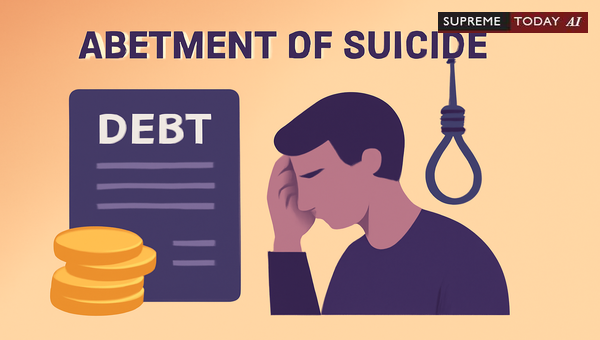
Does Non-Payment of Debt Induce Suicide? Indian Law Guide
In today's fast-paced financial world, debt disputes are common. But what happens when a debtor takes the extreme step of suicide, blaming non-payment by the creditor? A pressing question arises: Non Payment of Debt Not Induce to Commit Suicide – does mere refusal or delay in paying a debt amount to under Indian law?
This blog delves into this nuanced legal issue, drawing from key judicial precedents and legal principles under the (IPC). We'll examine why courts typically hold that non-payment alone doesn't cross the threshold into , while highlighting the need for evidence of or aiding. Note: This is general information based on precedents and not specific legal advice. Consult a qualified lawyer for your situation.
Main Legal Finding
The legal consensus is clear: mere non-payment of debt, without evidence of , coercion, or aiding in the act of suicide, does not constitute abetment under Indian law, particularly () read with (abetment). Courts emphasize the absence of (guilty intent) and direct involvement. 2006 0 Supreme(Raj) 548 2025 0 Supreme(Raj) 1797
For abetment to be established, there must be proof of , , or – not just financial pressure. As one court clarified, mere asking for a loan to be repaid, without more, does not constitute or aiding. 2006 0 Supreme(Raj) 548
Key Points from Precedents
- Abetment Requires Clear Evidence: , , or aiding must be proven. Mere refusal to pay or non-payment doesn't suffice. 2011 0 Supreme(Raj) 2058 2006 0 Supreme(Raj) 548
- is Essential: Intention to provoke suicide is key; debt demands alone lack this. 2006 0 Supreme(Raj) 548 2025 0 Supreme(Raj) 1797
- No Automatic Liability: Financial disputes or harassment without direct incitement fall short. 2025 0 Supreme(Raj) 1797
These principles are reinforced across multiple judgments, protecting creditors from unwarranted criminal charges.
Detailed Analysis: Absence of in Debt Cases
Core Principle: Debt vs.
Non-payment of debt often stems from financial distress, but courts distinguish this from criminal abetment. In a pivotal case, the court held that the deceased's debt trap was created by himself, and the act of requesting repayment does not amount to . The absence of means no charges under can be framed solely on non-payment. 2006 0 Supreme(Raj) 548
Similarly, in , the ruled that suicide due to the deceased's own conduct (like drunkenness) without accused's lacks abetment ingredients. 2011 0 Supreme(Raj) 2058
Broader Judicial Insights from Additional Sources
echo this view. For instance, one ruling states: due to non-payment of amount of earnest amount of given society to commitsuicide, the conscience of the Court should ... There is no active act or direct act committed by the applicant which laid victim to commitsuicide nor there is any material produced by the prosecution is not sufficient.
Another case involving a suicide note alleging non-repayment notes: In the suicide note he levelled allegations that the present applicants had borrowed loan from him and as they were not making the payment of loan, the deceased committed suicide... the conscience of the court should not be satisfied. 2025 Supreme(Online)(MP) 2520
Courts also consider victim : if the person committing suicide is hypersensitive and the allegations attributed to the accused are not of such a nature that they would ordinarily induce a similarly situated person to commitsuicide, it would be unsafe to hold the accused guilty. 2025 Supreme(Online)(KAR) 10106 2022 Supreme(Online)(MP) 7909 2025 Supreme(Online)(Bom) 1664 2025 Supreme(Online)(Bom) 1753
Harassment and Words Alone Insufficient
Even harsh words like go and die don't instigate unless intent is clear: mere words uttered by the accused, such as go and die, are not sufficient to instigate the deceased to commitsuicide. What is required... is that there must be an allegation of either a direct or indirect act of incitement. 2025 Supreme(Online)(KAR) 6353
In debt recovery scenarios: There is no positive act or role on part of applicants to induce deceased for commission of suicide. Non-returning of money may fall in other category of offence. 2024 Supreme(Online)(MP) 7100
Proximity matters too: No proximate act compelling suicide means no abetment, even with harassment for repayment.
2023 Supreme(Online)(MP) 24856
Exceptions and Limitations
While non-payment alone is insufficient, exceptions exist where persistent coercion, threats, or direct incitement cross into abetment. For example, if harassment directly leads to suicide with evidence of intent, liability may arise. However, courts caution: ordinary petulance, domestic discord, or debt disputes without don't qualify. 2025 0 Supreme(Raj) 1797 referenced in answer
tests apply: Actions must induce a similarly circumstanced individual to suicide, or it's unsafe to convict. 2025 Supreme(Online)(KAR) 10106
Practical Recommendations
- For Prosecutors: Present concrete evidence of beyond financial disputes.
- For Courts: Scrutinize facts to differentiate distress from abetment.
- For Defense: Highlight absent and lack of direct involvement.
- For Creditors/Debtors: Document communications; seek civil remedies for debts, not risking criminal escalation.
Conclusion and Key Takeaways
Under Indian law, non-payment of debt does not induce or abet suicide absent proof of , , or aiding. Precedents like 2006 0 Supreme(Raj) 548, 2011 0 Supreme(Raj) 2058, and 2025 0 Supreme(Raj) 1797 alongside High Court rulings (e.g.,
, 2025 Supreme(Online)(MP) 2520) consistently protect against overreach.
Key Takeaways:- Mere debt refusal ≠ abetment.- Require direct evidence and intent.- doesn't shift burden to accused.- Focus on civil recovery to avoid pitfalls.
This framework promotes fairness in debt matters. Stay informed, but always seek professional legal counsel.
#AbetmentOfSuicide, #IPC306, #DebtLawIndia












