Searching Case Laws & Precedent on Legal Query.....!
Analysing the retrieved Case Laws
Scanned Judgements…!



Searching Case Laws & Precedent on Legal Query.....!
Analysing the retrieved Case Laws
Scanned Judgements…!
Non-State Actors Enforcing Morality Codes - Main Points and Insights
Legislative Backing and State Responsibility: Recognition and enforcement of morality codes by non-State actors often require legislative intervention, as the state has the constitutional obligation to protect citizens' rights and uphold constitutional morality ["2023 0 Supreme(SC) 5"], ["
KAUSHAL KISHOR vs THE STATE OF UTTAR PRADESH GOVT. OF U.P. HOME SECRETARY - Supreme Court
"]]. Courts have emphasized that public morality cannot overshadow constitutional morality, and the state must intervene when rights are violated, even by non-State actors ["2023 Supreme(Online)(Ker) 54246"].State as Enforcer and Non-State Actors: The state’s duty to protect rights extends horizontally to non-State actors, but enforcement mechanisms are primarily rooted in legislation. The courts recognize that non-State actors, such as private educational institutions, can be regulated by the state, especially regarding activities like employment, education, and discipline ["2017 Supreme(Online)(SC) 1614"], ["2017 Supreme(Online)(SC) 744"].
Private Actors and Morality Enforcement: Non-State actors, including private institutions, may attempt to enforce morality codes (e.g., dress codes, behavioral standards). However, courts have scrutinized whether such enforcement is a state function or delegated public duty, often considering whether activity is entwined with governmental policies or involves a public function ["2022 Supreme(US)(ca4) 190"], ["2022 Supreme(US)(ca4) 189"].
Violence and Reprisals: Enforcement of morality codes by non-State actors can lead to violent reprisals and punishments, especially when such codes are enforced without legislative backing. Courts have acknowledged that interference by non-State actors in personal liberties, especially when driven by societal or moral notions, can have chilling effects and may violate constitutional protections ["2022 0 Supreme(P&H) 645"], ["SUNITA AND ANR Vs STATE OF HARYANA AND OTHERS - Punjab and Haryana"].
Limitations and Risks: The enforcement of morality by non-State actors in the absence of legislative or constitutional backing raises concerns about legality, potential violence, and violations of fundamental rights. Judicial pronouncements stress that courts must uphold constitutional morality and prevent societal morality from overshadowing individual rights ["2016 0 Supreme(Ker) 85"], ["2023 Supreme(Online)(Ker) 54246"].
Analysis and Conclusion
Non-State actors can attempt to enforce morality codes, but their authority to do so without legislative or constitutional backing is limited and often viewed skeptically by courts. Enforcement that results in violence or punishment without legal sanction contravenes constitutional protections and can undermine individual freedoms.
The state retains the constitutional responsibility to regulate morality and protect rights, and such regulation typically requires legislative support. Courts have clarified that activities involving public functions or entwined with governmental policies are state actions, and enforcement by non-State actors alone does not suffice ["2023 Supreme(US)(ca9) 269"], ["2017 Supreme(US)(ca1) 124"].
Ultimately, while non-State actors may influence societal notions of morality, their capacity to enforce moral codes through violence or punishment without legal backing is constrained and subject to judicial review to prevent violations of constitutional rights. This underscores the primacy of constitutional morality over societal or personal notions of morality in the absence of explicit legislative authority ["2021 Supreme(US)(ca4) 185"], ["SUNITA AND ANR Vs STATE OF HARYANA AND OTHERS - Punjab and Haryana"].
References:- ["2023 Supreme(US)(ca9) 269"]- ["2023 0 Supreme(SC) 5"]- ["
KAUSHAL KISHOR vs THE STATE OF UTTAR PRADESH GOVT. OF U.P. HOME SECRETARY - Supreme Court
"]- ["2021 Supreme(US)(ca4) 185"]- ["2017 Supreme(Online)(SC) 1614"]- ["2022 0 Supreme(P&H) 645"]- ["2023 Supreme(Online)(Ker) 54246"]- ["2016 0 Supreme(Ker) 85"]- ["SUNITA AND ANR Vs STATE OF HARYANA AND OTHERS - Punjab and Haryana"]- ["2017 Supreme(Online)(SC) 744"]- ["2017 Supreme(Online)(SC) 726"]- ["SUNITA AND ANR Vs STATE OF HARYANA AND OTHERS - Punjab and Haryana"]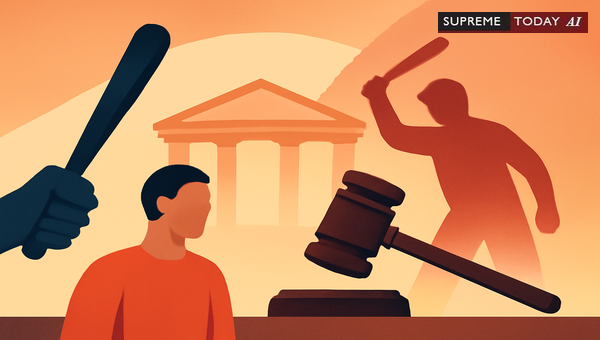
In today's diverse society, questions often arise about the boundaries between personal beliefs, community norms, and the law. Can groups or individuals outside the government—known as —take it upon themselves to punish others for perceived moral failings, especially if it involves violence? This blog post delves into the legal question: Whether can enforce morality codes that result in violent reprisals and punishment, in the absence of any legislative or constitutional backing?
Drawing from Indian judicial precedents, we'll examine why such actions are generally impermissible, emphasizing the supremacy of constitutional principles over societal or moral judgments.
cannot legally enforce morality codes that lead to violent reprisals and punishment without legislative or constitutional backing. Such actions typically violate core constitutional norms like the , individual rights, and separation of powers. Courts have consistently held that enforcement cannot be justified solely on societal or moral grounds without explicit legal authority. 2025 0 Supreme(All) 2291
This stance ensures that only authorized state institutions uphold laws, preventing chaos from .
These principles underscore that enforcement lacks legitimacy.
have repeatedly affirmed that enforcement of any code—be it environmental laws or moral standards—must stem from legal authority. For instance, the law enacted relating to protection of environment or other statutory provisions must be enforced by authorized agencies, and enforcement cannot be based on societal or moral judgments alone.
Similarly, the enforcement of law is an , highlighting that wouldn't be needed if authorities complied voluntarily. 1996 3 Supreme 741
Without such backing, ' attempts to impose morality through violence are invalid and unlawful.
Only the state, via its institutions, holds legitimacy to enforce laws within constitutional limits. Bodies exercising public functions must operate in the public interest, but violent moral enforcement falls outside this. Courts note that enforcement of the same has been tardy, to say the least, and continued law infringement often relies on violators' illicit means. 2006 7 Supreme 539 2015 0 Supreme(Ker) 739
, lacking authority, cannot step into this role, especially with punitive measures.
Such actions infringe (equality) and 21 (life and liberty) of the Constitution. The powers of the executive should not only be derived from law but also that the same should be limited by law.
Violence under moral pretexts undermines these protections, eroding the .
Courts clarify: the enforcement of law is an which it is bound to discharge, and laws bind everyone. 1996 3 Supreme 741 Violence by exceeds lawful bounds and cannot be justified.
A recurring theme in Indian jurisprudence is the primacy of over . As observed, must outweigh the argument of public morality, even if it be the majoritarian view. 2020 0 Supreme(Ker) 1064 2018 6 Supreme 577
In cases like the decriminalization of adultery, courts rejected outdated notions: A woman's ‘purity’ and a man’s marital ‘entitlement’... cannot be recognized as being so today. It is not the ‘common morality’... but rather , which must guide the law. 2018 7 Supreme 1
Similarly, in Navtej Singh Johar v. Union of India (), the emphasized: of a section of society howsoever small... must not be allowed to be trampled by obscure notions of social morality which have no legal tenability. 2018 6 Supreme 577 Courts must ensure prevails. 2021 0 Supreme(Raj) 138
Excommunication cases further illustrate: Religious denominations' rights under are subject to , not societal views. Ex-communication affecting civil rights like access to community property violates dignity under . 2023 0 Supreme(SC) 116
These rulings reinforce that cannot invoke societal morality for violent enforcement, as it clashes with constitutional values.
Even religious or cultural practices yielding violent outcomes must align with .
Generally, lack authority to enforce morality codes violently without legal backing, as it undermines India's constitutional framework. Prioritizing protects individual rights against majoritarian or vigilante impositions.
Key Takeaways:- trumps societal norms. 2020 0 Supreme(Ker) 1064- Only state institutions enforce laws legitimately.- Violence breaches and 21.
This post provides general information based on judicial precedents and is not legal advice. Consult a qualified lawyer for specific cases.
Inline citations reference key documents like
, 2025 0 Supreme(All) 2291, 2006 7 Supreme 539, 1996 3 Supreme 741, 2015 0 Supreme(Ker) 739, 2021 0 Supreme(Raj) 138, 2023 0 Supreme(SC) 116, 2020 0 Supreme(Ker) 1064, 2018 7 Supreme 1, and 2018 6 Supreme 577. #ConstitutionalMorality, #RuleOfLaw, #FundamentalRights



Before reaching the merits of this dispute, we must determine whether § 1981 provides Yoshikawa a valid cause of action. 2 Section 1981 creates federal rights but does not provide an express cause of action. At issue here is whether § 1981 creates an implied cause of action against state actors. ... The absence of any discussion of Jett, 391 U.S. at 701, in the legislative history of the 1991 amendments cuts against the inference that Congress intended to overrule Jett in enacting them....

Union of India, (2017) 10 SCC 1 while elaborating on the duty of the State and non-State actors to protect the rights of citizens, pointed out that recognition and enforcement of claims qua non-State actors may require legislative intervention. ... What is relevant for our purpose is the opinion of the Constitutional Court in paragraph 33 which dealt with the enforcement of the rights against non-State#HL....

Union of India16, while elaborating on the duty of the State and non-State actors to protect the rights of citizens, pointed out that recognition and enforcement of claims qua non-State actors may require legislative intervention. ... What is relevant for our purpose is the opinion of the Constitutional Court in paragraph 33 which dealt with the enforcement of the rights against non-State #HL_STA....
Instead, it was a “legislative policy choice” to provide that public function. Id. Other circuits have followed the reasoning in Rendell-Baker when analyzing whether private schools or charter schools can be state actors. ... Other times, the Court has asked whether a state delegates a constitutional obligation to a private party. West v. ... Had Congress intended to exclude dress codes, it obviously knew how to do so. It could have included ....
. § 1981 against state actors, including defendants sued in their official capacities as government officials -- here, employees of the City of Boston. This result is required by Jett v. ... Since the 1991 Act, nine federal courts of appeals have decided whether § 1981, as amended by the 1991 Act, now provides an implied private right of action for damages against state actors. ... After extensively analyzing the statutory text, statutory structure, and l....
Instead, it was a “legislative policy choice” to provide that public function. Id. Other circuits have followed the reasoning in Rendell-Baker when analyzing whether private schools or charter schools can be state actors. ... Other times, the Court has asked whether a state delegates a constitutional obligation to a private party. West v. ... Had Congress intended to exclude dress codes, it obviousl....
Instead, it was a “legislative policy choice” to provide that public function. Id. Other circuits have followed the reasoning in Rendell-Baker when analyzing whether private schools or charter schools can be state actors. ... Other times, the Court has asked whether a state delegates a constitutional obligation to a private party. West v. ... Had Congress intended to exclude dress codes, it obviousl....

(iii) whether the State, having a duty of protecting its citizens, is having any kind of restrictions, reservations or exceptions.

Interference by the State in such matters has a seriously chilling effect on the exercise of freedoms. Others are dissuaded to exercise their liberties for fear of the reprisals which may result upon the free exercise of choice. ... Intimacies of marriage, including the choices which individuals make on whether or not to marry and onwhom to marry, lie outside the control of the state. Courts as upholders of constitutional freedoms must safeguard these freedoms. ... The Apex Court has l....

The constitutional morality is the basic principles encapsulated in the Constitution. The laws and principles in connection with the concepts of "equality" are part of constitutional morality. The principle enunciated under Article 15(1) is one of the basic principles of constitutional morality. ... competent authorities shall enforce such remedies when granted. ... If, as a guardian of the constitution, the state machinery fails to protect the right....

Moreover, notion of morality evolves with time and is not static. The question whether Constitutional morality can be equated with equality, fraternity and non-discrimination needs consideration.

If there is any type of “morality” that can pass the test of compelling State interest, it must be “constitutional” morality and not public morality. … Popular morality, as distinct from a constitutional morality derived from constitutional values, is based on shifting and subjecting notions of right and wrong. 86. … In our scheme of things, constitutional morality must outweigh the argument of public morality, even if it be the majoritarian view.”

If there is no space to voice people's grievance that will negate the very idea of the democratic character of such Government. In modern constitutional jurisprudence, fundamental rights claimed horizontally against non State actors or a private individual are justiciable.
A woman's ‘purity’ and a man’s marital ‘entitlement’ to her exclusive sexual possession may be reflective of the antiquated social and sexual mores of the nineteenth century, but they cannot be recognized as being so today. It is not the “common morality” of the State at any time in history, but rather constitutional morality, which must guide the law. In any democracy, constitutional morality requires the assurance of certain rights that are indispensable for the free, equal, and dignified existence of all members of society. A commitment to constitutional morality require....
In our scheme of things, constitutional morality must outweigh the argument of public morality, even if it be the majoritarian view.” If there is any type of “morality” that can pass the test of compelling state interest, it must be “constitutional” morality and not public morality… The invocation of constitutional morality must be seen as an extension of Dr Ambedkar’s formulation of social reform and constitutional transformation. Popular morality, as distinct from a constitutional morality derived from constitutional values, is based on shifting and subjecting notions of ....


An indispensable Tool for Legal Professionals, Endorsed by Various High Court and Judicial Officers
Please visit our Training & Support
Center or Contact Us for assistance

Scan Me!
India’s Legal research and Law Firm App, Download now!


For Daily Legal Updates, Join us on :



 Back to top


