




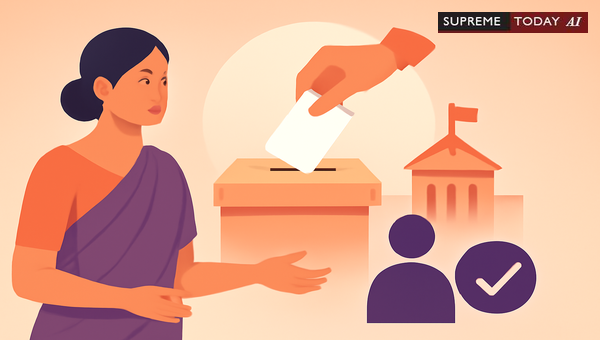
Can a Woman Councillor Elected from an Open Seat Contest for a Mayor Post Reserved for Women?
In the dynamic world of local governance, questions about for higher offices like mayor often arise, especially amid aimed at promoting representation. A common query is: can a woman councillor elected on open seat contest mayor post reserved for women? This issue touches on municipal laws, reservation principles, and judicial interpretations across Indian jurisdictions.
Reservation systems in municipal bodies ensure minimum representation for women, Scheduled Castes, Tribes, and Backward Classes. However, they spark debates on whether a councillor's original election seat restricts their for like mayor. This post breaks down the legal landscape, drawing from key judgments and rules, to provide general insights. Note: This is not legal advice; consult a qualified lawyer for specific cases.
Understanding Municipal Reservations and
Municipal corporations and councils rotate reservations for mayor/president posts to guarantee diversity. Typically, seats are reserved for women, SC/ST, OBC, or general categories by or rotation. The core question is whether ties strictly to the ward/seat from which a councillor was elected.
Generally, reservation ensures minimum representation without creating rigid barriers based on prior election seats. As per legal principles, a female councillor from an may contest a mayor post reserved for women, provided she meets other criteria like tenure and no . This stems from the view that women from open seats fulfill the gender criterion for women-reserved posts. 1997 0 Supreme(Bom) 204
Key points include:- Election from an unreserved seat does not bar contesting reserved offices if the candidate belongs to the reserved category (e.g., woman).- Reservations are for guaranteed minimums, not exclusive pools limited to those elected from matching reserved wards. 1998 0 Supreme(Bom) 270
Key Judicial Pronouncements Supporting
Several judgments affirm that women councillors from open seats can vie for women-reserved mayor/president roles.
In analyzing , courts have emphasized inclusivity for women. For instance, one ruling states: no distinction can be made between a ‘woman’ councillor from a seat reserved for women only, or a woman councillor from any other seat; and both of them would be on the same pedestal. 2021 0 Supreme(MP) 762 This underscores that reservation for women encompasses all categories of women, irrespective of their election ward. 2021 Supreme(Online)(MP) 6789
The in clarifies nuances: candidates from general wards may contest reserved positions if they meet category criteria, flipping the logic for women from open seats. 1997 0 Supreme(Bom) 204 Similarly, a Maharashtra judgment holds that all councillors are eligible for mayor unless explicitly restricted, extending to cross-category contests. 1998 0 Supreme(Bom) 270
Contrasting Views and Jurisdiction-Specific Rules
Not all rulings align perfectly, highlighting state variations. In some cases, stricter interpretations prevail:- A decision notes: if the post of President was reserved for O.B.C. category, a Councillor who was not elected from a ward reserved for O.B.C. category, is not eligible. 1997 0 Supreme(Bom) 234 This suggests for caste-based reservations (SC/ST/OBC), matching ward election may be required.- For Scheduled Caste women posts, is limited: to the category of Scheduled Caste women who has been elected on such a seat. 2024 0 Supreme(HP) 211 1997 0 Supreme(Bom) 337
However, for pure women reservations (not intersected with caste), broader applies. A upheld: The reservation for women in the includes all categories of women, irrespective of whether they are from exclusively reserved seats or unreserved seats. 2021 0 Supreme(MP) 762
In , courts have ruled that popular candidates from reserved categories can contest general posts, implying reciprocity for women in open seats. 2006 0 Supreme(P&H) 4339 2006 0 Supreme(P&H) 4348
Legal Framework: Rules Governing Contests
Rules like the specify rotation but do not bar open-seat women from women-reserved mayor posts. 1997 0 Supreme(Bom) 204 Purpose: Ensure representation without exclusion.
Under , states frame reservation rules, often mirroring: only category-belonging candidates contest reserved offices, but seat-of-election is not always a bar for gender quotas. Exceptions arise in .
- : For OBC/SC reserved presidents, ward-matching needed. 1997 0 Supreme(Bom) 234
- Himachal Pradesh Rules: Reservation references category/caste to which the person belongs and not the nature of the constituency. 2024 0 Supreme(HP) 211
No blanket prohibition exists for women from open seats in pure women-reserved mayor posts across reviewed documents.
Practical Implications and Exceptions
checklist for a woman councillor:1. Elected as councillor (open or reserved).2. Fulfills gender criterion for women-reserved mayor.3. No (e.g., tenure, criminal cases).4. Verify local rules—no additional restrictions in most cases.
Exceptions/Limitations:- Caste-specific women posts (e.g., SC women) may require reserved ward election. 2024 0 Supreme(HP) 211- If rules explicitly link to ward category, non-matching candidates are barred. 1997 0 Supreme(Bom) 234- Procedural lapses can void elections, as in Panchayati Raj cases. 2024 0 Supreme(P&H) 658
Recommendations:- Check jurisdiction-specific acts (e.g., , state rules).- Review latest notifications for rotation/reservation.
Broader Context: Promoting Women in Local Governance
These rulings balance representation with democracy. Restricting open-seat women would undermine women's overall participation, as they often win general seats on merit. Courts favor interpretations ensuring minimum guaranteed representation without over-restriction. 1998 0 Supreme(Bom) 270
Related issues include deputy mayor elections and bye-elections, where similar principles apply. 2016 0 Supreme(Ori) 980 2006 0 Supreme(Bom) 1231
Conclusion and Key Takeaways
Generally, yes—a woman councillor elected from an open seat can contest a mayor post reserved for women, as supported by principles of inclusive reservation and key judgments like those in 1997 0 Supreme(Bom) 204 and 1998 0 Supreme(Bom) 270. However, nuances exist for intersected categories or specific state rules—always verify locally.
Key Takeaways:- Women reservations typically include all women councillors.- Ward-of-election bars apply more to caste quotas.- Judicial trend: Favor to uphold representation goals.- Seek expert advice for your municipal body's rules.
Stay informed on evolving local election laws to navigate these opportunities effectively.
#MunicipalElections, #WomenReservation, #LocalGovLaw












