




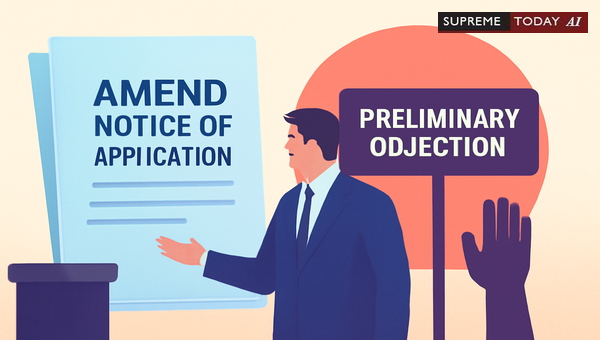
Opposing Late Amendments After Preliminary Objections in Court
In the fast-paced world of litigation, procedural maneuvers can make or break a case. Imagine this: a has been raised during submissions, highlighting flaws in the opponent's . Then, suddenly, they seek to amend it. Can you oppose this? And will the court allow it?
This scenario raises a critical question: opposing an application to amend a previous after a had already been raised during the submission stage. Generally, such opposition is viable if the amendment introduces new issues, causes prejudice, or smacks of . , guided by the , prioritize , timeliness, and fairness. Let's dive into the principles, case law, and strategies.
Core Principles Governing Amendments
Amendments to or notices fall under strict . Courts favor applications that are timely, made in good faith, and do not prejudice the opposing party [
#CourtAmendments #PreliminaryObjection #LegalProcedures















