


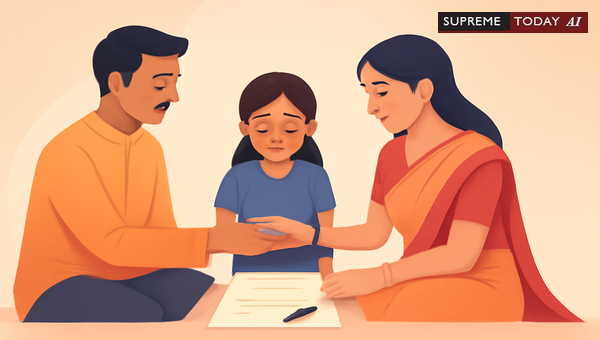
Is Oral Adoption Valid in India? Legal Insights
Adoption is a profound legal and emotional process that creates a permanent parent-child relationship, often transforming lives. But what exactly constitutes a valid adoption, especially when it's done orally without formal paperwork? In India, where family laws are deeply rooted in religious and customary practices, understanding the nuances is crucial. This blog dives into What is Adoption? with a focus on oral adoptions under the (HAMA), exploring validity, evidence, ceremonies, and key judicial insights. Note: This is general information and not specific legal advice. Consult a qualified lawyer for your situation.
What is Adoption in the Indian Legal Context?
Adoption in India refers to the legal transfer of a child from their biological parents (or guardian) to adoptive parents, granting the latter all parental rights and responsibilities. Primarily governed by HAMA for Hindus, it requires strict compliance with statutory conditions to ensure the child's welfare and prevent disputes.
The Act does not prescribe a rigid form for adoption, allowing flexibility. As noted in judicial observations, As per the Act of , no particular form of adoption has been prescribed. The adoption can be done simply by putting a child in the lap of adopting parents by the natural parents. 2019 0 Supreme(Jhk) 1816
Pramod Kumar Mandal alias Parmanand Mandal VS Paran Mandal - Current Civil Cases
2018 0 Supreme(P&H) 3940. However, simplicity does not mean informality—validity hinges on essential legal elements.Key Requirements for a Valid Adoption
For an adoption to hold legal weight, several conditions must typically be met under :
1. Capacity of Parties
- The adopter (male or female Hindu) must have the capacity, be of sound mind, and not have a living child of the same sex (with exceptions).
- The giver (usually the biological parent) must have the authority and free consent.
2. Free Consent and No Consideration
Adoptions must be free from coercion. Interestingly, An adoption is valid merely because the person giving in adoption receives a consideration for the adoption from the person taking in adoption, though the promise to pay cannot be enforced in law. 2023 0 Supreme(Bom) 1294. Still, courts scrutinize for undue influence.
3. The Ceremony of
This is the cornerstone. The physical act of the giver handing over the child to the adopter is essential. Courts emphasize: The essential ceremonies of must be performed for an adoption to be valid. This physical act is a critical component of the adoption process, regardless of whether a deed exists. 1996 0 Supreme(SC) 1166 2023 0 Supreme(Kar) 342.
Simple acts suffice: The adoption can take place on natural parents giving the child in adoption to adoptive parents. 2018 0 Supreme(P&H) 795. No elaborate rituals are needed post-, prioritizing intent over pomp.
Validity of Oral Adoption: Can It Stand Alone?
A common question is whether oral adoption—without a written deed—is valid. The answer is yes, but with caveats. Oral adoptions are recognized if they fulfill HAMA conditions, but proving them is challenging.
and Evidence Standards
The person claiming adoption bears the heavy burden: The burden of proving adoption lies heavily on the person claiming the benefit of the adoption. This includes demonstrating the existence of the adoption and its validity through , which must be free from suspicion of fraud. 1982 0 Supreme(SC) 217.
- Oral Evidence: Permissible but must be corroborated. While oral testimony can be used to prove adoption, it must be corroborated by other forms of evidence. The courts have held that mere oral assertions without substantial backing are insufficient. 2022 0 Supreme(Kar) 511 2024 1 Supreme 250.
- No Sole Reliance on Oral Claims: No doubt, the adoption of a child can also be an oral one, however, the aforesaid adoption of the child was also required to be proved by the respondents, once the petitioners have disputed the factum of giving their son in adoption to the respondents. 2016 0 Supreme(P&H) 536.
Role of Registered Adoption Deeds
A registered deed offers a under : S.16 of the casts a duty on the courts to draw a mandatory presumption to the effect that whenever there is a registered document purporting to record an adoption made and is signed by the person giving and the person taking the child in adoption. 2023 Supreme(Online)(Jhk) 8684.
However, it's rebuttable: Although a registered adoption deed can provide a , it does not replace the need for proof of the actual ceremonies. The deed alone cannot establish the if challenged. 1979 0 Supreme(Guj) 238 1996 0 Supreme(SC) 1166. Deeds without proper signatures or ceremony evidence fail: Merely because of the deed of adoption it cannot be said that... 2007 0 Supreme(Kar) 496 2023 0 Supreme(Guj) 307).
Judicial Precedents on Oral and Ancient Adoptions
Courts have shaped adoption law through precedents:
- Ancient Adoptions: For old adoptions, direct evidence may be unavailable. Courts rely on circumstantial evidence and family acceptance: In cases of ancient adoptions, where direct evidence may be lacking due to the passage of time, courts may rely on circumstantial evidence and the presumption of adoption based on long-standing acceptance within the family. [ 1991 0 Supreme(SC) 39.
- Customary Practices: Recognized if proven: Customary laws may also play a role in determining the validity of an adoption, provided that such customs are well-established and recognized. 2008 0 Supreme(SC) 402.
- Challenged Adoptions: In one case, the plea of alleged adoption advanced by the Defendants was clearly hit by the provisions of Section 7 and the adoption cannot be said to be a valid adoption. 2024 0 Supreme(All) 912.
Oral agreements, if evidenced properly, hold: Oral Adoption - Adoption can be validly made through oral agreement, provided it meets the legal requisites such as capacity of the parties, consent, and compliance with applicable laws. (From integrated analysis).
Additional Considerations: Child Welfare and Modern Laws
For non-Hindus or inter-country adoptions, laws like the apply, emphasizing Child Welfare Committees. Oral elements may feature in registrations: Registration of name of child.— Where the birth of any child has been registered without a name, the parent or guardian of such child shall within the prescribed period give information regarding the name of the child to the registrar either orally or in writing... 2023 0 Supreme(Guj) 307.
Child's welfare paramount: Courts ensure formalities like registration for validity under JJ Act.
Key Takeaways and Recommendations
- Gather Strong Evidence: Testimonies, photos, family records, and ceremony witnesses.
- Document Where Possible: Opt for registered deeds for presumption.
- Ancient Claims: Leverage family history and customs.
- Prepare for Disputes: Counter challenges with proof of giving/taking.
Adoption cannot be established solely through oral assertions; it requires substantial evidence, including the performance of necessary ceremonies. In essence, oral adoption is valid in India if legal requisites are met, but robust proof is key.
Word count: ~950. References integrated inline. Always seek professional advice. Share your thoughts below!
#OralAdoption, #AdoptionIndia, #HinduLaw















