SupremeToday Landscape Ad

AI Overview

AI Overview...

  • Complainant Absence and Recalling Evidence - The law permits courts to allow the recall of witnesses or evidence even after closure, primarily under the court’s inherent powers, despite the deletion of specific provisions like Order 18 Rule 17-A (which previously facilitated such recall). The court's discretion is limited by relevance, timeliness, and procedural fairness. For example, applications under Section 151 CPC or Order 18 Rule 17 are considered on merits, with courts rejecting recalls if evidence was not previously produced without sufficient explanation ["2024 0 Supreme(Cal) 1332"], ["2022 0 Supreme(Del) 1765"], ["2023 0 Supreme(Del) 506"].

  • Legal Provisions for Recalling Evidence - Originally, Order 18 Rule 17-A provided a specific legal basis for producing evidence not previously known or available despite due diligence, but it was deleted in 2002. Post-deletion, courts rely on inherent powers and principles of justice to permit the production of relevant evidence, provided procedural fairness is maintained and the evidence is relevant and necessary ["2023 0 Supreme(Del) 506"], ["2024 0 Supreme(MP) 364"].

  • Order of Closure and Opportunity to Reopen Evidence - Courts generally close evidence after considering the record, but may permit the recall or re-opening of evidence if justified by circumstances such as absence of the party, medical emergencies, or other valid reasons. The absence of a party or their counsel, when adequately explained, does not necessarily bar subsequent attempts to lead evidence, especially if the court finds sufficient cause ["2025 Supreme(Online)(Mad) 47617"], ["

    Sarvasiddi.Manjuveni vs State represented by Public Prosecutor - Andhra Pradesh

    "].
  • Procedural Fairness and Court’s Discretion - Courts have inherent powers to ensure justice, which includes allowing evidence to be reopened or recalled if it is relevant and necessary for a fair adjudication. However, such discretion is exercised judiciously, and courts may reject attempts to recall evidence if procedural requirements are not met or if the evidence was intentionally withheld earlier ["2024 0 Supreme(Cal) 1332"], ["2022 0 Supreme(All) 1064"].

Analysis and Conclusion:The primary legal basis for recalling evidence after its closure is rooted in the court’s inherent powers under the Civil Procedure Code and Criminal Procedure Code, especially when justified by circumstances such as absence of a party or new evidence becoming available. While specific provisions like Order 18 Rule 17-A were deleted, courts continue to exercise their discretion to permit the production or recall of evidence to ensure justice. The courts generally reject such applications if the evidence was not previously produced without valid reasons or if it would cause undue delay. Therefore, to re-call an order or reopen evidence, a party must demonstrate sufficient cause, relevance, and procedural fairness, relying on the court’s inherent powers rather than a specific statutory provision.

Adjudicating Order 9 Rule 13 CPC Applications: The Necessity of Evidence on Sufficient Cause

Order 9 Rule 13: Must Courts Decide After Taking Evidence of Both Parties on Sufficient Cause for Absence?

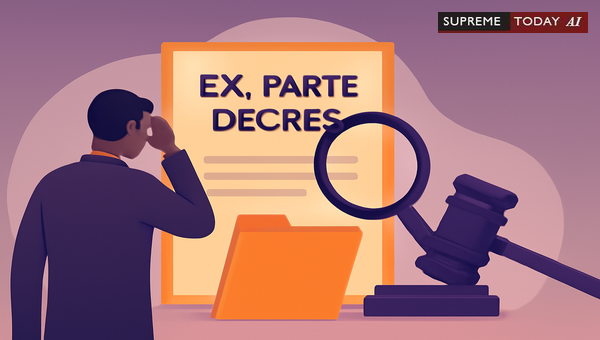
In the realm of civil litigation, missing a court date can lead to harsh consequences like an ex-parte decree under the Code of Civil Procedure (CPC). But what if you had a genuine reason? Order 9 Rule 13 CPC allows defendants to apply to set aside such decrees if they can show sufficient cause for their absence. A critical question arises: Order 9 Rule 13 should be Decided after Taking Evidence of both Parties about Sufficient Cause for Absence. This principle ensures fairness, preventing snap judgments based solely on one side's story.

This blog explores the legal framework, judicial precedents, and practical steps, drawing from Supreme Court rulings and related cases. While principles from criminal procedure (like CrPC Section 311 for recalling witnesses) offer analogies, the focus remains on civil justice delivery.

Understanding Order 9 Rule 13 CPC

Order 9 Rule 13 CPC empowers courts to set aside ex-parte decrees if:- Summons were not duly served, or- The defendant shows sufficient cause preventing appearance.

Courts typically exercise this discretion liberally to promote substantive justice, but not mechanically. The key is evidence. Merely filing an affidavit isn't enough; courts often require oral evidence from both parties to test the claim of sufficient cause. This prevents abuse and ensures the trial's integrity. 2024 3 Supreme 199 2024 3 Supreme 130

As emphasized in judicial precedents, hasty closures without hearing both sides undermine fairness. For instance, courts have held that absence due to valid reasons—like illness or unavoidable circumstances—warrants restoration, provided evidence supports it. 2024 0 Supreme(SC) 233

Legal Framework and Analogies from Criminal Procedure

While Order 9 Rule 13 is civil, parallels exist in criminal law where complainant's absence leads to evidence closure. Under CrPC Section 311, courts can recall witnesses if essential for justice, even post-closure. This mirrors the restorative approach in civil cases. 2024 3 Supreme 130

In NI Act Section 138 cases, CrPC Section 256 allows dismissal for non-prosecution, but provisos permit proceeding without personal attendance if represented. Courts criticize outright dismissals without considering alternatives:

Magistrate is not justified in straight away dismissing complaint(s) and ordering acquittal of accused on mere non-appearance of complainant. 2023 2 Supreme 386

Similarly, in civil contexts, Order 18 Rule 17 CPC (post-2010 amendments) allows recalling witnesses under exceptional circumstances, not routinely. Delays must not derail justice, but evidence on cause is crucial. 2023 0 Supreme(P&H) 1816

Judicial Precedents: Ensuring Evidence from Both Sides

Supreme Court rulings underscore that decisions under Order 9 Rule 13 (or analogous provisions) demand evidence:- Consistent holdings: Absence shouldn't doom the case if valid reasons exist. Courts may allow later evidence presentation. 2012 7 Supreme 1 2014 2 Supreme 642- In a criminal analogy, trial courts can't close evidence without summoning witnesses after diet money deposit: Once diet expenses had been deposited... it was duty of said Court to issue summons. 2020 0 Supreme(J&K) 247

Another case highlights misuse: Defendants' evidence closure despite affidavits on record was unsustainable, stressing opportunity to adduce evidence. 2018 0 Supreme(Del) 391

The closing of the Defendants evidence is unsustainable and the subsequent decree passed is also unsustainable as the evidence of the Defendants was not considered. 2018 0 Supreme(Del) 391

In NI Act dismissals, one-time absence after diligent pursuit warrants restoration: one time absence when has led to order of dismissal of the complainant, who relentlessly pursued this matter. 2018 0 Supreme(Guj) 863

These precedents reinforce: Hear both parties' evidence before ruling on sufficient cause. 2006 3 Supreme 415 1984 0 Supreme(SC) 181

Application Process: Steps for Success

To invoke Order 9 Rule 13 effectively:1. File timely application: Explain absence with supporting documents (medical certificates, affidavits).2. Seek evidence opportunity: Request cross-examination and your witnesses.3. Demonstrate relevance: Show how your testimony impacts fairness.4. Judicial factors: Courts consider case nature, testimony impact, prior attempts. 2024 3 Supreme 199

In practice:- Gather proof of sufficient cause.- Analogous to CrPC 311 applications: Highlight justice interest. 2023 2 Supreme 386- Avoid dilatory tactics; courts deny routine recalls. 2023 0 Supreme(P&H) 1816

Challenges and Court Discretion

Courts balance diligence against justice. Non-appearance without excuse leads to rejection, but genuine cases get relief. In recovery suits under Order XXXVII CPC, defendants must get evidence chance. 2018 0 Supreme(Del) 391

Public prosecutor absence analogies show frustration with delays, but re-calls were allowed post-change.

State of West Bengal VS Laltu Mahapatra

Key Takeaways and Recommendations

  • Core principle: Order 9 Rule 13 decisions require evidence from both parties on sufficient cause, akin to CrPC safeguards.
  • Action steps:
  • File detailed application with evidence.
  • Prepare for cross-examination.
  • Cite precedents for liberal construction.
  • Likelihood of success: High with strong proof, enhancing fair trial chances.

Disclaimer: This is general information based on precedents like those from the Supreme Court 2024 3 Supreme 130 2024 3 Supreme 199. Consult a legal professional for case-specific advice, as outcomes depend on facts.

By prioritizing evidence, courts uphold justice over technicalities. Stay informed, act promptly, and ensure your day in court.

#Order9Rule13, #CPCExParte, #LegalJustice
Chat Download
Chat Print
Chat R ALL
Landmark
Strategy
Argument
Risk
Chat Voice Bottom Icon
Chat Sent Bottom Icon
SupremeToday Portrait Ad
logo-black

An indispensable Tool for Legal Professionals, Endorsed by Various High Court and Judicial Officers

Please visit our Training & Support
Center or Contact Us for assistance

qr

Scan Me!

India’s Legal research and Law Firm App, Download now!

For Daily Legal Updates, Join us on :

whatsapp-icon Back to top