


Ossification Test Accuracy in Indian Courts
In legal proceedings across India, particularly in cases involving minors such as those under the , accurate age determination can make or break a case. The ossification test, a examining bone development to estimate age, plays a crucial role when documentary evidence like birth certificates is unavailable or disputed. But how reliable is this test under Indian law? What are the legal standards for ossification test accuracy?
This blog delves into the judicial recognition of the ossification test's limitations, accepted margins of error, and the need for corroborative evidence. Drawing from key judgments and legal principles, we provide insights for legal professionals, accused persons, victims, and anyone navigating age-related disputes in court. Note: This is general information and not specific legal advice. Consult a qualified lawyer for your case.
What is the Ossification Test?
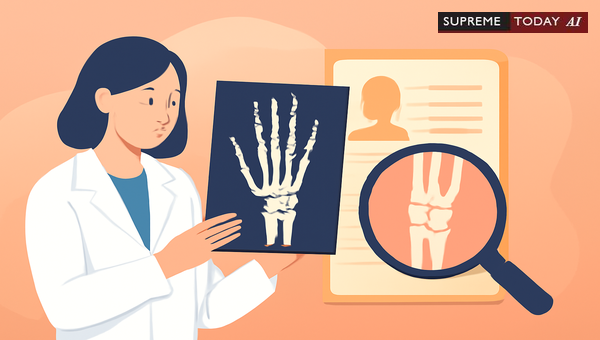
The ossification test involves X-ray examination of bones, typically the wrist, elbow, or knee, to assess the fusion of ossification centers. It estimates age based on skeletal maturity, commonly used in criminal cases to determine if an individual is a minor (under 18 years) or juvenile (under 16 years in some contexts).
While valuable, courts consistently recognize it as an rather than . Its accuracy is influenced by factors like nutrition, genetics, and ethnicity, leading to potential discrepancies. In Indian jurisprudence, the test's results are weighed alongside other evidence for a holistic assessment.
Legal Standards for Ossification Test Accuracy
Indian courts have established flexible yet cautious standards for the ossification test, emphasizing its inherent margin of error. There is no rigid benchmark for precision; instead, allows for error margins, often 1-2 years, to ensure fairness, particularly benefiting the accused in doubtful cases.
Key Principles:
: Courts acknowledge errors up to 13 years in extreme cases, though typically 1-2 years. When results fall near age thresholds (e.g., 14-16 years), the favors the accused.
Judicial Precedents on Error Margins: In Balasaheb Vs. The State of Maharashtra, the court justified adding a one-year margin to the medical opinion, stating it could favor the accused in borderline cases. 2009 0 Supreme(Bom) 1239
Not Absolute Accuracy: The test is a , not definitive. Courts mandate corroboration with dental exams, radiological data, school records, or witness statements.
2009 0 Supreme(Bom) 1239
No Fixed Legal Standard: Findings are indicative, with error possibilities explicitly noted. Judges evaluate within the entire evidence spectrum.
2009 0 Supreme(Bom) 1239
These standards reflect a balanced approach, prioritizing justice over mechanical reliance on science.
Case Law Insights on Ossification Test Reliability
Judgments illustrate how courts apply these standards practically:
In a case, the victim's age was 17 years and 6 months per High School Certificate but 18 years via ossification test conducted on . The court scrutinized the discrepancy, highlighting the test's approximate nature alongside documentary proof.
Another ruling determined an accused's age as above 20 years based on ossification, with fusion particulars detailed in evidence (Exh. 66). Despite cross-examination claims of 14 years, the test supported adulthood. 2015 0 Supreme(Bom) 282
Medical evidence admitted a one-year difference possibility, yet when corroborated, it upheld the age below 16 years, underscoring cautious interpretation. 2000 0 Supreme(Raj) 1401
These examples show courts preferring composite evidence. Documentary proof often trumps ossification if conflicting, but the test strengthens cases lacking records.
Limitations of the Ossification Test
Despite utility, limitations demand caution:- Variability in Results: Nutrition and health affect bone development, causing variances. Courts note it's less reliable post-puberty.- Need for Corroboration: Standalone results risk injustice. Pair with matriculation certificates or dental ossification for reliability.- Age Range Outputs: Tests yield ranges (e.g., 16-18 years), not exact ages, amplifying error margins near legal thresholds.
In Balasaheb, the emphasis was on holistic assessment, warning against over-reliance. 2009 0 Supreme(Bom) 1239
Best Practices and Recommendations
For litigants and lawyers:- Anticipate Margins: Always argue 1-2 year buffers, especially near 16/18 years.- Gather Multiple Proofs: Combine ossification with school records, as in the UP High Court case where HSC evidence influenced outcomes.
- Expert Testimony: Engage radiologists acknowledging limitations to bolster credibility.- : In POCSO or juvenile cases, leverage judicial trends favoring accused on borderline results.
Courts may direct fresh tests if initial ones are inconclusive, ensuring procedural fairness.
Implications for Legal Proceedings
Ossification tests impact bail, trial courts, sentencing, and juvenile transfers. Inaccurate age can lead to wrongful prosecution of minors as adults or vice versa. Judicial caution upholds , making the test a supportive, not decisive, element.
For instance, when a test suggests 18 years but documents indicate 17.5, courts probe deeper, as seen in recent rulings.
Conclusion and Key Takeaways
The ossification test remains a valuable but imperfect tool in Indian courts for age estimation. Legal standards prioritize margins of error (1-2 years typically), corroboration, and contextual evaluation over rigid accuracy. Key takeaways:- Courts accept inherent limitations, often granting .
2009 0 Supreme(Bom) 1239- Corroborate aggressively with documents for stronger cases.- Embrace judicial flexibility for fair outcomes.
Understanding these nuances empowers better legal strategies. Stay informed on evolving case law, as interpretations may shift.
References:-
- 2009 0 Supreme(Bom) 1239-
- 2015 0 Supreme(Bom) 282- 2000 0 Supreme(Raj) 1401 #OssificationTest #IndianLaw #AgeDetermination
















