


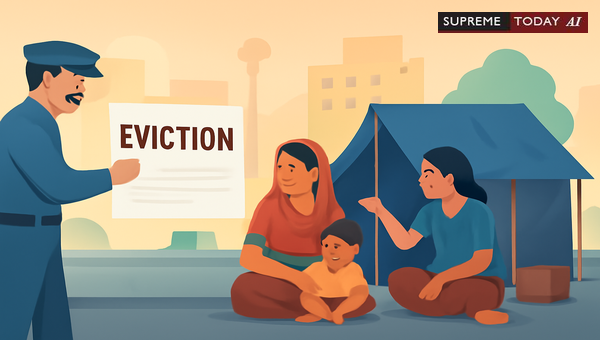
Pavement Dwellers' Legal Rights in India: Key Facts
In bustling Indian cities like Mumbai, Delhi, and Kolkata, pavement dwellers are a stark reminder of urban poverty and housing crises. These individuals, often living on sidewalks, footpaths, and , raise a pressing legal question: Pavement Dweller – do they possess any legal rights to reside or trade on these public spaces? This blog post delves into Indian jurisprudence, court rulings, and policy frameworks to clarify the position. Note that this is general information based on established cases and is not specific legal advice; consult a qualified lawyer for personalized guidance.
The Legal Status of Pavement Dwellers
Under Indian law, pavements and are designated for pedestrian use and public convenience, not private residence or trade. Courts have consistently ruled that , including pavement dwellings, confer no legal rights. The main legal finding is clear: pavement dwellers generally lack recognized rights to occupy these spaces, and authorities may remove such lawfully, often without prior notice 1983 0 Supreme(Cal) 217.
Key points from judicial precedents include:- Pavements are part of , not subject to private or protected rights 1983 0 Supreme(Cal) 217.- No legal or prescriptive rights exist for occupation or trading on pavements 1983 0 Supreme(Cal) 217.- can be removed without notice due to the absence of possession rights 1983 0 Supreme(Cal) 217.- Constitutional protections do not extend to unlawful occupations on public land 1985 0 Supreme(SC) 226.
This stance prioritizes public interest, such as traffic flow, hygiene, and safety, over individual claims rooted in necessity.
Landmark Court Rulings on
Indian courts, including those in Calcutta, Bombay, and Delhi, have uniformly addressed this issue. In a Calcutta case, the court interpreted , holding that pavement dwellers do not have any right to reside on 1983 0 Supreme(Cal) 217. Authorities were justified in eviction without prior notice, as no legal basis for possession existed.
Similarly, in Bombay, the High Court affirmed that no person has any legal right to encroach upon or construct on foot-paths or , labeling such actions unlawful 1985 0 Supreme(SC) 226. The echoed this, stating authorities need not provide prior notice for baseless 1992 0 Supreme(SC) 252. These rulings emphasize that while hardships are acknowledged, they do not create enforceable rights.
Constitutional Rights and Limitations
() and 21 ( and livelihood) of the are often invoked by pavement dwellers. However, courts clarify these do not protect illegal . As noted in the Calcutta judgment, encroachment on does not violate constitutional rights because such occupation is unlawful1983 0 Supreme(Cal) 217. In Bombay, the does not include the right to occupy on public land unlawfully1996 0 Supreme(Del) 493.
Public interest trumps individual claims, but courts urge humane approaches, like rehabilitation, without mandating them as rights.
Real-Life Challenges Faced by Pavement Dwellers
Beyond courtrooms, pavement dwellers endure profound vulnerabilities. Cases highlight individuals like Kalyani (age 60), Rukmini (age 57), and Bhagwan Das (age 50), residing opposite City Market in Thokkuttu-Peramunur, facing homelessness and marginalization
- Karnataka
. Others, such as Anjali, Yagavalli, Kalaivani, and Lakshmi, report violence, suicidal attempts, burns from accidents, and loss of meager possessions during evictions 2021 Supreme(Online)(MAD) 43541 2021 Supreme(Online)(MAD) 39222.Social exclusion compounds these issues, with Dalit women like Lakshmi exemplifying dignity erosion. Judicial references even poetically note the Constitution's reach to the butcher, the baker and the candlestick maker — shall we add, the bonded labour and pavement dweller2023 Supreme(Online)(GAU) 5333
- Rajasthan
.Rehabilitation Policies and Exceptions
While no inherent rights exist, policies aim to mitigate hardships. Eligibility for schemes often requires proof like voter IDs, electricity bills, school certificates, or community recognition, excluding those owning property elsewhere 2023 Supreme(Online)(DEL) 2052. Courts scrutinize claims to distinguish genuine dwellers from encroachers
INDGUJ00000013433
2022 Supreme(Online)(Guj) 10590 2022 Supreme(Online)(MAD) 25172.Governments are encouraged to offer alternate sites, but this remains a policy choice, not a legal entitlement 1985 0 Supreme(SC) 226 2022 Supreme(Online)(Guj) 1954 2025 Supreme(Online)(Kar) 9187. Challenges persist in verification, balancing development (e.g., infrastructure) with social justice.
Authority to Evict: Procedures and Safeguards
Municipal bodies hold eviction powers for public safety and hygiene. No prior notice is typically required for unlawful occupations 1992 0 Supreme(SC) 252. However, courts advocate minimal disruption and rehabilitation exploration. Evictions involve shelter demolition, underscoring the need for fair processes 2021 Supreme(Online)(MAD) 39222.
Recommendations for Stakeholders
- For Pavement Dwellers: Pursue lawful rehabilitation via government schemes, gathering eligibility documents early.
- For Authorities: Enforce anti-encroachment laws while prioritizing identification and relocation for genuine cases.
- For Advocates: Push policy reforms for vulnerable groups, emphasizing constitutional dignity without endorsing illegality.
Key Takeaways and Conclusion
Pavement dwellers in India generally hold no legal rights to public pavements, as affirmed across jurisdictions 1983 0 Supreme(Cal) 217 1985 0 Supreme(SC) 226. are removable in public interest, sans notice, though empathy drives rehabilitation efforts. This balance reflects India's commitment to urban order alongside social welfare.
The plight of dwellers like those in Thokkuttu or Delhi's JJ clusters demands nuanced solutions
- Karnataka
2023 Supreme(Online)(DEL) 2052. Ultimately, legal reforms may evolve, but current law prioritizes public spaces' integrity. Stay informed, support ethical policies, and seek professional advice for specific situations.Word count: 1028. References are illustrative of judicial trends; full case review recommended.
#PavementDwellers, #IndiaLaw, #LegalRights












