


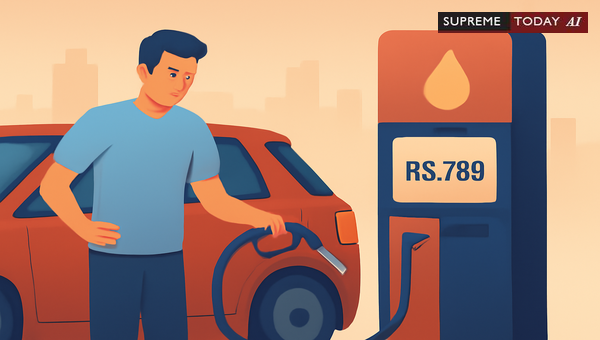
Swift Car Diesel Overbilling: Does It Attract IPC Section 420?
Imagine pulling into a petrol bunk to fill your Swift car's 42-liter diesel tank, only to receive a bill for 46.07 liters. Is this a simple error, or potential under Indian law? Many vehicle owners face similar discrepancies at fuel stations, raising questions about fraud and applicable legal remedies.
In this post, we explore the legal question: Swift Car having Capacity of 42 Litre Diesel Tank, Diesel Filled in a Petrol Bunk, they Gave the Bill for 46.07 Litres, what Section of IPC will Attract against the Petrol Bunk Servant? We'll break down the primary offence under , analyze key elements, review similar cases, and discuss exceptions. Note: This is general information based on legal principles and is not specific legal advice. Consult a qualified lawyer for your situation.
Understanding Under
punishes and . It states that whoever cheats and thereby dishonestly induces the person deceived to deliver any property... shall be punished. The key ingredients include:
- at the time of the act.
- or .
- Deception leading to wrongful loss or gain. 2001 8 Supreme 216
In the Swift car scenario, billing for 46.07 liters exceeds the tank's 42-liter capacity, suggesting a of the quantity supplied. This could deceive the customer into paying for non-existent fuel, fitting the definition. 2023 8 Supreme 50
Courts emphasize that dishonest intent must exist from the outset: for an offence under , there must be proof of at the time of making the or . 2001 8 Supreme 216
Why Section 420 Applies Here
The petrol bunk servant's act of issuing a bill for excess fuel implies knowledge of the impossibility (tank can't hold more than 42L), pointing to . This over-billing can cause wrongful gain to the bunk and loss to the customer, satisfying Section 420 elements. 2023 8 Supreme 50
Legal precedents reinforce this: mere overcharging isn't enough without fraud proof, but billing beyond physical capacity indicates intent, especially if patterned. 2024 0 Supreme(Jhk) 960
Real-World Cases of Petrol Bunk Fraud
Petrol bunks have faced scrutiny for similar malpractices. For instance, in a consumer case, a bike owner with an 8-liter tank was billed for 9 liters at Rs. 697.77, highlighting excess billing akin to our scenario.
: this Opposite Party has collected excess amount for one liter as capacity of the petrol tank of his bike is only eight liters whereas the Opposite Party have issued bill for Rs.697.77 towards nine liters.
Other incidents involve broader fraud:
- Diesel pilferage and : Raids uncovered pipes for unloading diesel into bunk tanks, suggesting systematic . 2023 Supreme(Online)(AP) 2662: noticed about fitting of a pipe for unloading diesel....
- Swift car-specific : A Swift car arrived for diesel at 3:10 a.m., leading to robbery at the bunk, invoking IPC sections.
- Overbilling patterns: Cases link inflated bills to under , with counter-cases registered. 2024 Supreme(Online)(AP) 9512: a counter case in Crime No.300 of 2023 under was registered....
- Misappropriation claims: Running a bunk in another's name without disclosure raised Section 420 and 406 IPC doubts, but courts require clear intent proof. 2023 0 Supreme(Telangana) 518: None of the ingredients of either punishable under Section 420 of IPC or punishable under are made out....
These examples show courts invoke for misrepresentation in fuel sales, alongside Section 406 () or Section 378/379 () for misappropriation or stealing fuel. From other sources, Section 427 () applies if tampering occurs.
Other Relevant IPC Sections in Fuel Fraud
While Section 420 is central, context matters:
- Section 378/379 IPC (): If fuel is siphoned or stolen, as in Swift car robberies.
- (): For misappropriating entrusted funds or fuel. 2023 0 Supreme(Telangana) 518
- (): Primary for false billing, as here.
In adulteration or illegal sales, additional charges may apply, but over-billing typically triggers probes. 2023 Supreme(Online)(Mad) 83150
Exceptions and Defenses
Not every discrepancy is criminal:
- Genuine mistakes: Accidental billing errors without dishonest intent won't attract Section 420. Proof of negligence alone may lead to civil remedies.
- Lack of intent evidence: Courts dismiss if no pattern or knowledge shown. 2024 0 Supreme(Jhk) 960: mere overcharging or billing for a larger quantity than physically possible does not automatically establish dishonest intent unless supported by evidence of fraudulent purpose.
- Customer fault: If the tank was modified or overfilled via external means, defenses strengthen.
Investigation is key: billing records, CCTV, and witness statements establish intent.
What Should You Do If Overbilled?
- Preserve evidence: Keep the bill, note tank capacity, and photograph the vehicle.
- Complain immediately: Report to bunk manager, consumer forums, or police.
- File FIR: Invoke if fraud suspected; weights and measures dept. for quantity issues.
- Seek refunds: Consumer courts handle disputes efficiently, as in bike overcharge cases.
Authorities should probe patterns: Evidence such as billing patterns, records, and statements can help establish dishonest intent.
Conclusion and Key Takeaways
Billing 46.07 liters for a 42-liter Swift diesel tank may attract against the petrol bunk servant, as it suggests via . Supported by cases like overbilling complaints and raids, this underscores fuel station accountability. 2023 8 Supreme 50 2001 8 Supreme 216
Key Takeaways:- Verify bills against tank capacity.- Intent proof is crucial for criminal charges.- Sections 420, 406, and 378 IPC commonly apply in bunk frauds.- Always document discrepancies.
Stay vigilant at fuel stations—knowledge of IPC 420 empowers consumers. For personalized advice, contact a legal expert.
References
- 2023 8 Supreme 50 – Misrepresentation in fuel quantities.
- 2001 8 Supreme 216 – Ingredients of .
- 2024 0 Supreme(Jhk) 960 – Fraudulent intent essentials.
– Excess billing case.
- 2023 Supreme(Online)(AP) 2662 – Diesel pilferage.
– Swift car .
- 2024 Supreme(Online)(AP) 9512 – Section 420 counter-case.
- 2023 0 Supreme(Telangana) 518 – and misappropriation analysis.












