




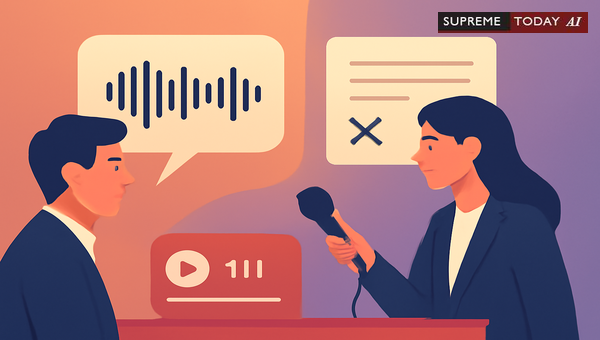
Can a Cross-Examiner Directly Play an Audio Clip to the Witness in the Box?
In the high-stakes arena of courtroom cross-examinations, lawyers often seek powerful tools to challenge a witness's credibility. One such tool is an audio recording that contradicts prior statements. But can a cross-examiner directly put an audio clip to the witness in the box? This question arises frequently in Indian courts, where digital evidence like audio clips is increasingly common.
This blog post delves into the legal framework, procedures, challenges, and practical tips under the Indian Evidence Act. While courts generally permit such use under specific conditions, procedural compliance is key. Note: This is general information, not legal advice. Consult a qualified lawyer for your case.
Legal Framework Governing Audio Clips in
is a fundamental right designed to test the truthfulness of witness testimony. The , provides clear provisions for using prior statements, including audio recordings, to .
Right to Cross-Examine with Prior Statements
Under , a witness may be cross-examined regarding previous statements relevant to the matters in issue. This explicitly includes audio recordings if they pertain to the witness's testimony. 1993 0 Supreme(Ker) 332 2018 0 Supreme(Guj) 349
Additionally, Section 146 allows the cross-examiner to ask questions testing the witness's veracity, subject to court control. 1993 0 Supreme(Ker) 332
Section 155(3) further supports impeaching a witness's credit through , making audio clips a potent tool. 2014 0 Supreme(Del) 1663 1993 0 Supreme(Ker) 332
Courts have affirmed this: I find that in , any voice can be put to the witness even if it was not produced on the file. 2018 0 Supreme(P&H) 1897
Admissibility of Electronic Audio Evidence
Audio clips qualify as under Section 65B of the Evidence Act, but for , the focus is relevance and contradiction rather than formal proof. Questions can be put referring to CD clips, as electronic devices are recognized as evidence. 2016 0 Supreme(All) 2540
However, direct use is limited to jogging memory or clarification if it goes to the root of the matter. There is no clear prohibition, provided relevance. 2024 0 Supreme(Bom) 1091
Procedure for Introducing Audio Clips During
Successfully playing an audio clip requires meticulous preparation to avoid objections.
Step-by-Step Process
- Ensure Relevance: The clip must relate directly to the witness's statements or contradict testimony.
- Authenticate the Clip: Prove it is the witness's voice if contested. Courts may require . 2025 Supreme(Online)(MP) 4911
- Play the Clip: Present it compliantly. The witness should listen before questioning. Courts may direct playback during after authentication. 2025 Supreme(Online)(Ker) 46258
- Comply with Court Rules: Follow procedural safeguards, like ensuring clarity and audibility. Unclear audio loses evidentiary value. 2024 Supreme(Online)(CAT) 3709
In practice, Questions can be put from the witnesses referring to the C.D. Clip. 2016 0 Supreme(All) 2540
Managing Witness During Objections
To maintain fairness, courts often direct: Every time there is an objection to of a witness, I would direct the witness to leave the Witness Room so that the witness is not able to listen to the objection.
- High Court Malaya Kuala Lumpur
2023 0 Supreme(Raj) 151This preserves the integrity of .
Potential Challenges and Objections
Despite legal support, hurdles exist:
- Authenticity Disputes: If the witness denies the voice, courts assess validity before use. 2022 0 Supreme(UK) 174 Witnesses to audio may only identify voices, not content. 2023 Supreme(Online)(Cal) 6477
- Non-Disclosure: Opposing counsel may object if not shared earlier.
- Quality Issues: Poor audio is unreliable. 2024 Supreme(Online)(CAT) 3709
- Procedural Objections: Must not violate rules; e.g., no prior questions on contents weaken position. 2024 Supreme(Online)(KER) 12542
In one case, a husband faced direct suggestion of a statement in , upheld as valid. 2016 0 Supreme(Mad) 786
Video conferencing for witnesses also permits audio-video recording of testimony.
- Current Civil Cases
Practical Recommendations for Lawyers
To maximize effectiveness:- Pre-Trial Prep: Authenticate via forensics; disclose if required.- Anticipate Objections: Address relevance and clarity upfront.- Court-Specific Rules: Check local practices for audio playback.- Backup with Transcripts: Use if audio is disputed.
The Appellant is permitted to record the testimony and of its witness Ms Rosalind Miller through audio video conferencing.
- Current Civil Cases
Key Case Insights and Analysis
Judicial precedents reinforce flexibility:- Audio clips used to enable effective , even from mobile phones. 2024 Supreme(Online)(KER) 12542- Viral audio clips considered in bail conditions, highlighting impact. 2023 Supreme(Online)(ALL) 13464- Longhand transcripts of audio examined for authenticity. 2023 Supreme(Online)(RAJ) 10593
Analysis: Courts permit direct use subject to relevance, authentication, and procedure. Strict compliance ensures fairness. 2024 0 Supreme(Bom) 1091 2025 Supreme(Online)(Ker) 46258 2023 0 Supreme(Raj) 151 2025 Supreme(Online)(Cal) 1469 2025 Supreme(Online)(MP) 4911
Conclusion and Key Takeaways
Yes, a cross-examiner can generally directly put an audio clip to the witness in the box, backed by Sections 145, 146, and 155 of the Indian Evidence Act. However, success hinges on relevance, authentication, and procedural adherence.
Key Takeaways:- Authenticate and ensure audio clarity.- Prepare for objections on voice identification.- Follow court directions for playback.- Use to contradict effectively.
References: 2019 0 Supreme(Kar) 2031 2019 0 Supreme(Bom) 746
- Delhi
2022 0 Supreme(UK) 174 2021 0 Supreme(Mad) 385 2014 0 Supreme(Del) 1663 1993 0 Supreme(Ker) 332 2018 0 Supreme(Guj) 349Disclaimer: This post provides general insights based on legal provisions and cases. Laws evolve, and outcomes vary. Always seek professional legal counsel for specific matters.
#CrossExamination #AudioEvidence #IndianEvidenceAct















