


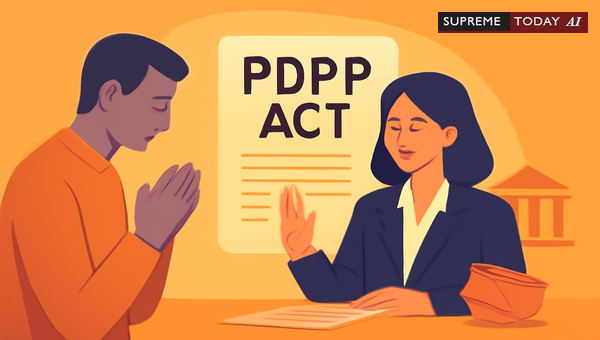
Pleading Guilty to PDPP Act Offences in Kerala: Key Insights
In times of public unrest, protests, or riots, charges under the (PDPP Act) are common in Kerala. But a critical question arises: Whether PDPP PDPP Kerala Offences can be Plead Guilty? This query touches on the rights of the accused, court procedures, and the balance between personal defense and public interest. While the PDPP Act aims to protect public assets, understanding plea options is vital for those facing such serious allegations.
This article breaks down the legal framework, precedents, and considerations for pleading guilty under the PDPP Act in Kerala. Note that this is general information based on legal precedents and should not be taken as specific legal advice—consult a qualified lawyer for your situation.
Overview of the PDPP Act
The PDPP Act was enacted to curb vandalism and damage to public property, especially during riots or public commotions. It defines public property broadly and imposes stringent penalties, ranging from three months to ten years imprisonment, depending on the offence's severity 2011 0 Supreme(Ker) 891 2013 0 Supreme(Ker) 882.
In Kerala, these offences often arise in contexts like hartals, political agitations, or mob violence. For instance, cases involving damage to government vehicles or buildings during protests frequently invoke alongside IPC sections like 143, 147, or 427 2025 0 Supreme(Ker) 1995 2022 0 Supreme(AP) 219.
The Act equates under PDPP with , covering any act that destroys, diminishes the value of, or injuriously affects public property 2023 0 Supreme(All) 1176. This makes it a criminal offence distinct from civil remedies, attracting imprisonment and fines.
The Right to Plead Guilty or Claim Trial
Under Indian criminal law, including in Kerala courts, accused persons generally have the option to plead guilty or not guilty. However, PDPP Act cases carry unique nuances due to their public interest nature.
Guilty Pleas in Practice
While the PDPP Act does not explicitly prohibit guilty pleas, legal documents indicate they are permissible, though not always highlighted in judgments. Courts have noted that pleading guilty may lead to conviction and sentencing, but accused often opt for trial to contest evidence 2019 0 Supreme(Raj) 1427.
In one case, the presence of the accused at the scene led to upheld convictions under PDPP, underscoring the importance of evidence in trials 2017 0 Supreme(Del) 1670
. Pleading guilty could expedite proceedings but forgoes the chance to challenge prosecution evidence.
Precedents on Trials and Convictions
Kerala courts have handled numerous PDPP cases:- In a hartal-related incident, the convicted the first accused under and , but the acquitted due to insufficient identification evidence and inconsistent application of the 2025 0 Supreme(Ker) 1995. The court emphasized: if the benefit of doubt is given to some accused, it must apply equally to all similarly situated.- Another ruling clarified that PDPP proceedings are criminal, not merely civil like eviction under , when under is involved 2023 0 Supreme(All) 1176.- Bail applications under PDPP alongside IPC or sections highlight prolonged custody considerations, with courts granting bail after weighing evidence and conditions 2022 Supreme(Online)(KER) 64077.
These cases show trials are common, with acquittals possible if evidence falters, but convictions stand when presence and damage are proven.
Public Interest and
PDPP offences are viewed as against public interest and public peace. Courts rarely allow without compelling reasons 2013 0 Supreme(Ker) 882. The has stressed: the prosecution's relentless course cannot be halted without sound considerations germane to public justice 2013 0 Supreme(Ker) 882.
No exceptions exist for political agitations or collective actions—damage to public property remains prosecutable regardless of context 2013 0 Supreme(Ker) 882. This stance influences plea decisions, as courts prioritize deterrence.
In larger riots, is often denied if the accused's role is evident from complaints or witness statements, emphasizing for fair investigation 2022 0 Supreme(AP) 219. Similarly, in cases linked to banned organizations, bail is withheld if materials suggest complicity 2019 0 Supreme(Ker) 823.
Strategic Considerations for Accused
If facing PDPP charges in Kerala:- Pleading Guilty: Possible, but weigh severe penalties (up to 10 years). It may lead to lighter sentences if mitigating factors exist, like first-time offence or minimal damage.- Claiming Trial: Viable if evidence is weak, as seen in acquittals due to lack of specific identification 2025 0 Supreme(Ker) 1995.- Plea Negotiations: Explore alternatives, though limited by public interest. Courts may consider videography or electronic evidence for stronger cases 2018 0 Supreme(SC) 961.- Bail and Other Reliefs: Factors like custody duration and co-accused status influence outcomes 2022 Supreme(Online)(KER) 64077.
In multi-offence scenarios, such as PDPP with or , selective convictions occur based on proof 2018 0 Supreme(Del) 860. Refund of deposited amounts is possible upon acquittal 2022 Supreme(Online)(Ker) 80418.
Broader Context: Protests and Public Order
Kerala sees PDPP invocations during protests turning violent, like film release agitations or cattle smuggling resistance 2018 0 Supreme(SC) 961 2018 0 Supreme(Del) 860. directives urge videography and nodal officers to prevent unmerited acquittals and ensure accountability 2018 0 Supreme(SC) 961.
Conclusion and Key Takeaways
Pleading guilty to PDPP Act offences in Kerala is generally permissible, but given the Act's focus on public protection and precedents favoring trials, it's a decision requiring careful strategy. Courts uphold convictions with solid evidence while allowing acquittals on doubt, always balancing individual rights with societal needs.
Key Takeaways:- PDPP penalties are severe; guilty pleas may convict but skip trial risks.- Public interest limits withdrawals or leniency.- Consult a lawyer early—evidence like witness statements or videography is crucial.- Recent cases stress consistent doubt application and fair investigations.
Stay informed, respect public property, and seek professional guidance for legal matters. This overview draws from Kerala precedents but evolves with new rulings.
#PDPPAct #KeralaLaw #GuiltyPlea












