


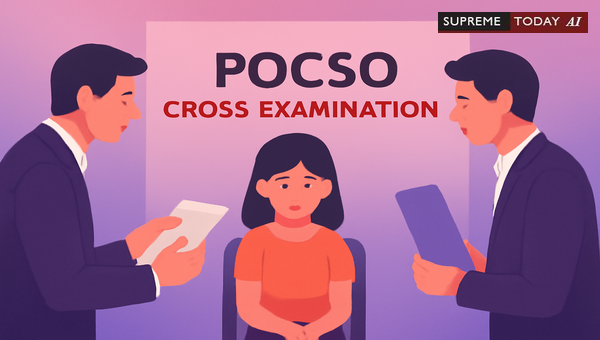
Cross-Exam Questions for Victims in Roman Urdu: A Child-Friendly Guide
In high-stakes (Protection of Children from Sexual Offences) cases, cross-examining a requires precision, empathy, and strict adherence to legal safeguards. The question arises: Draft a List of Cross Examination Questions in Roman Urdu Transliteration Put to Victim of Case. Crafting such questions is not just about challenging testimony—it's about upholding the child's dignity while testing credibility. This guide draws from legal precedents to provide simple, non-traumatizing questions in Roman Urdu, optimized for clarity and effectiveness.
trials demand a balance: probing facts without causing harm. Courts emphasize respectful approaches to avoid reversing convictions on appeal due to procedural lapses. Let's explore principles, sample questions, and best practices.
Legal Principles Governing
in cases must prioritize the child's welfare. Courts have ruled that questions should be clear, simple, and non-embarrassing. 2023 0 Supreme(SC) 1107 As per guidelines, the shall create a by allowing a family member, a guardian, a friend or a relative, in whom the child has trust or confidence, to be present in the court. 2021 0 Supreme(Kar) 183 The or must communicate questions through the to prevent direct confrontation.
Key tenets include:- Avoid that influence responses. 1999 8 Supreme 364- Focus on factual details like the incident's location, perceptions, and timeline, without humiliation. 2024 0 Supreme(SC) 916- respectfully: The goal is clarification, not confusion or trauma. 1999 8 Supreme 364
In one case, scandalous questions during shocked the court, leading to discouragement of probes into the victim's dignity. 2017 0 Supreme(Ori) 1120 The type of questions put by the defence to the victim during her to elicit said answers shocked this Court because the defence has not obeyed the principles of to the victim in a rape case.
Failure to follow these can undermine the defense. For instance, superficial or omitting incident-specific questions weakens outcomes. 2024 0 Supreme(Gau) 951 2025 0 Supreme(Del) 470
Sample Case-Winning Questions in Roman Urdu
Here’s a curated list of questions, transliterated in Roman Urdu for accessibility, especially in regions where Urdu is prevalent. These are designed to be non-aggressive, focusing on memory, recognition, and consistency. Always tailor to case facts and submit in writing for court approval. 2023 0 Supreme(SC) 1107
- Tum ne us din kya dekha? (What did you see on that day?) – Establishes initial observations.
- Kya tum ne us waqt us aadmi ko pehchana? (Did you recognize that person at that time?) – Tests identification without pressure.
- Kya usne tum se koi galat baat ki? (Did he say anything wrong to you?) – Probes verbal interactions gently.
- Kya usne tumhare saath koi bura bartao kiya? (Did he behave badly with you?) – Gauges behavior factually.
- Tum ne kis jagah par us incident ko dekha? (Where exactly did you see the incident?) – Clarifies location. 2024 0 Supreme(SC) 916
- Kya tum ne us aadmi ka chehra dekha? (Did you see his face?) – Verifies visibility.
- Tum ne us waqt kis cheez ko mehsoos kiya? (How did you feel at that time?) – Assesses mental state.
- Kya tum ne us aadmi ko pehle bhi dekha hai? (Have you seen that person before?) – Checks prior acquaintance.
- Tum ne us din kis jagah par tha? (Where were you at that time?) – Timeline confirmation.
- Kya tum ne us aadmi ke saath koi baat ki? (Did you speak to that person?) – Explores communication.
- Kya tum ne us waqt koi shor suna? (Did you hear any noise at that time?) – Sensory details.
- Kya tum ne us ke baare mein koi khabar di? (Did you inform anyone about him?) – Disclosure timeline.
- Kya tum ne us aadmi ke baare mein kuch aur batana chahti ho? (Do you want to tell anything more about that person?) – Open-ended for completeness.
Additional from precedents:- Kya aapko samajh aaya ke hum kya pooch rahe hain? (Do you understand what we are asking?)
- Kya aap bata sakti hain ke aapko pehle kya yaad hai? (Can you tell what you remember first?) – Tests sequence.- Kya aapko yaad hai ke us din kya hua tha? (Do you remember what happened that day?) 2024 0 Supreme(Gau) 951
These questions help expose inconsistencies, like in cases where victims avoided age-related queries or affirmed no coaching. 2016 0 Supreme(P&H) 1945 In the , a number of questions were put to her relating to her age but the victim avoided giving the answers.
Integrating Best Practices from Case Law
Effective strategy involves assessing the child's competency first. gauge understanding and rational responses.
2023 0 Supreme(Gau) 1020 Demeanor matters—nervousness or crying can sway judges, so record it. 2024 0 Supreme(Gau) 951
Medical evidence ties in: Challenge reports if not by a female doctor per .
In cross-exams, victims sometimes decline further questioning, as seen when The of PW-2 was declined by victim girl. 2024 0 Supreme(Gau) 903
Avoid pitfalls like probes without basis. One victim firmly denied coaching: In the , questions have been put to the victim to nullify her evidence on the ground that she was a but the victim has categorically stated that nobody had taught her anything to depose in the case. 2015 0 Supreme(Ori) 532
Provide breaks, use trusted companions, and ensure child-friendly courts. 2023 0 Supreme(SC) 1107 2021 0 Supreme(Kar) 183
Guidelines and Limitations
- Prepare in advance: Simple, non-technical Roman Urdu.
- Court submission: Written questions via officer. 2023 0 Supreme(SC) 1107
- No : Steer clear of humiliating probes. 2017 0 Supreme(Ori) 1120
- Frequent breaks: Prevent trauma.
- Exceptions: Intrusive questions risk case dismissal. 2024 0 Supreme(Gau) 90
Key Takeaways and Recommendations
- Tailor questions to facts for relevance.
- Prioritize child competency and consistency tests.
- Leverage precedents for .
In defenses, thoughtful can turn cases. Consult precedents like those directing non-embarrassing methods. 2023 0 Supreme(SC) 1107 Always adapt to specifics.
Disclaimer: This is general information based on legal precedents and not specific legal advice. Consult a qualified lawyer for case-specific guidance.
#POCSOCrossExam, #RomanUrduLegal, #ChildVictimQuestions















