


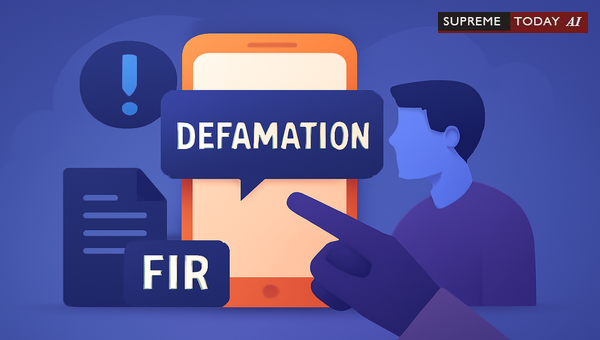
Can Police Register a Criminal Case for Defamatory Statements on Social Media?
In today's digital age, social media platforms like Facebook, Twitter (now X), and Instagram have become battlegrounds for public opinions, sometimes crossing into defamatory territory. A single post accusing someone of wrongdoing can go viral, damaging reputations instantly. But what happens when the aggrieved party approaches the police? Can they register a criminal case against the propagator of such statements?
This article explores the legal nuances of on social media in India, drawing from key judicial precedents and statutory provisions. We'll address the core question: Can Police Register any Criminal Case against Propagating Defamatory Statement in Social Media Platform? While this is general information based on established law, consult a legal professional for advice tailored to your situation.
Understanding : Civil vs. Criminal
involves making false statements that harm a person's reputation. In India, it splits into two remedies:
- : A where the victim sues for monetary damages or . The plaintiff must prove the statement was defamatory, published to a third party, and caused harm 2015 0 Supreme(AP) 925.
- : Governed by , it punishes the act with up to two years' imprisonment, fine, or both. It requires intent or knowledge that the imputation would harm reputation 1971 0 Supreme(SC) 263.
The same defamatory post on social media can trigger both proceedings simultaneously, as they serve distinct purposes: compensation (civil) vs. punishment and deterrence (criminal) 2008 8 Supreme 333. Courts have affirmed: there can be no bar to the simultaneous continuance of a criminal proceeding and a civil proceeding if the two arise from separate causes of action 2008 8 Supreme 333.
Can Police Directly Register a Criminal Case?
Here's the crux: No, police cannot register an on their own for . Why? Section 499/500 IPC offenses are and . This means:
- Police lack authority to investigate without a magistrate's order.
- The aggrieved must file a under before a Magistrate, who may then direct investigation 2025 0 Supreme(Del) 602 2025 0 Supreme(Telangana) 861.
Social media amplifies this—posts are 'published' instantly to thousands, fulfilling the element easily. However, frivolous complaints risk backlash under for false charges: Whoever, with intent to cause injury to any person, institutes or causes to be instituted any criminal proceeding against that person... 2024 0 Supreme(Cal) 872.
Judicial caution prevails: Courts cases to prevent abuse, but genuine ones proceed 2024 0 Supreme(Gau) 1099.
Coexistence of Civil and Criminal Proceedings
A key legal finding: Civil and can coexist for the same cause of action, as they are distinguishable remedies with different proofs— (civil) vs. (criminal) 2008 8 Supreme 333 2015 0 Supreme(AP) 925.
- Separate Objectives: Civil seeks damages; criminal punishes (guilty mind) 2004 0 Supreme(Pat) 525. The ambit and scope for a proceeding for under the penal law would be substantially different from a proceeding under the civil law for 2004 0 Supreme(Pat) 525.
- No Legal Bar: There is no legal impediment to invoke the civil proceedings for as well as initiating the criminal proceedings for simultaneously and continuation of the same 2016 0 Supreme(Del) 3840.
- Judicial Endorsement: In multiple rulings, courts allow parallel actions. If is committed, there can be prosecution as well as a civil action for damages 2018 0 Supreme(Mad) 2585. The noted both are maintainable: both the civil proceedings for damages caused due to defamatory statements and criminal proceeding for the same defamatory statements are maintainable simultaneously 2020 0 Supreme(Cal) 407.
For social media, a viral defamatory tweet could lead to a civil suit for compensation alongside a criminal complaint for punishment.
Judicial Perspectives and Case Law
Courts consistently uphold this duality:
- Simultaneous Proceedings Allowed: Even from the same facts, no merger occurs 2008 8 Supreme 333. A commercial dispute might yield civil claims and criminal charges if defamatory 2023 0 Supreme(Gau) 495.
- as Reasonable Restriction: aligns with , not alien to 2023 0 Supreme(Cal) 1304.
- No Prejudice if Distinct: Criminal intent is probed separately; a civil written statement doesn't prejudice it 2016 0 Supreme(Del) 3840.
- Exceptions for Privilege: Statements in judicial proceedings or opinions may be protected 2024 0 Supreme(Cal) 590 2022 0 Supreme(J&K) 433.
In one case, courts refused against grievances, deeming them non-defamatory 2024 0 Supreme(Bom) 428. Another clarified no bar on parallel enquiries 2018 0 Supreme(Mad) 2585.
Exceptions, Limitations, and Strategic Considerations
While permissible, caveats apply:
- Abuse of Process: Courts may or if 2009 0 Supreme(SC) 647 2024 0 Supreme(Gau) 1099.
- Essential: Criminal needs proof of intent to harm 2016 3 Supreme 598.
- Social Media Specifics: Platforms' takedown policies aid, but legal action requires evidence like screenshots.
Recommendations:- Victims: File for criminal + civil suit for damages.- Posters: Ensure ; opinions on public matters may qualify as fair comment.
Key Takeaways
- Police cannot register an FIR for social media without magistrate orders—it's .
- Both civil and criminal actions can proceed together for the same post 2020 0 Supreme(Cal) 407 2016 0 Supreme(Del) 3840.
- Strategic use enhances remedies: punish + compensate.
- Always verify facts; has limits under law.
This overview draws from precedents like 1971 0 Supreme(SC) 263, 2008 8 Supreme 333, and others. Laws evolve, so this is not legal advice. Seek counsel from a qualified lawyer for your case. informed, post responsibly!
#CriminalDefamation #SocialMediaLaw #DefamationIndia












