


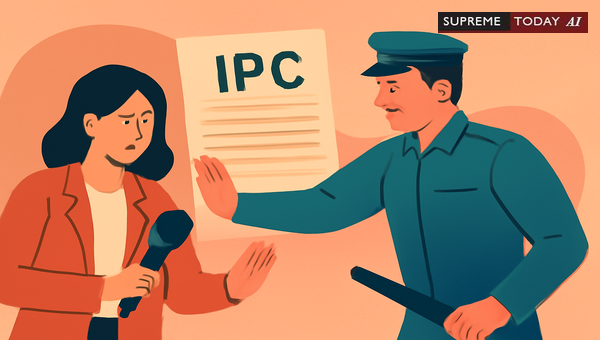
IPC Sections for Police Mental Harassment of Journalists
In today's digital age, journalists play a pivotal role in upholding democracy by reporting facts and holding authorities accountable. However, instances of police officers engaging in mental harassment—such as threats, false accusations, or unwarranted intimidation—against journalists have raised serious concerns. A common query we encounter is: Tell me IPC sections for police doing mental harassment to a journalist. This blog post delves into the relevant Indian Penal Code (IPC) provisions, judicial safeguards, and practical steps journalists can take. Note: This is general information and not specific legal advice. Consult a qualified lawyer for personalized guidance.
Understanding Mental Harassment by Police
Mental harassment by police can manifest as psychological pressure, including repeated questioning without basis, threats to reputation, or filing frivolous cases to silence reporting. Courts have repeatedly emphasized that journalists, as the , deserve protection from such misconduct. For instance, the judiciary has ruled that journalists should not be subjected to harassment or ill-treatment while performing professional duties, especially after reporting crimes 2010 0 Supreme(Mad) 2440.
Such actions not only violate freedom of expression under of the Constitution but also attract criminal liability under the IPC. Let's break down the key legal framework.
Relevant IPC Provisions Against Police Harassment
: Defamation
IPC addresses defamation, which applies when police make false allegations against a journalist, tarnishing their reputation. The protects journalists publishing true reports of court proceedings 2002 0 Supreme(Kar) 322. If police falsely accuse a journalist to harass them, this section can be invoked. Courts have quashed unjustified actions, reinforcing that mere criticism or reporting isn't defamatory 2010 0 Supreme(Mad) 2440.
: False Information to Public Servant
This section penalizes giving false information to a public servant intending injury. If police misuse power by lodging false complaints against journalists, it may qualify. Investigations revealing dropped charges under highlight how baseless cases can be challenged 2024 3 Supreme 373.
Other Applicable IPC Sections
- : Intentional insult to provoke breach of peace, often seen in verbal threats or humiliation during interrogations.
- : Criminal intimidation, relevant for threats causing alarm.
- : Promoting enmity, if harassment involves communal angles in reporting 2024 3 Supreme 373.
From case law, police cannot harass journalists by filing false cases or delaying investigations. For example, offenses under were upheld, but defamation charges dropped due to lack of evidence 2024 3 Supreme 373.
Judicial Protections and Key Case Insights
Indian courts have been vigilant in protecting journalists. In one landmark observation, the court stressed: journalists should not be subjected to harassment or ill-treatment by police while performing their professional duties 2010 0 Supreme(Mad) 2440. This principle quashes FIRs lacking merit.
Additional sources reveal patterns:- Unwarranted Seizures: Police cannot seize a journalist's mobile without Cr.P.C. procedures, deeming it harassment 2023 0 Supreme(Ker) 542.- False Charges and Delays: Misuse of (false statements), (sedition), or 506 to intimidate is unlawful unless elements are proven 2023 0 Supreme(Mad) 2435.- Mental Impact: Harassment affects journalists mentally, akin to broader influences of media on public psyche, invoking of IPC 2024 0 Supreme(P&H) 193.
Courts mandate , noting: delays in filing complaints or investigations can be deemed unjustified 2024 Supreme(Online)(TEL) 8569. In cases like false implications under IPC 153A, 504, procedural violations by police were scrutinized 2024 Supreme(Online)(MP) 6493.
Legal Recourse for Harassed Journalists
Journalists facing mental harassment have robust remedies:1. File Complaints: Under IPC Sections 499, 182, 504, or 506 against the officer.2. Writ Petitions: Approach High Courts for quashing FIRs or to halt harassment 2010 0 Supreme(Mad) 2440.3. Documentation: Record dates, times, interactions, and witnesses meticulously.
Media organizations should train staff on rights, as police powers under mental health provisions don't extend to harassing professionals 2018 0 Supreme(Del) 562.
Practical Recommendations
- Immediate Steps: Report to senior police or human rights commissions.
- Evidence Gathering: Save communications, audio recordings (legally), and witness statements.
- Awareness: Understand exceptions like the ninth under for fair reporting 2024 0 Supreme(P&H) 193.
- Seek Bail/Quashing: Courts often grant relief if no cognizable offense exists 2024 3 Supreme 373.
Organizations can push for protocols preventing misuse, as seen in cases of dropped charges 2024 0 Supreme(Telangana) 510.
Conclusion and Key Takeaways
India's legal framework, via IPC Sections 499, 182, and others, alongside judicial precedents, offers strong shields against police mental harassment of journalists 2010 0 Supreme(Mad) 2440 2018 0 Supreme(P&H) 2855 2002 0 Supreme(Kar) 322. Courts uphold press freedom, quashing overreach and emphasizing accountability.
Key Takeaways:- Document everything for strong cases.- Leverage writs for swift relief.- Stay informed on rights to deter misconduct.
Journalists: Your role is vital—don't let harassment silence you. For tailored advice, consult legal experts.
References: 2010 0 Supreme(Mad) 2440 2018 0 Supreme(P&H) 2855 2002 0 Supreme(Kar) 322 2023 0 Supreme(Ker) 542 2024 0 Supreme(P&H) 193 2024 3 Supreme 373 2023 0 Supreme(J&K) 34 2023 0 Supreme(Mad) 2435 2024 Supreme(Online)(TEL) 8569 2024 0 Supreme(Telangana) 510
#JournalistRights, #PoliceHarassment, #IPCLaw












